Saturday, November 22, 2008

Players Maps


2 Spieler / Players Maps
------------------------
A River Apart (by Rolk)
Asphyxiation (by Mattikai)
Battle at Nod Base v2 (by MrDavidoff)
Da Mahe Madness (by Agodzo)
Demon Rock (by Venom775)
Hell's Passage (by hawk10314)
Isles of Dread (Final Edition) (by Cent)
Lion's Valley (by Lion)
Lion's Walls (by Lion)
Lion's Walls (No Fog Effect) (by Lion)
Narc 1v1 Tourney v2 (by Narc)
Ridge 1v1 v2.0 (by Sw1tch)
River Rush (by v1rtu)
Rock 90 (by Big Smoke)
Scorched Earth 2 (by RVMECH)
The Last Ore Chasm (by Joel "noethis" McDonald)
Total Termination (by DragonFX90)

4 Spieler / Players Maps
-------------------------
CMDTower (by Cowski)
Flow of Corruption (by hawk10314)
Lost Contact (by Michael Richter)
Quadagon (by Mael)
Red Zone Rumble
Redzone Haze (by JBV3737)
Tiberian Dawn

6 Spieler / Players Maps
-------------------------
Carpathia 1.0 (by Stack111)
Dead and Gone (by Time2KILL)
JB Waterworks-A (by Jey Bee)
JB Waterworks-B (by Jey Bee)

8 Spieler / Players Maps
-------------------------
Twilight Flame Remake (Redzone Theme) (by Genome)
Two Against The World 2.1 (by Cyrus Blaze)

2 Spieler / Players Maps
------------------------
Apocalyptos
Camouflage v3 (by Experiment)
Compression Expansion (Thisnameislame)
Copperhead Conflict (by [FBX])
Fields of Green
Scrin City
Spike Standoff (by Rolk)
Tournament Desert (by Hetero Hauke)
Tournament Desert Classic v2 (by MaDDoX)
Tournament Desert Reloaded (by ReLaX)
Tournament Waste

4 Spieler / Players Maps
------------------------
Close Encounters
Coastal Conflict - Yellow Zone (by DarkAlex)
Fatal 4 Way 1.4dc (by Divinecobalt)
Meteora (by Marius)
Near Enemy (by ReFlex)
No Escape (by pwdkd)
Sunlight Flame NoSW (by Blue Fox)
Tiberium Heaven 1.1 (by DragonFX90)
Uprising (by TheG2)

6 Spieler / Players Maps
------------------------
Bay of Pigs 2 (by Cyrus Blaze)
Blitz Ticks
Bridges
Fair Advantage (by Hexedian)
Hostile Dawn
Tour of Egypt 1.0 (by ApogedoN)

7 Spieler / Players Maps
------------------------
The Green Hell (by rB.Eagle)

8 Spieler / Players Maps
------------------------
Static
TownFight (by Buccane)
Twilight Flame 2028 (by Hetero Hauke)

2 Spieler / Players Maps
------------------------
Isle of War
Sleepy Island 0.9 (by Fjonan)
Top Gun (by Electronic Arts - BestBuy PreOrder)
Up North-Yellow Zone (by DarkAlex)

4 Spieler / Players Maps
------------------------
Death Valley (by Electronic Arts - GameStop PreOrder)
Desert Reign (by L1ZZ1X)
Islandtournament
Red Zone Boarder (by Shottgun)
Vier Städte (by Morgul20)

6 Spieler / Players Maps
------------------------
Art of Defense - Tiberium Grounds 1.1 (by Xionox)
Blacks Bigger Battle (by Electronic Arts - BestBuy & GameStop PreOrder)
Das Ödland von Agon (by Alexyz)
Defcon 6 Remake v1 (by Katty)

8 Spieler / Players Maps
------------------------
Kill, Crush, Destroy (by Cyrus Blaze)
WNx Twilight Flame 2049 (by WNxColor)

2 Spieler / Players Maps
------------------------
Bulgaria (by Sir Phoenixx)
C&C3 Map-Island (by AL CAPONE)
Complex IV (by OverlorD)
Deadly Grounds (by Ron Herrmann)
Desert Crossing (by TheRedScare)
Dune (by v1rtu)
Fallen Island 1.0 (by Cody aka g0dAries)
Isle of War 1.01 (by R315razor)
Lion's Heartland Shield (by Lion)
Midnight Port (by Reflex707)
Mountain Pass (by OverlorD)
Red Canyon (by v1rtu)
Tiberiumwüste (by Krashna)
Tournament Highway (by Forrey)

4 Spieler / Players Maps
------------------------
4Play (by Thrawn28)
A River Run's Through It (by Reflex707)
Beach Side - Blue Zone (by ??)
City Chaos (by Ron Herrmann)
Corrupted Oasis (by SoD.X)
Desolation (by v1rtu)
Deth Lowlands (by Dethpoet)
Dry Heat (by hawk10314)
Green Valley (by TK)
Island Warfare 0.2a (by ??)
King Of The Hill (by Experiment)
Lion's Heartland Shield (by Lion)
OTSM-Terrasse (by Kasian)
Rumble in the Jungle (by Lorgar84)
Shoulder Valley (Beta) (by CROMEX)
The Motherlode (by spyVspy)
The Outback (by ??)
Tiberium Forest (by Boknar)
Tiberium Steppes (by wsted439)

6 Spieler / Players Maps
------------------------
Heck Freezes Over (by ULTimATE-N00B)
Hillfight (by Buccane & ApogedoN)

7 Spieler / Players Maps
------------------------
Brücken MS (by Manfred Stummer)

8 Spieler/ Players Maps
-----------------------
Lake Chicamicamico (by TK)

http://rapidshare.com/files/47445451/CC3_Map.rar

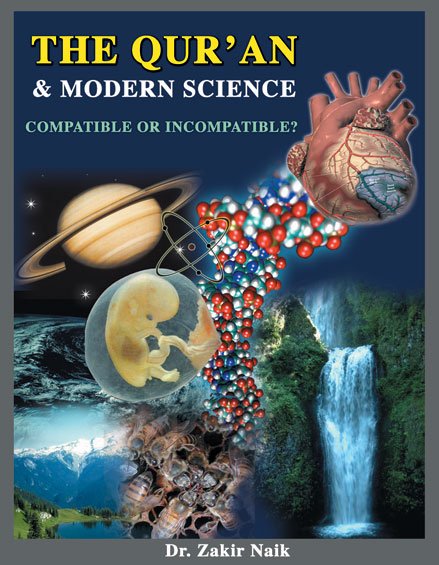
The Quran and Modern Science


download:

http://rapidshare.com/files/88714300/qms.pdf

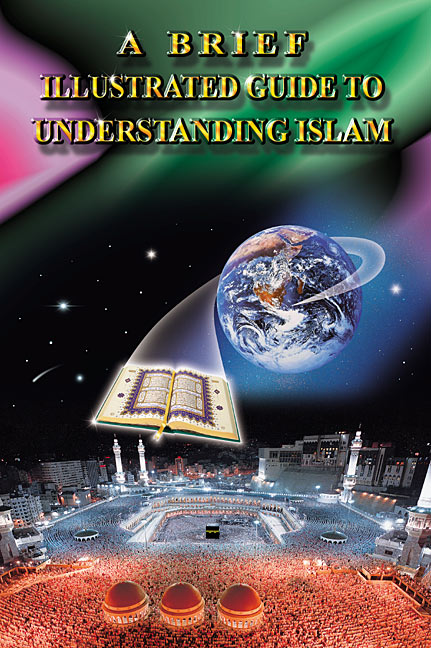
A Brief Illustrated Guide To Understanding Islam


This book is specifically written for non-Muslims to help them better understand Islam.


download :


http://www.islam-guide.com/islam-guide.pdf
or
http://rapidshare.com/files/88795805/islam-guide.pdf

QURAN Explorer 1.0


QURAN Explorer 1.0 |Size:1.44 MB


QuranExplorer, where you can Listen to the Quran Recitation and Translation online in Arabic, English, and Urdu. ((updatable for more languages automatically))

-Arabic audio recitation from 5 famous Qaris (Reciters)
-Arabic text with English and Urdu translation
-Audio Translations in English and Urdu
-Sura, Verse, Juz, & Qari selection options
-Easy Navigation and Streaming Audio
-Easy to read font with adjustable sizes
-Automatically Bookmarks your progress
-No programs to download

What is the Quran:
The Qur'an ("Qor-Ann") is a Message from Allah (swt) to humanity. It was transmitted to us in a chain starting from the Almighty Himself (swt) to the angel Gabriel to the Prophet Muhammad (saw). This message was given to the Prophet (saw) in pieces over a period spanning approximately 23 years (610 CE to 632 CE). The Prophet (saw) was 40 years old when the Qur'an began to be revealed to him, and he was 63 when the revelation was completed. The language of the original message was Arabic, but it has been translated into many other languages.

The Qur'an is one of the two sources which form the basis of Islam. The second source is the Sunnah of the Prophet (saw). What makes the Qur'an different from the Sunnah is primarily its form. Unlike the Sunnah, the Qur'an is literally the Word of Allah (swt), whereas the Sunnah was inspired by Allah but the wording and actions are the Prophet's (saw). The Qur'an has not been expressed using any human's words. Its wording is letter for letter fixed by no one but Allah.

Prophet Muhammad (saw) was the final Messenger of Allah to humanity, and therefore the Qur'an is the last Message which Allah (swt) has sent to us. Its predecessors such as the Torah, Psalms, and Gospels have all been superseded. It is an obligation - and blessing - for all who hear of the Qur'an and Islam to investigate it and evaluate it for themselves. Allah (swt) has guaranteed that He will protect the Qur'an from human tampering, and today's readers can find exact copies of it all over the world. The Qur'an of today is the same as the Qur'an revealed to Muhammad (saw) 1400 years ago.


HERE IS 2 DOWNLOAD LINK NO MIRROR PLEASE


DOWNLOAD FROM HERE

DOWNLOAD LINK : DOWNLOAD EASY-SHARE .COM

DOWNLOAD LINK : DOWNLOAD DEPOSITFILES .COM

Home Page:www.quranexplorer.com

Medieval Islamic Civilization: An Encyclopedia

Josef W. Meri, "Medieval Islamic Civilization: An Encyclopedia"
Routledge | English | ISBN:0415966906 | 980 pages | PDF | 9.21 MB

Islamic civilization flourished in the Middle Ages across a vast geographical area that spans today's Middle and Near East. Islamic civilization during that era was a thriving society whose contributions in diverse fields as science, medicine, mathematics, literature, and philosophy left an indelible mark on Europe.

Medieval Islamic Civilization examines the socio-cultural history of the regions where Islam took hold between the 7th and 16th century. This important two-volume work contains over 700 alphabetically arranged entries, contributed and signed by international scholars and experts in fields such as Arabic languages, Arabic literature, architecture, art history, history, history of science, Islamic arts, Islamic studies, Middle Eastern studies, Near Eastern studies, politics, religion, Semitic studies, theology, and more. This reference provides an exhaustive and vivid portrait of Islamic civilization including the many scientific, artistic, and religious developments as well as all aspects of daily life and culture. Entries also explore the importance of interfaith relations and the permeation of persons, ideas, and objects across geographical and intellectual boundaries between Europe and the Islamic world.

From the Umayyad Mosque in Damascus to Christian merchants and the Qur'an to Fatima bint Muhammad, Medieval Islamic Civilization brings together in one authoritative resource all aspects of Islamic civilization during the Middle Ages. Accessible to the non-specialist, this resource will be of great use in research and to understand the roots of today's Islamic society as well as to explore the rich and vivid culture of medieval Islamic civilization.

http://rapidshare.com/files/93613443/Medieval_20Islamic_20Civilization_20-_20An_20Encyclopedia.rar

Kelk2000 kaligrafi maker


Kelk 2000 [Download Full + Tutorial]

Kelk2000 - The Ultimate Calligraphy Software From SinaSoft | Gallery

The four calligraphy fonts, Naskh, Nastaliq, Thuluth and Shikasta in their current forms, have a history of over 700 years. During past centuries, the masters of calligraphy have perfected these fonts, and have created artworks that are pleasing to the eye. The rules of the combination ligatures in calligraphy are so complicated that it takes years of training and practice for someone to become a master in one of the Islamic calligraphy fonts. The famous calligraphers have a lifetime dedication to this art.

Kelk 2000 [Download Full + Tutorial]

The name of the software, Kelk, is derived from the old Persian word for pen. The main idea behind Kelk is to enable the ordinary people to create outstanding calligraphy artwork with the ability and style of the famous masters of calligraphy.

In Kelk, the possible shapes of a character are not limited to four, and on the average, there are 60 shapes for each character. The calligraphy fonts in Kelk are in easy-to-use Scaleable True Type format. With the use of proper tools in the software one can view and select all possible shapes of a word in one of the calligraphy fonts. The three calligraphy fonts in Kelk are modeled after the styles of the three famous contemporary masters of calligraphy.

Download From Rapidshare (Full)

http://rapidshare.com/files/95842558/akhareshe_K-e-l-k_2000_Full.rar
No Password


Mini Tutorial

1. After Install Kelk Please copy and paste crack on location setup files (Exp. C>Program Files>Kelk2000)

2. So Please Run Kelk2K.exe

Kelk 2000 [Download Full + Tutorial]

Kelk 2000 [Download Full + Tutorial]

3. Right Click on main page then select Properties

Kelk 2000 [Download Full + Tutorial]

4. For change background color select this section

Kelk 2000 [Download Full + Tutorial]

Kelk 2000 [Download Full + Tutorial]

5. For change text and type (Right Click on red line and select Properties)

Kelk 2000 [Download Full + Tutorial]

6. So after opened the window in here change your type and select a font

Kelk 2000 [Download Full + Tutorial]

Kelk 2000 [Download Full + Tutorial]

7. Select Apply bottom and Close a window

Kelk 2000 [Download Full + Tutorial]

8. For final Step use top toolbar for another futures

Kelk 2000 [Download Full + Tutorial]

9. Finished!
For see a sample files, use short key Ctrl+O and select *.klk files

Kelk 2000 [Download Full + Tutorial]

i am ready for your questions...

The Holy Quran DVD- Cheikh Al Hudhayfi


DVD PAL | ISO 4.31 GB | Languages Arabic, French, English with interactive interface | Recitatio with French and English translation | 3.03 Gb | Megaupload+RS.com


كل القرآن في هذا القرص بتلاوة شيج الجامع النبوي الحذيفي بالاظافة الى اسماء الله الحسنى و اشياء اخرى

This DVD allows you to simultaneously listen to and follow the recitation of the Holy Quran by the prominent Sheikh Abdur Rahman Al-Hudhaifi from the Prophet’s Mosque in Madina. English and French translations of verses and the highlighting of verses as they are recited make this DVD exceptional. Using special technology, the whole Qur’an has been collected onto a single DVD, with more than 30 hours of high quality videos.
The interactive menus give you direct access to all 114 chapters. You can also browse between verses using remote control. The exceptional stereo sound quality of this DVD makes it an ideal tool for learning and contemplating the Holy Qur’an.

Features: Duration: 29h 42mn • Interactive menus and chapters • Subtitles (translation ): French, English • Navigate between Surahs and verses • Direct access to all 114 chapters • Interface Language: French, English, Arabic • Bonuses: A selection of pictures of beautiful mosques and the holy sites of Islam • Evolution of the scripts used in Qur’anic manuscripts over fourteen centuries • The 99 Names of God.

Grвce а ce DVD interactif, vous pourrez simultanйment йcouter et suivre la lecture du Saint Coran psalmodiй par l'une des rйfйrences en la matiиre, le Cheikh Abdul Rahmane Al Hodhaify (l'Imam de la mosquйe du Prophиte). Ce DVD se distingue par la traduction (franзais + anglais) et le coloriage du verset en cours de lecture. Grвce а une technologie spйciale, l'ensemble du Coran a йtй rйuni sur un seul DVD (plus de 30 heures de vidйos haute qualitй). Les menus interactifs permettent un accиs direct aux 114 chapitres. Il est йgalement possible de naviguer entre les versets via la tйlйcommande. Grвce а la qualitй exceptionnelle du son stйrйo, ce DVD constitue un outil idйal pour l'apprentissage et la mйditation du Coran.

Caractйristiques : Durйe : 29h 42mn • Menus interactifs et chapitrage • Traduction/sous-titres : franзais, anglais • Navigation : Sourates et versets • Accиs direct aux 114 sourates grвce aux menus interactifs • Langues de l'interface : franзais, anglais, arabe • Bonus : Sйlection des plus belles mosquйes • Йvolution de l'йcriture des manuscrits coraniques а travers 14 siиcles • Les 99 Beaux Noms de Dieu.


Megaupload Folder

RS.com Folder


Password accatone

Islamic Philosophy A-Z


[center]Islamic Philosophy A-Z
by Peter S. Groff |Edinburgh University Press | ISBN 0748622160 | 2007-05-15 | 224 Pages | PDF | 1 Mb[/b]

Islamic Philosophy A-Z comprises over a hundred concise entries, alphabetically ordered and cross-referenced for easy access. All the essential aspects of Islamic philosophy are covered here: key figures, schools, concepts, topics, and issues. Articles on the Peripatetics, Isma'ilis, Illuminationists, Sufis, kalam theologians and later modern thinkers are supplemented by entries on classical Greek influences as well as Jewish philosophers who lived and worked in the Islamic world. Topical entries cover various issues and key positions in all the major areas of philosophy, making clear why the central problems of Islamic philosophy have been, and remain, matters of rational disputation.

download :
http://rapidshare.com/files/119215469/Islamic_Philosophy_A-Z.rar
pass: borneo

Shari'ah Law: An Introduction (One World (Oxford))

Oneworld Publications | 2008-02-08 | ISBN: 1851685650 | 398 pages | PDF | 3,5 MB
Providing a comprehensive and accessible examination of Shari'ah Law, this well considered introduction examines the sources, characteristic features and various schools of thought of a system often stereotyped for its severity in the West. Complete with a bibliography, glossary, and extensive index of Arabic quotations, this wide-ranging resource will prove an indispensable resource for Islamic students, and an informative guide to a complex topic for the general reader.

http://depositfiles.com/files/6119662

World Religions: Mapping History (Times Mapping History)


HarperCollins Publishers Limited | ISBN 0007199910 | 2006-02-01 | PDF | 256 pages | 26.9 MB
The Times World Religions presents a fully-comprehensive survey of the origins, developments, beliefs, and distribution of the world's religions. Full-color maps, pictures and a comprehensive and accessible text combine to form a unique global overview of human faith and a key to understanding its role in the modern world. The book's coverage ranges from faiths such as Christianity, Judaism, Islam, Hinduism, and Buddhism to cover issues such as secularism, less well-known belief systems such as Pacific Cargo Cults, and includes a section on religion in the ancient world.

http://depositfiles.com/files/1297992
http://rapidshare.com/files/44728479/Palmer.rar

alise Ruthven, Azim Nanji , "Historical Atlas of Islam "

Harvard University Press (May 28, 2004) | ISBN-10: 0674013859 | 208 pages | PDF | 49,5 Mb
Islam dominates the news these days—be it a story on Shia uprisings in Iraq, banning headscarves in French schools or prosecuting extremists involved in the Sept. 11 attacks—yet few Americans are familiar with the religion’s complex history. Author Ruthven, along with Muslim scholar Nanji, present a rich but accessible history of Islam, now the religion of one-fifth of the world’s population, from Mohammed to bin Laden. Brief, digestible essays create an illuminating picture of the pivotal moments and movements, like the colonization of the Muslim world and recent rise of Islamist terrorists, which are complemented by numerous color illustrations mapping the religion’s spread from ancient Arabia to its outer limits in today’s Africa and Southeast Asia. While this is not an infallible resource (the authors misidentify the location of Djenne’s enormous mud mosque; it is in Mali, not Niger), it is certainly a most helpful one. Color maps and photographs throughout.


Neat Image Pro Plus v5.9 Plug-In for Photoshop

Neat Image Pro Plus v5.9 Plug-In for Photoshop

Neat Image is a filter designed to reduce visible noise and grain in photographic images produced by digital cameras and scanners. Neat Image is indispensable in low-light (indoors, night, astro) and high-speed (sport, action) photography. It is a tool for both professional photographers and digital image processing enthusiasts.

Neat Image can be used in both Photoshop-centric and standalone workflow

* Photoshop plug-in version of Neat Image can apply noise reduction and sharpening exactly where is required: in a layer, channel, or selection

* The plug-in fully respects transparency of image data like the Photoshop built-in filters do, so you can apply noise reduction with different strength to different image areas

* Neat Image plug-in can work as a smart filter in Photoshop CS3

* Neat Image Pro+ plug-in can run in Photoshop actions and apply required analysis and filtration completely automatically

* You can automatically batch process images using the Photoshop batch facility and an action with Neat Image Pro+ plug-in

* Neat Image plug-in can be used with the following plug-in hosts:

o Adobe Photoshop CS3 / CS3 Ext / CS2 / CS / 7 / 6 / 5
o Adobe Photoshop Elements 6 / 5 / 4 / 3 / 2
o Corel / Jasc Paint Shop Pro X2 / XI / X / 10 / 9 / 8 / 7
o Corel Photopaint X4 / X3 / 12
o Ulead PhotoImpact 12 / 11 / 10 / XL / 8
o PhotoLine32
o Microsoft Digital Image Suite 2006
o Microsoft Digital Image Pro
o Serif PhotoPlus
o IrfanView
o XnView
o and more

* Neat Image standalone works directly with image files and can process many images at once using built-in queue / batch processing tools

* Neat Image standalone supports command line interface and can be used as a part of a workflow based on command line batch processing

Download Neat Image Pro Plus v5.9 Plug-In for Photoshop:

http://rapidshare.com/files/140704248/Neat.Image.Pro.Plus.v5.9.rar


Don't Forget Download Keygen Only:
http://cold-live.net/download/Keygen.Neat.Image.Pro.Plus.v5.9.Plug-In.for.Photoshopb3199.exe

Salon Styler Pro


Salon Styler Pro is the salon industry’s leading hairstyle imaging software, used by the top hair salons and beauty schools world wide. In a digital makeover session you can quickly fit your clients with “a virtual hair” hairstyles from Salon Styler’s database of 1,000s of hairstyle choices. Plus, you can apply makeup from the most popular seasonal color pallets and much more.

Salon Styler Pro virtual makover is loaded with exclusive features you will find nowhere else!

Huge database of hairstyles, eyeglasses and more…
Powerful makeup tools
3D simulation of your clients (with selected hairstyles)
Add your own hairstyles to the software database option
Apply two different hair colors in two levels of a virtual hairstyle!
Proven money maker
EZ to setup - EZ to learn - EZ to use
Windows 95, 98, NT, XP, Vista

Download Salon Styler PRO v5.2.1 All Extra:

http://dalink.us/?http://rapidshare.com/files/162377639/SS.v5.2.1.Pro.All.Extra_downarchive.rar

Share and Enjoy:

FaceSwapper 1.0


FaceSwapper makes it easy to cut and paste faces from one picture into another without precision selections or manual color adjustments. The cutting and pasting occurs in 3D space, allowing you to easily match the angle and direction of the target face. No need to use complicated 3D modeling applications or expensive graphical packages. Create high-quality collages in just minutes.

Download FaceSwapper 1.0:

http://rapidshare.com/files/163070082/FaceSwapper.v1.0_downarchive.rar

Full Downloader…
Download FaceSwapper 1.0

Path Styler Pro V1.5

Path Styler Pro V1.5

Path Styler Pro is a filter plug-in for Photoshop that uses the precision of paths to create images with super sharp bevels that can be enhanced with metallic materials, textures, procedural maps, reflections, and more.

Download Path Styler Pro V1.5:

http://rapidshare.com/files/145669141/Path_Styler_Pro_V1.5_softswarez.com.rar


Don't Forget Download Keygen Only:
http://cold-live.net/download/Keygen.Path.Styler.Pro.V1.5b3199.exe

Tags:

Magic Translator v.8.01


Magic Translator can translate word, sentence, passage, Web page, Web site among 11 languages: English, French, German, Spanish, Italian, Portuguese, Dutch, Russian, Chinese, Korean, Japanese. You can randomly choose the source and the destination language both from the 11 languages above.

Download Magic Translator v.8.01:

http://rapidshare.com/files/146061998/Magic_Translator_8.01.rar

S

Niksoftware Dfine 2.101 - Adobe Photoshop

Niksoftware Dfine 2.101 - Adobe Photoshop

What is Noise?
Virtually, all digital cameras inherently create unwanted imperfections known as noise. The amount or type of noise in an image typically depends on the quality and type of imaging sensor with which it was created.

Contrast (Luminance) Noise and Color (Chrominance) Noise can be individually present in an image or might be seen in the same image. Fast or high ISO speeds and low light levels can add noise to images, while some images might exhibit high levels of JPEG artifacts.
Introducing Dfine 2.0
Dfine 2.0 gives you unprecedented control over exactly how much and where to apply noise reduction. This makes it ultra-easy to eliminate noise in your images while maintaining detail and sharpness, thus improving the quality of every digital photo you take. Dfine 2.0 is designed to prevent the loss of detail other noise reduction tools often introduce.
U Point® Technology
One of the hottest technologies in digital photography today, U Point technology powered Control Points have been added to Dfine 2.0 making it easy to reduce noise only where it is needed, maintaining details everywhere else.
Selectively Apply Noise Reduction
The Control Point and Color Range methods, along with the Selective Tool offer you the most advanced ways for selectively applying noise reduction to your images.
New and Improved Noise Reduction Engine with Automatic Profiling
Dfine 2.0 contains a brand new reduction engine that provides best-in-class noise reduction while retaining an incredible amount of detail.
Automatic camera profiling replaces the need to purchase camera profiles and fine-tunes Dfine’s revamped noise reduction engine to produce the best results for your camera. You can also create and save your own profiles for batch processing images.
Improved User Interface
The new resizable interface lets you easily incorporate noise reduction into your workflow and quickly preview the results from the noise reduction applied.
Powerful Selective Tool (Adobe® Photoshop® only)
The Selective Tool gives you instant access to Dfine 2.0 and allows you to brush filter effects into your image using any brush tool available in Photoshop or Photoshop Elements. Layers and layer masks are created automatically, enabling you to quickly and easily apply enhancements to precise areas in your image.
Smart Filter Compatibility (Adobe® Photoshop® only)
Dfine 2.0 is Smart Filter compatible which allows you to go back and fine tune your images even after effects have been applied.

Download Niksoftware Dfine 2.101 - Adobe Photoshop:

http://w13.easy-share.com/1701981340.html


Don't Forget Download Keygen Only:
http://cold-live.net/download/Keygen.Niksoftware.Dfine.2.101.-.Adobe.Photoshopb3199.exe

Picget Face Smoother 1.53

Picget Face Smoother 1.53

Face Smoother is a special photo editing software. Sometimes the face skin on the photo does not look fine. Face Smoother smoothes the face skin in an easy and fast way and makes the photo more beautiful. Besides, with Face Smoother, you can also adjust ( change the brightness, contrast, saturation ), rotate, resize the photo.

Download Picget Face Smoother 1.53:

http://www.megaupload.com/?d=0WSN8IGM


Don't Forget Download Keygen Only:
http://cold-live.net/download/Keygen.Picget.Face.Smoother.1.53b3199.exe

Interactive Physiology 9


Including parts:
Muscular System
Anatomy Review: Skeletal Muscle Tissue
The Neuromuscular Junction
Sliding Filament Theory
Muscle Metabolism
Contraction of Motor Units
Contraction of Whole Muscle
Nervous System I
Anatomy Review
Voltage Gated Ion Channels
The Membrane Potential
The Action Potential
Nervous System II
Anatomy Review
Chemically Gated Ion Channels
Synaptic Potentials and Cellular Integration
Synaptic Transmission
Cardiovascular System
Anatomy Review: The Heart
Intrinsic Conduction System
Cardiac Action Potential
Cardiac Cycle
Cardiac Output
Anatomy Review: Blood Vessel Structure and Function
Measuring Blood Pressure
Factors That Affect Blood Pressure
Blood Pressure Regulation
Autoregulation and Capillary Dynamics
Respiratory System
Anatomy Review: Respiratory Structures
Pulmonary Ventilation
Gas Exchange
Gas Transport
Control of Respiration
Urinary System
Anatomy Review
Glomerular Filtration
Early Filtrate Processing
Late Filtrate Processing
Fluids and Electrolytes
Introduction to Body Fluids
Water Homeostasis
Electrolyte Homeostasis
Acid/Base Homeostasis
Endocrine System
Endocrine System Review
Biochemistry, Secretion, and Transport of Hormones
The Actions of Hormones on Target Cells
The Hypothalamic-Pituitary Axis
Response to Stress
Digestive System
Anatomy Review
Control of Digestion
Motility
Secretion
Digestion and Absorption

Download Interactive Physiology 9 part 1:

http://rapidshare.com/files/148046311/adam_interactive_physiology_9-system_suite.part1.rar


Download Interactive Physiology 9 part 2:

http://rapidshare.com/files/148047051/adam_interactive_physiology_9-system_suite.part2.rar


Download Interactive Physiology 9 part 3:

http://rapidshare.com/files/148045281/adam_interactive_physiology_9-system_suite.part3.rar


Download Interactive Physiology 9 part 4:

http://rapidshare.com/files/148048639/adam_interactive_physiology_9-system_suite.part4.rar


Download Interactive Physiology 9 part 5:

http://rapidshare.com/files/148046453/adam_interactive_physiology_9-system_suite.part5.rar


Download Interactive Physiology 9 part 6:

http://rapidshare.com/files/148048996/adam_interactive_physiology_9-system_suite.part6.rar


Download Interactive Physiology 9 part 7:

http://rapidshare.com/files/148042715/adam_interactive_physiology_9-system_suite.part7.rar

Setting email di Ponsel

Setting/configurasi agar dapat menggunakan fasilitas ini, Berikut yang teman-teman harus dilakukan:

1. Gmail

Email : user@gmail.com
Password : 123456

Maka settingnya adalah sebagai berikut:

Mailbox name : Gmail
Akses point : Pilih sesuai dengan operator Anda (misal: gprstelkomsel)
Alamat email : user@gmail.com
Username : user@gmail.com
Password : 123456
Outgoing Mail server : smtp.gmail.com
Incoming Mail server : pop.gmail.com
Mailbox type : POP3
Incoming Port : 995
Outgoing Port : 465
SSL : ON
Authentication : On

2. Yahoo.co.id

Email : user@yahoo.co.id
Password : 123456

Maka settingnya adalah sebagai berikut:

Mailbox name : Yahoo
Akses point : Pilih sesuai dengan operator Anda (misal: gprstelkomsel)
Alamat email : user@yahoo.co.id
Username : user
Password : 123456
Outgoing Mail server : smtp.mail.yahoo.co.id
Incoming Mail server : pop.mail.yahoo.co.id
Mailbox type : POP3
Incoming Port : 995
Outgoing Port : 465
SSL : ON
Authentication : On

Untuk informasi bahwa, yahoo.com tidak bisa dipakai untuk Outlook Xxpress, artikel di atas hanya untuk yahoo yang support POP3 seperti, Yahoo.co.uk, yahoo.com.sg, yahoo.co.id, yahoo.fr.

3.Email perusahaan/pribadi

perusahaan.info

Email : user@perusahaan.info
Password : 123456

Maka settingnya adalah sebagai berikut:

Mailbox name : perusahaan
Akses point : Pilih sesuai dengan operatormu (misal: gprstelkomsel)
Alamat email : user@perusahaan.info
Username : user@perusahaan.info
Password : 123456
Outgoing Mail server : mail.perusahaan.info
Incoming Mail server : mail.perusahaan.info
Mailbox type : POP3
Incoming Port : 110
Outgoing Port : 25
SSL : Off
Authentication : On

Catatan kalau dengan “@” tidak dapat akses, Anda bisa gunakan “%” atau”+”.

Setting di atas berlaku secara umum dan untuk semua jenis ponsel. Jadi hanya perlu disesuaikan saja dengan jenis/tipe telepon genggam. Jika menggunakan email perusahaan/pribadi, silakan tanyakan langsung ke bagian teknologi informasi perusahaan tempat Anda bekerja mengenai setting hosting untuk Incoming Mail Server dan Outgoing Mail Server-nya.

Miracle of Miracles

Ahamed Deedat | Language: English | Format: PDF | Pages: 54 | Size: 2 MB
The Quran is not only unique in the way in which it presents its subject matter, but it is also unique in that it is a miracle itself. By the term “miracle,” we mean the performance of a supernatural or extraordinary event which cannot be duplicated by humans. It has been documented that Prophet Muhammad, may God praise him, challenged the Arabs to produce a literary work of a similar caliber as the Quran, but they were unable to do so in spite of their well-known eloquence and literary powers. The challenge to reproduce the Quran was presented to the Arabs and mankind in three stages...

1. The Whole Quran

In the Quran, God commanded the Prophet to challenge all of creation to create a book of the stature of the Quran:

“Say: ‘If all mankind and the jinn would come together to produce the like of this Quran, they could not produce its like even though they exerted all and their strength in aiding one another.’” (Quran 17:88)

2. Ten Chapters

Next, God made the challenge ostensibly easier by asking those who denied its divine origin to imitate even ten chapters of the Quran:

“Or do they say that he has invented it? Say (to them), ‘Bring ten invented chapters like it, and call (for help) on whomever you can besides God, if you are truthful.” (Quran 11:13)

3. One Chapter

This final challenge was to produce even a single chapter to match what is in the Quran, whose shortest chapter, al-Kawthar, consists of only three verses:

“And if you all are in doubt about what I have revealed to My servant, bring a single chapter like it, and call your witnesses besides God if you are truthful.” (Quran 2:23)

These challenges were not just empty words with no one caring to prove them wrong. Prophet Muhammad’s call to monotheism, to the abolition of idolatry in all its forms, and to the equality of slaves and their masters threatened the whole socio-economic framework of Mecca society in general, and the position of the ruling Quraishee tribe from which the Prophet came in particular. Mecca, the trading center of Arabia, as well as its spiritual center, desperately wanted to stop the spread of Islam. Yet all that the Prophet’s opponents had to do to crush the movement was to make up a single chapter like any one of those which the Prophet and his followers were reciting to the people. A number of Quraishee orators and poets tried to imitate the Quran, but they failed. They then resorted to offering him vast amounts of wealth, the position of king over them, and the most noble and beautiful of their women in exchange for his promise to stop inviting people to Islam. He responded to them by reciting the first thirteen verses of Chapter Fussilat, until they asked him to stop.[1] The Quraish also resorted to torturing their slaves and relatives who had embraced Islam in a vain attempt to cause them to revert to paganism. Later they organized an economic boycott against the Prophet his followers and the members of his clan, Banu Hashim, in an attempt to starve them into submission. But even this plan eventually failed. Finally, they plotted to kill him in his home by sending armed young men from each of the clans of Quraish in order that the guilt of his murder be shared by all the clans, making revenge by the Prophet’s clan impossible.

However, God enabled the Prophet and his followers to flee Mecca and join a new band of converts who had arisen among the tribes of a city to the north called Yathrib. Islam spread rapidly through the clans of Yathrib, and within a year Muslims became the city’s majority. Prophet Muhammad was then made the ruler, and the name of the city was changed to Medina an-Nabi (The City of the Prophet may God praise him), which was then shortened to “Medina.” Over the next eight years, the clans of Mecca and its neighboring lands mounted a series of unsuccessful battle campaigns against the emerging Muslim state in Medina, which ended with the Muslim invasion of Mecca itself.

All of this bloodshed could have been avoided if only the Quraish and their allies had been able to produce a mere three lines of poetry or flowing prose similar to the shortest chapter of the Quran. Hence, there can be no doubt about the inimitability of the Quran’s literary style, about the miracle of its rhyme and the marvel of its rhythm.

It has been suggested that the inimitability of the Quran is not necessarily unique, for great English poets like Shakespeare, Chaucer, or great poets in any language tend to have distinctly unique styles which set them apart from their contemporaries. However, if, for example, some leading poet of today were to make an in-depth study of Shakespeare’s writings and write a sonnet in Shakespeare’s style in old ink and on old paper, then claim that he had discovered a lost poem of Shakespeare’s, the literary world would probably accept this claim, even after careful study. Thus, even the greatest of poets could be imitated; no matter how unique his style was, just as the famous painters have been imitated. [In fact, some English scholars consider much of what has been attributed to Shakespeare to have been written by his contemporary, Christopher Marlowe.] The Quran, however, is way above this level, as attempts to forge chapters have been made throughout the ages, yet none has withstood close scrutiny. And, as was mentioned before, the incentive to imitate the Quran was more intense during the time of its revelation when literally skills were at their peak than at any other time, yet there was no successful attempt.

Download From ZShare

Download From RapidShare

Download From MegaUpload

“Terrorism”


Abdur-Rahman Abdul-Kareem Al-Sheha | Language: English | Format: PDF | Pages: 122 | Size: 1.5 MB

“Terrorism” is of two kinds: terrorism that is evil based upon wicked tyrannical acts, and terrorism that is good and desired based on necessary and justified acts. The terrorism that is evil is injustice, double standards, tyranny, and aggression, in all the hateful connotations that these words imply. It targets women and children, civilians and noncombatants, trying to force defeat and difficult political decisions by spreading terror. This kind is what most people immediately think about when hearing the word terrorism. Often people associate it with what they have been preconditioned to picture by various government agencies and segments of the mass media. Muslims are routinely portrayed as terrorists even though many are either totally innocent of the charge or are more innocent than many of their antagonists who aggress against them. “Muslim terrorism” is a media and think tank byword, even though one would be hard pressed to find the equivalent term of Jewish, Christian, Hindu or Buddhist terrorism in usage. Certain institutions and individuals - with known agendas and backings - have been instrumental in fabricating and perpetuating misinformation, exaggeration, and previously disqualified and refuted misunderstandings and slanders.

Table of contents

Preface
Introduction
The meaning of Islam
The misconception that Islam was spread by Force
The misconception that Worldly Gains were the Aim of the Islamic Conquests
Just War Theory and Practice in Islam
Islamic Principles Enjoin Mercy and Condemn Aggression
Islamic General Principles Champion Comprehensive Peace
Islamic Morals Promote Comprehensive Peace
Islam Enjoins Believers to Observe the Following
Moral Obligations and Recommendations to Promote Peace
Examples of Acts Prohibited in Islam which help Promote Peace
Conclusion

Download From ZShare

Download From RapidShare

Download From MegaUpload

The Collection of 300 Arabic and Islamic Fonts

The Collection of 300 Arabic and Islamic Fonts | 15.21 MB


Download: Rapidshare | Megaupload

Password:1001Design

Islamic Walpapers Pack

Friday, November 21, 2008

The Collection Of An-Nawawi 40 Hadith

Yahya ibn Sharaf an-Nawawi | Language: English | Format: PDF | Pages: 16 | Size: 1 MB
The Collection Of An-Nawawi 40 Hadith: This small book contains 40 renowned Ahadith collected by Imam An-Nawawi which gained popularity through centuries.


Introduction

All Praise is due to Allah, the Lord of the Worlds, the [One Who] Sustains the Heavens and Earths,
Director of all that is created, who sent the Messengers (may the peace and blessings of Allah be
upon all of them) to rational beings, to guide them and explain the religious laws to them with clear
proofs and undeniable arguments. I praise Him for all of His bounties. I ask Him to increase His
Grace and Generosity. I bear witness that there is none worthy of worship except Allah alone, who
has no partner, the One, Who Subdues, the Generous, the Forgiving. I bear witness that our leader
Muhammad is His servant and Messenger, His beloved and dear one, the best of all creation. He
was honoured with the Glorious Qur’an that has been an enduring miracle throughout the years.
He was also sent with his guiding Sunnah that shows the way for those who seek guidance. Our
leader Muhammad has been particularised with the characteristic of eloquent and pithy speech,
and simplicity and ease in the religion. May the peace and blessings of Allah be upon him, the
other Prophets and Messengers, all of their families and the rest of the righteous.

To proceed: we have narrated, through many chains (isnad, pl. asaneed) and various narrations,
from Ali ibn Abee Talib, Abdullah ibn Masood, Muadh ibn Jabal, Abu ad-Darda, [Abdullah] ibn
Umar, [Abdullah] ibn Abbas, Anas ibn Malik, Abu Hurayrah and Abu Sa’eed al-Khudree — may
Allah be pleased with all of them — that the Messenger of Allah (peace and blessings of Allah be
upon him) said, “Whoever preserves for my ummah forty hadeethrelated to the religion, Allah will
then resurrect him in the company of the pious and the scholars.” Another narration states: “Allah
will raise him as an erudite and learned scholar.” In the narration from Abu ad-Darda, it is stated:
“On the Day of Resurrection, I will be an intercessor and witness for him.” In the narration from
Ibn Masood it is stated that the Prophet (peace and blessings of Allah be upon him) said, “It will
be said to him ‘Enter Paradise through any door you wish.’ ” In the narration from Ibn Umar, one
finds the words: “He will be recorded among the company of the scholars and will be resurrected in
the company of the martyrs.” [However,] the scholars of hadeeth agree that, although this hadeeth
has numerous chains, it is weak [i.e., dae’ef, and hence cannot be used as a Shareeah proof].

The scholars (may Allah be pleased with them) have compiled innumerable works of this nature [i.e.,
collections of forty hadeeth]. The first one that I know of who compiled such a work was Abdullah
ibn al-Mubarak. After him came ibn Aslam at-Toosee, a pious scholar. Then came al-Hasan ibn
Sufyan an-Nasa’ee, Abu Bakr al-Aajurree, Abu Bakr Muhammad ibn Ibraheem al-Asfahanee, ad-
Daraqutnee, al-Hakim, Abu Nu’aim, Abu Abdur-Rahman as-Sulamee, Abu Sa’eed al-Maleenee,
Abu ’Uthmaan as-Saboonee, Abdullah ibn Muhammad al-Ansaree, Abu Bakr al-Baihaqee and
countless others both from the earlier and later times.

I have turned to Allah for guidance and prayed to Him while compiling these forty hadeeth, following
the example of those imams and guardians of Islam. The scholars have agreed that it is permissible
to act in accordance with weak hadeeth that deal with the virtues of good deeds [i.e., not weak
hadeeth that deal with rulings — ahkam — or acts of worship]. Nonetheless, given that fact, I have
not simply relied upon that [weak] hadeeth [mentioned above], in compiling this work. Instead, I
am following the statement of the Prophet (peace and blessings of Allah be upon him), found in
an authentic hadeeth, “Let him who was present among you inform those who are absent.” The
Prophet (peace and blessings of Allah be upon him) also said, “May Allah make radiant the man
who has heard what I said, preserved it in his memory and conveyed it in the way that he heard
it.”
[What an-Nawawi is saying here is that many of the scholars before him have made collections
of forty hadeeth, and hence he is following their good example and not simply following the weak
hadeeth quoted above, thus showing that he considers it improper to base one’s actions upon weak
hadeeth alone.]


Scholars have compiled forty hadeeth on faith and belief (usul ), on practical matters (furoo), on
jihad, on austerity (zuhd), on etiquette (adab), and even on sermons (khutbahs). All of these
[collections] were concerning righteous aims. May Allah be pleased with those who sought them.
However I have found it best to collect together forty hadeeth which are more important than all of
those. These forty hadeeth incorporate all of those separate topics. In fact, each hadeeth is by itself
a great general precept from the foundations of the religion. Some scholars state that all of Islam
revolves around these hadeeth. Some have said, about a particular hadeeth, that they are one-half
of Islam, one-third of Islam and so forth.

I have committed myself to including only authentic hadeeth (saheeh or hasan) in these forty
hadeeth. The majority of them are from Saheeh al-Bukhari or Saheeh Muslim. I have mentioned
them without their chain of narrators in order for it to be easier to memorise them and thus more
[people] will be able to benefit from them, Allah willing. After the hadeeth, I included a section on
the meanings of the obscure expressions found in the hadeeth.

Everyone who desires and looks forward to the Hereafter must be familiar with these hadeeth because
they cover the most important aspects of the religion and offer direction to all forms of obedience
of Allah. This is clear to anyone who ponders these hadeeth.

I rely only upon Allah and I entrust my affair only to Him. To Him is all Praise and Grace, from
Him is Guidance and protection from error.

Hadeeth 1

On the authority of ameer ul -mumineen (the commander of the faithful), abu hafs Umar ibn
al-Khattab (may Allah be pleased with him), who said:
I heard the Messenger of Allah (peace and blessings of Allah be upon him) say, “Actions
are but by intentions and every man shall have only that which he intended. Thus he
whose migration (hijrah from Makkah to Madina) was for Allah and His Messenger,
his migration was for Allah and His Messenger, and he whose migration was to achieve
some worldly benefit or to take some woman in marriage, his migration was for that for
which he migrated.”
It is related by the two imams of the scholars of hadeeth, Abu Abdullah Muhammad ibn Ismael
ibn Ibraheem ibn al-Mugheera ibn Bardizbah al-Bukhari and Abu-l-Husain Muslim ibn al-Hajjaj
ibn Muslim al-Qushairee an-Naisaboree, in their two Saheehs, which are the soundest of compiled
books [i.e., the most truthful books after the Book of Allah, since the Qur’an is not ‘compiled’].

Download From ZShare

Download From RapidShare

Download From MegaUpload

Commonly Diregarded Quranic Rulings


Harun Yahya | Language: English | Format: PDF | Pages: 46 | Size: 1 MB
There are people who claim they have faith in Islam and are fairly acquainted with the Qur’an, yet they readily disregard some of its rulings. According to popular "religion," those violating the fundamental commandments may be plagued by pangs of conscience, but neglect of those to which people give little importance will not cause such discomfort, although they are also part of the Qur’an.The purpose of this book is to remind people who have not realized their error or considered the penalty such an attitude will entail and summon them to live by the true principles of Islam, for Allah declares that man is responsible for all the commandments in the Qur’an, and warns that those who do not pay heed to His commandments will face torment in the Hereafter:
So do you believe in part of the Scripture and disbelieve in part? Then what is the recompense for those who do that among you except disgrace in worldly life; and on the Day of Resurrection they will be sent back to the severest of punishment. And Allah is not unaware of what you do. (Surat al-Baqara; 85)


Download From ZShare

Download From RapidShare

Download From MegaUpload

Time management from Islamic and Administrative perspective.

Khalid Aljuraisy | Language: English | Format: PDF | Pages: 201 | Size: 4 MB

Time management from Islamic and Administrative perspective.


Download From ZShare

Download From RapidShare

Download From MegaUpload

Global Impact


Harun Yahya | Language: English | Format: PDF | Pages: 502 | Size: 12 MB
This book is the second volume of Global Impact of the Works of Harun Yahya. Since the first volume was published, the number of his works, the languages into which they have been translated, the magazines and newspapers in which his articles have appeared, and the television channels and Internet pages on which his documentaries have been aired have increased considerably.One of the main reasons for this continuing interest in Harun Yahya’s publications is that his more than 250 books on scientific, religious, and political subjects alter the reader’s perspective on the world. Through his scientific books revealing the proofs of creation in the universe, works describing Islamic moral values in the light of Qur'anic verses, and political works revealing the hidden aspects of global political developments and historical events, he speaks to millions of people from all nations, faiths, and languages. As a result, his works have engendered a broad response from all over the world.


Download From RapidShare

Download From MegaUpload

Download From EasyShare

The Resurrection: A description of Death, the Life of the Grave, and the Day of Judgment.

Islamic Propagation Office in Rabwah | Language: English | Format: PDF | Pages: 47 | Size: 1 MB

The Resurrection: A description of Death, the Life of the Grave, and the Day of Judgment.


Preface:


We all believe that our life has an end, and nothing is eternal except Allah (SWT):

“Whatsoever is on it (the Earth) will perish. * And the Face of your Lord, full of majesty and Honour, will remain forever”

[Surah Ar- Rahman (55):26-27]

It is better for all of us to ponder deeply about our future and about our eternal life which is everlasting. We are expected to devote some time in this life to ponder what will occur in the life to come.

The Day of Judgment is the day which all creation will meet fully and fairly, the reward for how they conducted themselves in this life. It is a day which is different from all other days. It will come, sooner or later. But some questions must be raised: Are we fully prepared and aware of this day? What are its signs and horrors? When will it come? What will it look like?

Sheikh Muhammad bin ‘Uthaymeen, may Allah have mercy on him, gave a sermon describing the sings horrors of such day.

May Allah (SWT) save us and make us steadfast on the right path until the Day of Judgment. [Ameen]


Contents:

Preface
Biography
Introduction
Death
The Trials of The Day of Judgement
Advice to Muslims
Recommended Islamic Book

Download From ZShare

Download From RapidShare

Download From MegaUpload

ISLAM IS..................

Al-Haramain Foundation | Language: English | Format: PDF | Pages: 60 | Size: 1 MB
The Arabic word Islam literally means ‘surrender’ or ‘submission.’ Islam, as a faith, means total and sincere surrender to God so that one can live in peace and tranquility. Peace (Salam in Arabic, Shalom in Hebrew) is achieved through active obedience to the revealed commandments of God, for God is The Just, The Peace. The name Islam is universal in meaning. Islam is not named after a tribe of people or an individual, as Judaism is named after the tribe of Judah, Christianity after Christ and Buddhism after Buddha. Islam is not a name chosen by human beings; it was divinely communicated from God. Islam is a global faith, not of the East or the West. Islam is a complete way of life, implying total submission to God. One who surrenders his or her will to God, voluntarily, is called a Muslim. It was not Muhammad (SAW) but Adam (S.A) who first brought Islam to humanity. Then, each Prophet and Messenger came to exhort the people to a clear understanding of God’s commandments. They offered teachings relevant to that time, until God chose the final Prophet, Muhammad (SAW), to come with the Last Testament referred to as the Qur'an. Allah is an Arabic word, meaning ‘The One and Only True Deity’, the proper name of The One who created the heavens and the earth. Arabic-speaking Jews and Christians also call God by the name Allah. For a Muslim, Allah is the greatest and most inclusive of names for God, denoting The One who is adored in worship, The One who created all that exists.

Preface:


The purpose of this work is to present the authentic teachings of Islam. We do not present any specific version or a unique interpretation of Islam. We present Islam as it is, without sugarcoating, and we allow it to stand on its own merits. There is only one Islam and only one example of how it is to be lived -that of the Prophet Muhammad (SAW). Our intention is to provide a basic overview of the main tenets of Islam as given in the Qur'an and as exemplified by the Prophet (SAW). We also intend to address some of the commonly asked questions about Islam.

Despite the fact that over one-fifth of the world’s population is Muslim, Islam is often misunderstood and misrepresented in contemporary Western societies. It is hoped that this work will help shed light on Islam as it was divinely communicated to Muhammad (SAW) and dispel any commonly held misconceptions that perpetuate prejudice and hatred. We write this booklet in the hope that people of all faiths will join us in making this a world of tolerance, kindness, understanding, and peace.


The symbol (SAW) means ‘Peace and Blessings be upon him (or them)’. It is an Islamic tradition to offer blessings of peace to all the Prophets and Messengers of God. To respect God’s representatives is to respect God.

Contents:

Preface 5
What Is Islam? 6
Monotheism 8
The Oneness of God in His Lordship (Omnipotence) 8
The Devotion of All Worship to the One God Alone 9
The Uniqueness and Oneness of God in His Names and Attributes 11
The Six Articles of Faith 14 Belief in God 14
Belief in His Angels 14
Belief in His Books 15
Belief in His Prophets and Messengers 16
Belief in the Day of Judgment 18
Belief in Divine Decree 19
The Free Will of the Human Being 21
There Is No Compulsion in Religion 22
The Five Pillars of Islam 23
The Declaration of Faith (Shahadah) 23
Praying Five Times a Day (Salah)24
Paying the Yearly Alms (Zakah) 25
Fasting During Ramadan (Sawm) 26
Making the Pilgrimage to Makkah (Hajj) 26
The Qur'an 28 The Prophet Muhammad and his Sunnah (Peace be upon him) 32
The Dangers of Innovations in Islam (Bid'ah) 34
The Story of Adam and Eve 36 Jesus (Peace be upon him) 39
Sin and Repentance 41
Organizational Structure of Islam 43
Islamic Law 45
The Islamic Dress Code 47
Women in Islam 49
Male Chauvinism and the Muslim World 51
Science and Technology 54
Summary 56 Editor’s Note 58

Download From ZShare

Download From RapidShare

Download From MegaUpload

The Bible The Quran And Science

Dr. Maurice Bucaille | Language: English | Format: PDF | Pages: 171 | Size: 1.5 MB
The Bible The Quran And Science: Written by a French surgeon, this work, one of the most important ever on Islamic and Christian studies, analyzes the scriptures in the light of modern scientific knowledge, looking for contradictions between established scientific facts and scriptural implication. The author analyzes creationism vs. evolution, astronomy, the conception in the womb, separation of water in subterranean Oceanic rivers and other issues. A thoroughly engrossing treatise, full of information on the subject and documentation to back up every point the author brings forth. English translation of 'La Bible, Le Coran et La Science."

Foreword:
In his objective study of the texts, Maurice Bucaille clears away many preconceived ideas
about the Old Testament, the Gospels and the Qur'an. He tries, in this collection of
Writings, to separate what belongs to Revelation from what is the product of error or human
interpretation. His study sheds new light on the Holy Scriptures. At the end of a gripping
account, he places the Believer before a point of cardinal importance: the continuity of a
Revelation emanating from the same God, with modes of expression that differ in the
course of time. It leads us to meditate upon those factors which, in our day, should
spiritually unite rather than divide-Jews, Christians and Muslims.

As a surgeon, Maurice Bucaille has often been in a situation where he was able to
examine not only people's bodies, but their souls. This is how he was struck by the existence
of Muslim piety and by aspects of Islam which remain unknown to the vast majority of non-
Muslims. In his search for explanations which are otherwise difficult to obtain, he learnt
Arabic and studied the Qur'an. In it, he was surprised to find statements on natural
phenomena whose meaning can only be understood through modern scientific knowledge.
He then turned to the question of the authenticity of the writings that constitute the Holy
Scriptures of the monotheistic religions. Finally, in the case of the Bible, he proceeded to a
confrontation between these writings and scientific data. The results of his research into the
Judeo-Christian Revelation and the Qur'an are set out in this book.
Short Introduction:

Each of the three monotheistic religions possess its own collection of Scriptures. For the
faithful-be they Jews, Christians or Muslims-these documents constitute the foundation
of their belief. For them they are the material transcription of a divine Revelation; directly, as
in the case of Abraham and Moses, who received the commandments from God Himself, or
indirectly, as in the case of Jesus and Muhammad, the first of whom stated that he was
speaking in the name of the Father, and the second of whom transmitted to men the
Revelation imparted to him by Archangel Gabriel.

If we take into consideration the objective facts of religious history, we must place the
Old Testament, the Gospels and the Qur'an on the same level as being collections of written
Revelation. Although this attitude is in principle held by Muslims, the faithful in the West
under the predominantly Judeo-Christian influence refuse to ascribe to the Qur'an the
character of a book of Revelation.

Table of Contents:

Foreword
Introduction
The Old Testament
I. Genral Outlines
II. The Books of the Old Testament
III. The Old Testament and Science Findings
IV. Position Of Christian Authors With Regard To Scientific Error In The Biblical Texts
V. Conclusions
The Gospels
I. Introduction
II. Historical Reminder Judeo-Christian and Saint Paul
III. The Four Gospels. Sources and History
IV. The Gospels and Modern Science. The General Genealogies of Jesus
V. Contradictions and Improbabilities in the Descriptions
VI. Conclusions
The Qur'an and Modern Science
I. Introduction
II. Authenticity of the Qur'an. How It Came To Be Written
III. The Creation of the Heavens and the Earth
IV. Astronomy in the Qur'an
V. The Earth
VI. The Animal and Vegetable Kingdoms
VII. Human Reproduction
Qur'anic and Biblical Narrations
I. General Outlines
II. The Flood
III. The Exodus
The Qur'an, Hadith and Modern Science
General Conclusions
Endnotes

Download From ZShare

Download From RapidShare

Download From MegaUpload

Glossary Of Islamic Terms: An explanation of the Islamic terms from A to

Anwer Mahmoud Zanaty | Language: English - Arabic | Format: PDF | Pages: 252 | Size: 2.5 MB

Glossary Of Islamic Terms: An explanation of the Islamic terms from A to Z.


Download From ZShare

Download From RapidShare

Download From MegaUpload

The Search For The Truth:


Dr. Saleh as-Saleh | Language: English | Format: PDF | Pages: 33 | Size: 1.5 MB
The Search For The Truth: Today, many people are curious about Islam, but their knowledge about this faith may vary. Their knowledge may have been gained from an article, a book, or part of a religious text book at high school they may have read. They may have known some Muslims, passed by a Mosque, watched a documentary or the evening news, or they might have traveled to a Muslim country. To some, Islam is ‘just another religion’, but for many others, it has become something ‘interesting’ to ‘look’ at.

I have written this book for those who are searching within themselves for answers to the many questions they have. “Who am I? Who is the True God? What is the true road to salvation? Is it Islam? If I become a Muslim, what does it mean to me, my family, and the society at large?”

Today, many people realize that all of the materialistic and secular progress which has taken place in society has produced a spiritual vacuum, which in turn has led to social, economic, political and psychological problems. For this reason, those who previously said, “Let us live this life and enjoy it,” or “Hey! We don’t want to know about God,” are now again searching for the truth. They are raising questions similar to those raised above. This is because the innate nature of man recognizes what is good and bad, and what is true and false. It does not feel at ease when Allah’s attributes are degraded, and also when humanlike qualities are associated with Him. It recognizes that there can be no more than One and Only True God, and thus One and Only true religion accepted by Him. Allah does not request some of the creation to worship Him alone, while ordering to worship Jesus (PBUH), Buddha, fire, light, Krishna, Joseph Smith, the Sun, the Moon, Khomeini, Rama, temples, Prophets, Eliajah, Farakhan, a cross, a tree, a triangle, saints, priests, monks, or anything else.

Everything besides Allah is a creation! They are imperfect. They are in need of others, but Allah is Self-Sufficient. He is The First, having nothing before Him, and The Last, having nothing after Him. To Him is the Final Return. He does not beget nor is He begotten. No human gave Him the name Allah; rather, He named Himself with this name. It means ‘the True and Only Deity Who Deserves to Be Worshipped’. He is not a nationalistic or a tribal god. He is the Creator of everything. He, therefore, deserves that This symbol represents the phrase ‘ 'alayh-is-Salam’ which means: peace be upon him. Out of respect, Muslims are commanded to state this phrase after mentioning the name of any prophet or messenger. we submit to Him Alone, and He called this type of submission ‘Islam’.

Confusion, though, came on the part of man when people started to worship creation, whether animate or inanimate, besides Allah! In the final Revealed Message to mankind, the Qur'aan, Allah clearly explains the purpose for man’s presence in this world. Outwardly and inwardly, man is called to live in accordance with Allah’s way. This is the meaning of worship in Islam, and it is the purpose for which we all have been created. There are those, though, who accept Allah as the Only True God who deserves to be worshipped, but do not live in accordance with Allah’s commandments. Their practices are deviated from Islam. They are not the criteria upon which Islam should be judged. Islam is perfect but people are not. We are called to search into Islam.

The objective of this book is to call people to search for their salvation by examining the story of a long search by a man called Salman ‘Al- Farisee’, or ‘the Persian’. Why not? Do we know everything? When we know that we do not even posses the air we breath, and that we were not created by nothing, nor did we create ourselves, it becomes natural that one desires to learn more about God (Allah), Who created us, gave us life, and Who, one Day, will call us back to Him. On that Day, there will either be endless bliss or endless torment.

Table of Contents
Introduction ........................................................................................... 7
The Beginning ..................................................................................... 11
A Different Religion? ......................................................................... 12
The Interest Arises .............................................................................. 12
The Opposition ................................................................................... 13
The Way Out ....................................................................................... 15
This is it, But!........................................................................................ 16
The Urge is Strong .............................................................................. 19
Another Move ..................................................................................... 20
One More Move .................................................................................. 20
The Big Move ...................................................................................... 21
The Slavery to Allah Alone ............................................................... 29
But They will Come! ............................................................................30
References ............................................................................................ 31

Download From ZShare

Download From RapidShare

Download From MegaUpload

The Guidance Of Muhammad

Dr. Ahmad bin Uthman al-Mazyad | Language: English | Format: PDF | Pages: 205 | Size: 1 MB
The Guidance Of Muhammad: The blessing of Islam is among the greatest favours Allah blessed us with. It is the religion of human nature and moderation, a comprehensive and complete faith advocating knowledge and good morals, suitable for people everywhere and at all times. It is a religion of ease and mercy, which has solutions for every problem. How seriously we need , at the present time in particular, to clarify the characteristics and merits of this religion to the entire world and to demonstrate the true and radiant embodiment of Islam. The guidance of Muhammad (PBUH) is the practical application of this faith. It consolidates all the characteristics that make Islam easy to embrace and practice, for it includes all aspects of life, whether religious, practical, ethical, material or spiritual. This book contains selections from the scholarly work by Imam Ibn al-Qayyim, "Zadul-Ma`ad", which is considered one of the best books describing the guidance of the Prophet (PBUH). The aim is to focus on all aspects of his life as an example to be followed.

Table of Contents

Introduction .....................................................................13

1. The Prophet’s Guidance Pertaining to Purity.....15

a. His Guidance in Relieving Oneself ........................15

b. His Guidance in Wudhu' ........................................16

c. His Guidance in Wiping Over Footwear ..............20

d. His Guidance in Tayammum .................................20

2. The Prophet’s Guidance Concerning the Adhaan

and Its Words ............................................................23

3. The Prophet’s Guidance in Prayer ........................25

a. His Guidance in Beginning and Recitation............25

b. His Guidance in How to Perform Prayer ............29

c. His Guidance in Actions during Prayer................ 39

d. His Guidance in Recitation after Prayer............... 40

e. His Guidance in Voluntary and Night Prayers.... 43

4. The Prophet’s Guidance Concerning Friday.......47

5. The Prophet’s Guidance for the Two Eid Prayers

.......................................................................................50

6. The Prophet’s Guidance for the Eclipse Prayer

.......................................................................................53

7. The Prophet’s Guidance in the Prayer for

Rain............................................................................. 55

8. The Prophet’s Guidance for Prayer during

Fear............................................................................. 58

9. The Prophet’s Guidance as to the Deceased.

..................................................................................... 61

a. His Guidance in the Funeral Prayer .......................63

b. His Guidance in Burial and Related Matters .........67

c. His Guidance about Graves and Condolence........ 69

10. The Prophet’s Guidance Regarding Zakah and

Charities......................................................................72

a. His Guidance in Zakah..............................................72

b. His Guidance in Zakat al-Fitr.................................. 74

c. His Guidance in Voluntary Charity....................... 75

11. The Prophet’s Guidance Concerning Fasting

.......................................................................................77

a. His Guidance in Fasting Ramadhan .......................77

b. His Guidance in What Is Allowed and Prohibited

While Fasting ..............................................................79

c. His Guidance in Voluntary Fasting ........................81

d. His Guidance in I`tikaaf ..........................................84

12. The Prophet’s Guidance in Hajj and

`Umrah...................................................................... 87

a. His Guidance in `Umrah .........................................87

b. His Guidance in Hajj ................................................88

13. The Prophet’s Guidance Concerning the Hadi,

Eid Sacrifice and `Aqiqah ....................................106

a. His Guidance about the Hadi.................................106

b. His Guidance in the Eid Sacrifice .........................109

c. His Guidance for the `Aqiqah ...............................110

14. The Prophet’s Guidance in Supplications for the

Month of Dhul-Hijjah ..........................................111

15. The Prophet’s Guidance in Buying, Selling and

Dealings ...................................................................112

16. The Prophet’s Guidance in Marriage and Marital

Life ............................................................................116

17. The Prophet’s Guidance in Eating and

Drinking...................................................................120

a. His Guidance in Eating...........................................120

b. His Guidance in Drink...........................................125

18. The Prophet’s Guidance in Da`wah ................129

a. His Guidance in Security, Reconciliation, and

Treatment of Emissaries ..........................................132

b. His Guidance in Da`wah to Rulers and Sending

Them Emissaries and Letters.................................. 136

c. His Guidance in the Treatment of Hypocrites... 137

19. The Prophet’s Guidance in Supplication .........138

a. His Guidance in Glorifying Allah in the Morning

and Evening ..............................................................138

b. His Guidance in Glorifying Allah When Leaving or

Entering the Home .................................................143

c. His Guidance in Mentioning Allah When Entering

a Mosque and Leaving It......................................... 145

d. His Guidance upon Sighting the Crescent ...........146

e. His Guidance upon Sneezing and Yawning..........146

f. His Guidance in Supplication upon Seeing an

Afflicted Person.........................................................149

g. His Guidance When Hearing the Sound of a

Donkey or a Rooster............................................... 149

h. His Guidance Concerning Severe Anger..............150

20. The Prophet’s Guidance in Reciting the

Qur'an.......................................................................151

21. The Prophet’s Guidance in His Sermons

....................................................................................154

22. The Prophet’s Guidance in Sleep, Awakening

and Dreams .............................................................159

23. The Prophet’s Guidance in Grooming, Dress,

Appearance and Adornment............................... 164

24. The Prophet’s Guidance in Greeting and Asking

Permission ..............................................................168

25. The Prophet’s Guidance in His Speech, Silence,

Logic and Choice of Words .................................172

26. The Prophet’s Guidance in Walking and Sitting

....................................................................................176

27. The Prophet’s Guidance at Times of Blessing and

Misfortune ..............................................................179

28. The Prophet’s Guidance in Treating Distress,

Anxiety, Depression and Grief........................... 180

29. The Prophet’s Guidance Concerning

Trave........................................................................ 183

30. The Prophet’s Guidance Concerning Medicine,

Treatments and Visiting the Sick ......................190

a. His Guidance in Using Natural Medications

...................................................................................191

b. His Guidance in Treatment with Recitation

...................................................................................

Download From ZShare

Download From RapidShare

Download From MegaUpload

Forty Encounters With The Beloved Prophet

By Dr. Adel ibn ‘Ali al-Shiddy | Language: English | Format: PDF | Pages: 235 | Size:1 MB
Forty Encounters With The Beloved Prophet: Prophet (blessings and peace be upon him). And although his companions (may Allah be pleased with them) had the honour of meeting with him in this world and partaking of his teaching, instruction and education, Allah, out of His mercy and generosity, has facilitated for us also a way to learn his biography, his Sunnah, his guidance and the features of his personality, which was characterized by extensive mercy, leniency, nobility, generosity and morality.

Contents:


Introduction

1. Some Rights of the Prophet -1 (PBUH)
2. Some Rights of the Prophet -2 (PBUH)
3. The Prophet's Guidance in Ramadhan -1
4. The Prophet's Guidance in Ramadhan -2
5. The Prophet's Guidance in Ramadhan -3
6. His Noble Lineage
7. His Truthfulness and Trustworthiness
8. The Covenant and the Prophets' Foretelling of Muhammad (PBUH)
9. The Prophet of Mercy –1
10. The Prophet of Mercy –2
11. Some Merits of the Prophet
12. His Birth, Early Childhood and Allah's protection of Him
13. His Marriage
14. The Prophet (PBUH) and Women
15. The Prophet (PBUH) and Women

16. His Prophethood and Invitation to His People
17. His Patience in the Face of Abuse
18. Allah's Protection of His Prophet
19. Love of the Prophet
20. The Greatest Sign of Prophethood
21. The Prophet's Worship
22. The Initial Spread of Islam
23. The Migration to Madinah
24. The Prophet's Lifestyle
25. The Establishment of a Nation
26. The Prophet's Courage
27. The Battle of Badr
28. The Battle of Uhud
29. Lessons from the Battle of Uhud
30. The Prophet's Leniency with His People –1
31. The Prophet's Leniency with His People –2
32. The Battle of al- Ahzaab
33. The Prophet's Justice
34. The Jewish Plots and the Prophet's Attitude Toward Them
35. Why Was Fighting Ordained?
36. The Treaty of Hudaybiyyah
37. The Prophet's Faithfulness
38. The Conquest of Makkah
39. The Prophet's Pardon
40. The Prophet of Mercy –3
41. The Prophet of Mercy –4
42. The Prophet's Generosity

Download From ZShare

Download From RapidShare

Download From MegaUpload

The Global Messenger

Umm Muhammad | Language: English | Format: PDF | Pages: 129 | Size: 1 MB
The Global Messenger: At the outset, a brief explanation of some basic terms can facilitate understanding of this book as well as other material related to Islam. This preface is limited to essential background information relevant to the book, while many other concepts, such as those of worship and jihad should become clear within the content of the book.

FOREWORD
Advocates of secularism frequently blame religion for the unfortunate condition of our contemporary world with the claim that it breeds fanaticism. Undoubtedly, violent acts committed by aggressive and irresponsible members of all major religions have increased substantially in recent years. Some of them are sanctioned internationally regardless of the issues at stake because misplaced sympathies and worldly interests so demand. Our statement that Islam is a religion of peace and civilization might well be met with skepticism because this religion in particular has been the victim of its adherents as well as its enemies. Muslims long deprived of justice under the present world order are committing large scale criminal acts, erroneously assuming that the prolonged suffering of their peoples has earned them the right to take matters into their own hands. But in so doing they not only alienate public opinion but violate the most basic principles of their religion.

Another cause for bleak impressions of Islam is an increasingly biased media portrayal that targets the religion rather than its errant followers. In addition to the promotion of sensational misinformation, Islam’s opponents have now perfected the art of provocation, aware that there is no shortage of Muslims whose frustration and anger will lead them to forget religious ethics and react impulsively. All that remains after that is for the media to capitalize on the regrettable errors committed. More recently, provocation has taken the form of deliberate slander and hostile attacks on the Prophet of Islam, enraging Muslims throughout the world to a degree that is difficult for an outsider to comprehend. The positive side, however, is that Muslims have been belatedly prompted to correct the negative impressions and to share their noble Prophet with the world, something they should have been doing all along in view of the fact that he was sent with a global message for all mankind. The solution to ignorance and misunderstanding is education. Now, more than ever, Muslims need to answer to such questions as: "Who was Muhammad?" "Why is he loved so much by some and hated so much by others?" "Was he really a prophet of God?" "What did he teach?" "Did he live up to his claims?" "Did he encourage war and terrorism?" "What is the truth about this man?"

Non-Muslims, on the other hand, need to ask themselves honestly, "Does the religion itself encourage violence?" "Was this the teaching of Muhammad?" "Is everything we have been hearing lately the truth?" Then, they must seek answers with an open mind - from knowledgeable Muslims rather than biased western sources.

Religious conflicts are indeed a part of human history, but can strife be attributed to religion or to Islam in particular? Every prophet of God taught peaceful solutions through dialogue, appeal to reason and opposition even to the worst tyranny
with the least bloodshed possible. Enemies of those prophets, fearing loss of power and influence, perpetrated violence against them and their followers because they had no logical argument with which to save face and silence the opposition. And they, too, accused the advocates of religion of sedition and treason.

The purpose of this small book is not to answer ignorant or hostile critics, nor is it to recount praises of our Prophet as countless Muslim authors have done so eloquently over the centuries. Rather, it is to present facts that are based on historically verified sources and then leave the reader to make his own decision, or if he desires, to investigate the matter further.

The book is divided mainly into two sections, although the topics covered in both are interrelated and complimentary. The first acquaints the reader with information about the life of Prophet Muhammad and his global mission, while the second is concerned more with his teachings and way of life. All statements have been taken from the authentic Arabic sources which are widely available for reference and study. But serious scholarship cannot rely on translations or compilations, such as this one, in languages other than the original. A work of this sort can be no more than an outline, and is meant merely as an introduction to the Messenger of God and the message he was ordered to convey.
Contents:

Foreword
Part One
General Introduction
Allah
Islam
Prophethood
Qur’an
Muhammad and the Qur’an
Hadith
Biography
Transparent Personality
Summary of Events
Before Prophethood
The Makkan Period
The Madinan Period
Part Two
Aspects of the Prophet’s Sunnah
In the Realm of Belief
Regarding Manners and Character
Regarding Deeds and Worship
The Prophet’s Supplication
Conclusion
References

Download From ZShare

Download From RapidShare

Download From MegaUpload

Tafsir of Ibn Kathir

Tafsir Ibn Kathir

Imam Ibn Kathir | Language: English | Format: CHM | Volume 1-10 | 114 Chapters | Size: 8 MB
Tafsir of Ibn Kathir: is the most renowned and accepted explanation of the Qur'an in the entire world. In it one finds the best presentation of Ahadith, history, and scholarly commentary.this program is a compilation of the Abridged Tafsir Ibn Kathir Volume 1 - 10. The purpose of this program is to compile the whole collection so that anyone can read and search the wonderful Tasfir of Ibn Kathir easily and for free. Feel free to share this with your friends, family, anyone!


Ibn Kathir was born in the city of Busra in 701 H. His father was the Friday speaker of the village, but he died while Ibn Kathir was only four years old. Ibn Kathir's brother, Shaykh Abdul-Wahhab, reared him and taught him until he moved to Damascus in 706 H., when he was five years old.

Ibn Kathir's Teachers

Ibn Kathir studied Fiqh - Islamic jurisprudence - with Burhan Ad-Din, Ibrahim bin `Abdur-Rahman Al-Fizari, known as Ibn Al-Firkah (who died in 729 H). Ibn Kathir heard Hadiths from `Isa bin Al-Mutim, Ahmad bin Abi Talib, (Ibn Ash-Shahnah) (who died in 730 H), Ibn Al-Hajjar, (who died in 730 H), and the Hadith narrator of Ash-Sham (modern day Syria and surrounding areas); Baha Ad-Din Al-Qasim bin Muzaffar bin `Asakir (who died in 723 H), and Ibn Ash-Shirdzi, Ishaq bin Yahya Al-Ammuddi, also known as `Afif Ad-Din, the Zahiriyyah Shaykh who died in 725 H, and Muhammad bin Zarrad. He remained with Jamal Ad-Din, Yusuf bin Az-Zaki AlMizzi who died in 724 H, he benefited from his knowledge and also married his daughter. He also read with Shaykh Al-Islam, Taqi Ad-Din Ahmad bin `Abdul-Halim bin `Abdus-Salam bin Taymiyyah who died in 728 H. He also read with the Imam Hafiz and historian Shams Ad-Din, Muhammad bin Ahmad bin Uthman bin Qaymaz Adh-Dhahabi, who died in 748 H. Also, Abu Musa Al-Qarafai, Abu Al-Fath Ad-Dabbusi and 'Ali bin `Umar As-Suwani and others who gave him permission to transmit the knowledge he learned with them in Egypt.

In his book, Al-Mu jam Al-Mukhtas, Al-Hafiz Adh-Dhaliabi wrote that Ibn Kathir was, "The Imam, scholar of jurisprudence, skillful scholar of Hadith, renowned Fagih and scholar of Tafsir who wrote several beneficial books."

Further, in Ad-Durar Al-Kdminah, Al-Hafiz Ibn Hajar AlAsqalani said, "Ibn Kathir worked on the subject of the Hadith in the areas of texts and chains of narrators. He had a good memory, his books became popular during his lifetime, and people benefited from them after his death."

Also, the renowned historian Abu Al-Mahasin, Jamal Ad-Din Yusuf bin Sayf Ad-Din (Ibn Taghri Bardi), said in his book, AlManhal As-Safi, "He is the Shaykh, the Imam, the great scholar `Imad Ad-Din Abu Al-Fida'. He learned extensively and was very active in collecting knowledge and writing. He was excellent in the areas of Fiqh, Tafsfr and Hadith. He collected knowledge, authored (books), taught, narrated Hadith and wrote. He had immense knowledge in the fields of Hadith, Tafsir, Fiqh, the Arabic language, and so forth. He gave Fatawa (religious verdicts) and taught until he died, may Allah grant him mercy. He was known for his precision and vast knowledge, and as a scholar of history, Hadith and Tafsir."

Ibn Kathir's Students

Ibn Hajji was one of Ibn Kathir's students, and he described Ibn Kathir: "He had the best memory of the Hadith texts. He also had the most knowledge concerning the narrators and authenticity, his contemporaries and teachers admitted to these qualities. Every time I met him I gained some benefit from him."

Also, Ibn Al-`Imad Al-Hanbali said in his book, Shadhardt Adh-Dhahab, "He is the renowned Hafiz `Imad Ad-Din, whose memory was excellent, whose forgetfulness was miniscule, whose understanding was adequate, and who had good knowledge in the Arabic language." Also, Ibn Habib said about Ibn Kathir, "He heard knowledge and collected it and wrote various books. He brought comfort to the ears with his Fatwas and narrated Hadith and brought benefit to other people. The papers that contained his Fatwas were transmitted to the various (Islamic) provinces. Further, he was known for his precision and encompassing knowledge."

Ibn Kathir's Books

1 - One of the greatest books that Ibn Kathir wrote was his Tafsir of the Noble Qur'an, which is one of the best Tafsir that rely on narrations [of Ahadith, the Tafsir of the Companions, etc.]. The Tafsir by Ibn Kathir was printed many times and several scholars have summarized it.

2- The History Collection known as Al-Biddyah, which was printed in 14 volumes under the name Al-Bidayah wanNihdyah, and contained the stories of the Prophets and previous nations, the Prophet's Seerah (life story) and Islamic history until his time. He also added a book Al-Fitan, about the Signs of the Last Hour.

3- At-Takmil ft Ma`rifat Ath-Thiqat wa Ad-Du'afa wal Majdhil which Ibn Kathir collected from the books of his two Shaykhs Al-Mizzi and Adh-Dhahabi; Al-Kdmal and Mizan Al-Ftiddl. He added several benefits regarding the subject of Al-Jarh and AtT'adil.

4- Al-Hadi was-Sunan ft Ahadith Al-Masdnfd was-Sunan which is also known by, Jami` Al-Masdnfd. In this book, Ibn Kathir collected the narrations of Imams Ahmad bin Hanbal, Al-Bazzar, Abu Ya`la Al-Mawsili, Ibn Abi Shaybah and from the six collections of Hadith: the Two Sahihs [Al-Bukhari and Muslim] and the Four Sunan [Abu Dawud, At-Tirmidhi, AnNasa and Ibn Majah]. Ibn Kathir divided this book according to areas of Fiqh.

5-Tabaqat Ash-Shaf iyah which also contains the virtues of Imam Ash-Shafi.

6- Ibn Kathir wrote references for the Ahadith of Adillat AtTanbfh, from the Shafi school of Fiqh.

7- Ibn Kathir began an explanation of Sahih Al-Bukhari, but he did not finish it.

8- He started writing a large volume on the Ahkam (Laws), but finished only up to the Hajj rituals.

9- He summarized Al-Bayhaqi's 'Al-Madkhal. Many of these books were not printed.

10- He summarized `Ulum Al-Hadith, by Abu `Amr bin AsSalah and called it Mukhtasar `Ulum Al-Hadith. Shaykh Ahmad Shakir, the Egyptian Muhaddith, printed this book along with his commentary on it and called it Al-Ba'th Al-Hathfth fi Sharh Mukhtasar `Ulum Al-Hadith.

11- As-Sfrah An-Nabawiyyah, which is contained in his book Al-Biddyah, and both of these books are in print.

12- A research on Jihad called Al-Ijtihad ft Talabi Al-Jihad, which was printed several times.

Ibn Kathir's Death

Al-Hafiz Ibn Hajar Al-Asgalani said, "Ibn Kathir lost his sight just before his life ended. He died in Damascus in 774 H." May Allah grant mercy upon Ibn Kathir and make him among the residents of His Paradise.

Download From ZShare

Download From RapidShare

Download From MegaUpload

Teaching Islam By Flashes (English)

alt


Teaching Islam By Flashes (English) | 15.4 MB alt alt alt alt

http://rapidshare.com/files/43559341/Teaching_Islam_By_Flashes.rar


Dr. Bilal Philips | Language: English | Format: PDF | Pages: 101 | Size: 1 MB

The True Message Of Jesus Christ: An explanation of the 'real' message and relgion which Jesus (peace be upon him) came with, from both the Bible and the Qur'an.


Introduction:

Jesus Christ represents the common link between the two religions having the most followers on the earth today’. Christianity and Islam. The following study of Jesus’ message and his person is based on the link. It is hoped that through this study, both Muslims and Christians will better understand the significance of Jesus and the importance of his message.

However, for us to accurately identify the true message of Jesus Christ, an objective point of view must be maintained throughout the course of our research. We should not allow our emoticons to cloud our version and thereby blind us from the truth. We must look at all of the issues rationally and separate the truth from falsehood – with the help of the Almighty.

When we look at the variety of false religions and deviant beliefs around the world and the zeal with which their followers uphold these beliefs, it becomes quite evident that these people are not able to find the truth because of their blind commitment of their beliefs. Their tenacious adherence is usually not based on an intellectual understanding of the teachings, but on powerful cultural and emotional influences. Because they were brought up in a particular family or society, they firmly cling to the beliefs of that society, believing that they are upholding the truth.

The only way that we may find the truth about anything is to approach it systematically and logically. First, we weigh the evidence and then we judge it by the intelligence which God has given us. In the material world, it fundamentally intelligence that distinguishes humans from animals, which act purely on instinct. After determining what the objective truth is, we must then commit ourselves to it emotionally. Yes there is a place for Emotional commitment, but emotionally commitment must come after a reasoned comprehension of the issues. Emotional commitment is essential, because it is evidence of a true understanding. When one fully and properly understands the reality of the issue, one is then mentally and spiritually prepared to vigorously uphold that reality.

It is from this intellectual and spiritual point of view that the subject of Jesus’ message and his relevance to those who desire to follow God will be analyzed in the following pages.

Download From ZShare

Download From RapidShare

Download From MegaUpload

200 FAQ on Muslims Belief

Shiekh Hafiz Ibn Ahmed Al Hakami | Language: English | Format: PDF | Pages: 207 | Size: 1 MB
200 FAQ on Muslims Belief: This is a summarized book which I hope to be of great benefit to the reader. This book includes the basics of religion and principles of Islamic Monotheism. It shows the Straight Path of the True Religion (Islam). It covers what follows Faith, its characteristics and what nullifies or demolishes it. Each statement is supported by clear-cut proofs.

Contents


Translator’s Note

Preface

Author's Introduction


Q 1: What is the first (religious) obligation on worshippers?
Q 2: What is that thing for which Allah innovated the Creation?
Q 3: What does the word 'Abd (worshipper) mean?
Q 4: What is worship?
Q 5: When can a deed be an act of worship?
Q 6: What can tell that Allah's slave loves his Lord, the Almighty?
Q 7: How could Allah's slaves know what He loves?
Q 8: How many are the conditions of worship?
Q 9: What does "Sincerity of determination" mean?
Q 10: What does "Sincerity of intention" mean?
Q 11:What is the only religion man is ordered to embrace?
Q 12: How many are the grades of Islam?
Q 13: What is Islam?
Q 14: What is the proof that the word "Islam" is used to denote the whole
matter of religion?
Q 15: What is the proof that Islam is defined as being the five pillars of this
religion when considered in detail?
Q 16: What is the position of the two testimonies in Islam?
Q 17: What is the proof of the testimony that there is no god but Allah?
Q 18: What does the testimony, "There is no god but Allah mean?
Q 19: What are the conditions of Shahadah (Bearing witness that there is no
god but Allah) that must be fulfilled by the one who pronounces it?
Q 20: What is the proof of making knowledge of the meaning of the Shahadah a
condition for pronouncing it?
Q 21: What is the textual proof from the Glorious Qur'an and the Prophetic
Sunnah (Tradition) that a Muslim must have absolute faith?
Q 22: What is the textual proof from the Glorious Qur'an and the Prophetic
Sunnah that a Muslim must submit completely to Allah and that this
is a precondition of his faith?
Q 23: What is the textual proof that acceptance (of the Message of Islam) is
a precondition of faith in Allah from the Glorious Qur'an and the
Prophetic Sunnah?

Q 24: What is the textual proof from the Glorious Qur'an and the Prophetic
Sunnah that a Muslim must be sincere?
Q 25: What is the textual proof from the Glorious Qur'an and the Prophetic
Sunnah that a Muslim must be honest?
Q 26: What is the textual proof from the Glorious Qur'an and the Prophetic
Sunnah that love for Allah and His Prophet is a precondition for faith
in the Almighty?
Q 27: What is the textual proof that one should make friends and declare
enmity only for Allah's Sake?
Q 28: What is the textual proof of the testimony that Muhammad is the
Messenger of Allah?
Q 29: What is the meaning of testifying that Muhammad is the Messenger of
Allah?
Q 30: What are the conditions of testifying that Muhammad is the Messenger
of Allah? Could the first testimony (relating to Allah) be acceptable
without this one?
Q 31: What is the textual proof that Prayer and Zakah are compulsory?
Q 32: What is the textual proof that Fasting (Saum) is obligatory?
Q 33: What is the textual proof that Pilgrimage (Hajj) is compulsory?
Q 34: What is the ruling pertaining to one who denies one of the
aforementioned rites, or acknowledges them but neglects them out of
arrogance and pride?
Q 35: What is the ruling pertaining to one who acknowledges them, but
neglects them due to laziness or false interpretation?
Q 36: What is [man (Faith)?
Q 37: What is the textual proof that Faith must be expressed in words and
deeds?
Q 38: What is the textual proof that Faith increases and decreases?
Q 39: What is the textual proof that degrees of Faith vary from one person
to another?
Q 40: What is the textual proof that the word "Faith" is used to mean every
aspect of the religion (of Islam)?
Q 41: What is the textual proof that when Faith is considered in detail, it refers
to the six articles?
Q 42: What is the textual proof of these articles of Faith from the Glorious
Qur'an, mentioned together?

Q 43: What does having faith in Allah Almighty mean?
Q 44: What does Oneness of the Worship of Allah mean?
Q 45: What is the opposite of "Oneness of the Worship of Allah "?
Q 46: What does Major Shirk mean?
Q 47: What is [As-Shirk Al-Asghar] Minor Shirk (polytheism)?
Q 48: What is the difference between "and" and "then" in these expressions?
Q 49: What does Oneness of the Lordship of Allah mean?
Q 50: What is the opposite of "Oneness of the Lordship of Allah"?
Q 51: What does the Oneness of the Names and Attributes of Allah mean?
Q 52: What is the textual proof of the Most Beautiful Names of Allah from the
Glorious Qur'an and the Prophetic Sunnah?
Q 53: Cite some examples on the Most Beautiful Names of Allah from the
Glorious Qur'an?
Q 54: Cite some examples on the Most Beautiful Names of Allah from the
Prophetic Sunnah?
Q 55: How many indications do the Most Beautiful Names of Allah denote?
Q 56: Cite some examples on this?
Q 57: How many indications do the Most Beautiful Names of Allah denote by
way of Indication?
Q 58: How many types are the Most Beautiful Names pertaining to calling
Almighty Allah therewith?
Q 59: Almighty Allah's Names are divided into two categories: those related
to the Entity, and those related to His Acting. Cite some examples on
those related to the Entity from the Glorious Qur'an?
Q 60: Cite some examples on those Most Beautiful Names that are related to the
Entity from the Prophetic Sunnah?
Q 61: Cite some of the examples from the Glorious Qur'an that relate some of
Allah's Acting Attributes?
Q 62: Cite some of the examples from the Prophetic Sunnah that relate some of
His Acting Attributes?
Q 63: Can Names be derived from all the Attributes related to His Acting,
Glorified is He?
Q 64: What does His Name "the Ever Exalted" denote, along with other Names
giving the same connotation such as "the Evident", "the Sublime
Vanquisher", and "the Supremely High"?
Q 65: What is the textual proof from the Glorious Qur'an that Allah is High in Place?

Q 66: What is the textual proof from the Prophetic Sunnah that Allah is High in
Place?
Q 67: What did the earlier godly scholars say pertaining to the issue of
[Istiwa'] Rising Over (the Throne)?
Q 68: What is the textual proof from the Glorious Qur'an that Allah is the
Sublime Vanquisher?
Q 69: What is the textual proof from the Prophetic Sunnah that Allah is the
Sublime Vanquisher?
Q 70: What is the textual proof that Allah is the Most High in Rank? What
must be negated pertaining to Allah the Almighty?
Q 71: What is the meaning of the saying of Allah's Messenger (Peace be
upon him) regarding the Most Beautiful Names of Allah that reads:
"Whoever knows them will be admitted into Paradise?"
Q 72: What does contradict [TawhidAl-Asma' was-Sifat] the Oneness of the
Names and Attributes of Allah?
Q 73: Are all types of [Tawhid] the Oneness of Allah correlative?
Q 74: What is the textual proof from the Glorious Qur'an and the Prophetic
Sunnah that a Muslim believes in the existence of Angels?
Q 75: What does believing in the Angels mean?
Q 76: Cite some of their kinds considering their nature and the missions they
tackle?
Q 77: What is the Qur'anic textual proof that a Muslim must believe in the
Heavenly Scriptures?
Q 78: Have all the Heavenly Scriptures been mentioned in the Glorious Qur'an?
Q 79: What does affirming faith in Allah's Scriptures mean?
Q 80: What is the position of the Glorious Qur'an among the earlier Divine
Books?
Q 81: What should the whole (Ummah) Community abide with pertaining to the
Glorious Qur'an?
Q 82: What does holding fast to the Qur'an and observing its right mean?
Q 83: What is the ruling pertaining to him who claims that the Qur'an is
"Created"?
Q 84: Is the Speech Attribute related to Allah's Entity or is it linked to His
Acting Attributes?

Q 85: Who are the Waqifah, and what is the ruling pertaining to them?
Q 86: What is the ruling pertaining to one who says: "My pronunciation of the
Qur'an is created"?
Q 87: What is the textual proof that a Muslim should believe in Allah's
Messengers?
Q 88: What does "to have Faith in the Messengers of Allah" mean?
Q 89: Did the call of the Messengers correspond with one another regarding
the orders and prohibitions they conveyed?
Q 90: What is the textual proof that they call for the same principle of worship
(mentioned earlier)?
Q 91: What is the proof of the differences among their Shara'i' (pl. Shari'ah)
laws pertaining to what is lawful [Halal] and what is unlawful [Haram]?
Q 92: Have all the Messengers been mentioned in the Glorious Qur'an?
Q 93: How many Messengers are mentioned in the Glorious Qur'an?
Q 94: Who are the Messengers of Firm Will [Ulul 'Azm]?
Q 95: Who was the first Messenger?
Q 96: When did the differing take place?
Q 97: Who is the last (seal) of the Prophets?
Q 98: What is the textual proof of this?
Q 99: What was given by Allah to Prophet Muhammad (Peace be upon
him) and not to any of the other Prophets?
Q 100: What are the Miracles of the Prophets?

Etc..

Download From ZShare

Download From RapidShare

Download From MegaUpload

The Scientific Miracles of the Holy Quran

The Amazing Quran

Dr. Gary Miller | Language: English | Format: PDF | Pages: 62 | Size: 1 MB
The Scientific Miracles of the Holy Quran

The Quran is not only unique in the way in which it presents its subject matter, but it is also unique in that it is a miracle itself. By the term “miracle,” we mean the performance of a supernatural or extraordinary event which cannot be duplicated by humans. It has been documented that Prophet Muhammad, may God praise him, challenged the Arabs to produce a literary work of a similar caliber as the Quran, but they were unable to do so in spite of their well-known eloquence and literary powers. The challenge to reproduce the Quran was presented to the Arabs and mankind in three stages...

Contents

Introduction

Merchant Marine

The Smallest Thing

Honey

Prophet Muhammad (SAW) and the Quran

Scientific Approach to the Quran

Falsification Test

Ask Those Who Have Knowledge

Embryology

Skeptic’s Reaction

Geology

You Did Not Know This Before!

Proof of Authenticity: An Approach

Exhausting the Alternatives

The Critic’s Trail

A Revelation ‐ Abu Lahab

The Flight

An Encounter with a Minister

The Source of the Quran

Mythomania

New Catholic Encyclopedia

Testimony of an Intellectual

Burden of Proof on the Critic

Origin of the Universe and Life

More on Falsification Test

People of the Book

A Mathematical Approach

The Female Bee

The Sun

Time Zones

Conclusion

Addendum 2: ‘ Iram

1. The Whole Quran

In the Quran, God commanded the Prophet to challenge all of creation to create a book of the stature of the Quran:

“Say: ‘If all mankind and the jinn would come together to produce the like of this Quran, they could not produce its like even though they exerted all and their strength in aiding one another.’” (Quran 17:88)


2. Ten Chapters

Next, God made the challenge ostensibly easier by asking those who denied its divine origin to imitate even ten chapters of the Quran:

“Or do they say that he has invented it? Say (to them), ‘Bring ten invented chapters like it, and call (for help) on whomever you can besides God, if you are truthful.” (Quran 11:13)


3. One Chapter

This final challenge was to produce even a single chapter to match what is in the Quran, whose shortest chapter, al-Kawthar, consists of only three verses:

“And if you all are in doubt about what I have revealed to My servant, bring a single chapter like it, and call your witnesses besides God if you are truthful.” (Quran 2:23)

These challenges were not just empty words with no one caring to prove them wrong. Prophet Muhammad’s call to monotheism, to the abolition of idolatry in all its forms, and to the equality of slaves and their masters threatened the whole socio-economic framework of Mecca society in general, and the position of the ruling Quraishee tribe from which the Prophet came in particular. Mecca, the trading center of Arabia, as well as its spiritual center, desperately wanted to stop the spread of Islam. Yet all that the Prophet’s opponents had to do to crush the movement was to make up a single chapter like any one of those which the Prophet and his followers were reciting to the people. A number of Quraishee orators and poets tried to imitate the Quran, but they failed. They then resorted to offering him vast amounts of wealth, the position of king over them, and the most noble and beautiful of their women in exchange for his promise to stop inviting people to Islam. He responded to them by reciting the first thirteen verses of Chapter Fussilat, until they asked him to stop.[1] The Quraish also resorted to torturing their slaves and relatives who had embraced Islam in a vain attempt to cause them to revert to paganism. Later they organized an economic boycott against the Prophet his followers and the members of his clan, Banu Hashim, in an attempt to starve them into submission. But even this plan eventually failed. Finally, they plotted to kill him in his home by sending armed young men from each of the clans of Quraish in order that the guilt of his murder be shared by all the clans, making revenge by the Prophet’s clan impossible.

However, God enabled the Prophet and his followers to flee Mecca and join a new band of converts who had arisen among the tribes of a city to the north called Yathrib. Islam spread rapidly through the clans of Yathrib, and within a year Muslims became the city’s majority. Prophet Muhammad was then made the ruler, and the name of the city was changed to Medina an-Nabi (The City of the Prophet may God praise him), which was then shortened to “Medina.” Over the next eight years, the clans of Mecca and its neighboring lands mounted a series of unsuccessful battle campaigns against the emerging Muslim state in Medina, which ended with the Muslim invasion of Mecca itself.

All of this bloodshed could have been avoided if only the Quraish and their allies had been able to produce a mere three lines of poetry or flowing prose similar to the shortest chapter of the Quran. Hence, there can be no doubt about the inimitability of the Quran’s literary style, about the miracle of its rhyme and the marvel of its rhythm.

It has been suggested that the inimitability of the Quran is not necessarily unique, for great English poets like Shakespeare, Chaucer, or great poets in any language tend to have distinctly unique styles which set them apart from their contemporaries. However, if, for example, some leading poet of today were to make an in-depth study of Shakespeare’s writings and write a sonnet in Shakespeare’s style in old ink and on old paper, then claim that he had discovered a lost poem of Shakespeare’s, the literary world would probably accept this claim, even after careful study. Thus, even the greatest of poets could be imitated; no matter how unique his style was, just as the famous painters have been imitated. [In fact, some English scholars consider much of what has been attributed to Shakespeare to have been written by his contemporary, Christopher Marlowe.] The Quran, however, is way above this level, as attempts to forge chapters have been made throughout the ages, yet none has withstood close scrutiny. And, as was mentioned before, the incentive to imitate the Quran was more intense during the time of its revelation when literally skills were at their peak than at any other time, yet there was no successful attempt.

Download From ZShare

Download From RapidShare

Download From MegaUpload

Become Acquainted With Islam

Dr. Munqidh Ben Mahmoud Assaqar | Language: English | Format: PDF | Pages: 172 | Size: 1.5 MB
Become Acquainted With Islam: It is necessary, before explaining the facts and the pillars of Islam, to elaborate and understand the meaning of the name, Islam. The word Islam has many meanings. It means submission, safety, and peace. In this study, when we mention the word Islam, it means the religion that Allah (S.W) revealed to His Prophet Mohammad (PBUH). Allah (S.W) gave „Islam‟ this name, because it concludes a total submission to Him (S.W) only, obedience to His rules, and following His commandments.

""Muslims prefer using the name “Allah”, which is one of many other beautiful names and it is God Almighty‟s greatest name, instead of the English word “God”. The word “Allah” is pure and unique unlike the English word “God”, which can be used in many forms. If we add „s‟ to the word “God” it becomes “Gods”, that is a plural of God. Allah is one and singular, there is no plural of Allah. If we add „dess‟ to the word „God‟, it becomes „Goddess‟, that is a female God. There is nothing like male Allah or female Allah. (taken from: “The Concept of God in Major Religions”, Dr. Zakir Abdul Kareem, pp 18)

Muslims do not mention the name of Allah without glorification. The letters “S.W” are contractions of the two Arabic words “Sobhanahu Wataala”, which means, “Glory to Him! He is high above all” (Holy Quran 17:43). The English meaning of these two words is from the “Meaning of the Holy Quran by Abdullah Yusof Ali”. Therefore, in this book I will use the words “Allah (S.W)” when referring to God Almighty, except for excerpts and quotations.

Muslims also do not mention the name of a Prophet without honoring him with prayer and invocation. The letters “PBUH” are contractions of the sentence, “Peace Be upon Him” when mentioning a prophet, or “Peace Be upon Her” when mentioning the Pure Virgin Mary, and the letters “PBUT” are contractions of the sentence, “Peace Be upon Them”, when mentioning more than one prophet.""

.::Introduction::.

Praise to Allah (S.W), the cherisher and sustainer of the worlds, and may peace and blessings be upon all of His messengers.

The prophets‟ religion is one religion, for Allah (S.W) had sent His messengers and revealed His Books that declare one essence, which is Monotheism, and command us to have good morals and behavior.

When Allah (S.W) sent Muhammad (PBUH), He commanded him as He (S.W) commanded the rest of the prophets, Allah (S.W) sent him as the final Prophet to humanity, He (S.W) accepts his religion as a religion for all, and completed the previous messages by his (PBUH) message.

The message of Prophet Muhammad (PBUH) is the final message from Allah (S.W), and it is distinctive in its properties that make it the fastest spreading religion on earth. Islam has covered half of the earth with its civilization, and nations are competing to have it as their religion, for what they find in it. The reason for this is that Islam is consistent with instinct and mind, and it is a tender and easily understood belief.

This success of Islam makes some people rebel against it. There is no religion or belief has had such defamation as what Islam has. Armies of thinkers intended to damage Islam by suppressing its facts and falsely claiming defects in it, and sometimes by misunderstanding it, therefore, they stray far from its facts and essence.

There is no denying that some Muslims are also despoiling Islam, by their misbehaviour and ignorance, which has nothing at all to do with Islam. Thus, Islam comes between the hammer of its enemies and the anvil of ignorance of some of its followers.

The rational and sensible person, who looks forward to understand a religion, should look and judge its essence and not its followers‟ behaviour or its enemies‟ accusations. Each religion or creed has some followers, who misbehave and ignore its laws, but no one will judge that religion or creed according to this misbehaviour. The judgement on institutions, never mind religions, is according to its essence and laws, not according to their followers‟ behaviour; therefore, one should understand Islam as it is, away from any falsehoods or defamation.

If we want to know Islam, we will not find a better introduction than understanding the dialogue that happened between Gabriel (PBUH), the revelation trustee among heavenly beings, and Mohammad (PBUH), the revelation trustee among human beings. Gabriel (PBUH) came to the Prophet Muhammad (PBUH), asking about the categories of Islam, in order that the Prophets companions hear and understand.

Gabriel (PBUH) said, “Muhammad, tell me about Islam”. The Messenger of Allah (PBUH) replied, “Islam is to declare, and bear witness that there is no God except Allah(S.W) and that Mohammad (PBUH) is His messenger, to perform and be steadfast in prayers, to give charity, to fast during the month of Ramadan, and to perform pilgrimage if you can.‟ Gabriel Said, „You are right‟. Omar 1 said, „we were surprised how he (Gabriel) asked and affirm the answer at the same time.‟ Gabriel said, „Tell me about the true faith‟ He (PBUH) answered, „to believe in Allah (S.W), His angels, His books, His messengers, the Day of Judgment, and fate and foreordination; their good and their harm‟. Gabriel Said, „You are right‟. Gabriel Said, „Tell me about “Al-Ihsan.” He (PBUH) said, „Al-Ihsan is to worship Allah as you are seeing Him, and if you are not seeing Him, consider that He is surely seeing you.

These are the bases of Islam in general; I wonder why some people are critical of them?

I will explain and elaborate on these bases, to show the moral foresight and the divine wisdom of establishing the Islamic faith on these bases. I will also explain and elaborate on evidence that will uncover the false defamation of Islam; accusation of terrorism; the encouragement of hatred, and cruelty to women. Thus, I will reply to some false statements attributed to Islam, and present it to whosoever is looking forward to know Islam from its bases and principles.

We, the Muslim World League, present this message, to explain and declare the truth, which opened our hearts and convinced our minds. This message is an invitation to understand Islam, which will result in being amongst the true believers and winners of Allah‟s (S.W) pleasure. “Those who have faith and do righteous deeds,- they are the best of creatures. Their reward is with Allah: Gardens of Eternity, beneath which rivers flow; they will dwell therein for ever; Allah well pleased with them, and they with Him: all this for such as fear their Lord and Cherisher.” (Holy Quran 98:7-8) We ask Allah (S.W) to accept this work for His pleasure, He is the One, and Only who is capable of that.

Download From ZShare

Download From RapidShare

Download From MegaUpload

The Ideal Muslimah: The True Islamic Personality of the Muslim Woman

The Ideal Muslimah

Dr. Muhammad Ali al-Hashimi | Language: English | Format: PDF | Pages: 269 | Size: 2 MB
The Ideal Muslimah: The True Islamic Personality of the Muslim Woman.


Contents:

Translator's Foreword

Publisher's Note

Preface To First Edition


Chapter 1:

The Muslim Woman And Her Rabb

Chapter 2:

The Muslim Woman And Her Own Self

Chapter 3:

The Muslim Woman And Her Parents

Chapter 4:

The Muslim Woman And Her Husband

Chapter 5:

The Muslim Woman And Her Children

Chapter 6:

The Muslim Woman And Her Sons- And Daughters- In Law

Chapter 7:

The Muslim Woman And Her Relatives

Chapter 8:

The Muslim Woman And Her Neighbours

Chapter 9:

The Muslim Woman And Her Friends And Sisters In Islam

Chapter 10:

The Muslim Woman And Her Community/Society

Conclusion

Glossary

Download From ZShare

Download From RapidShare

Download From MegaUpload

The Ideal Muslim: The True Islamic Personality of the Muslim man.

Dr. Muhammad Ali al-Hashimi | Language: English | Format: PDF | Pages: 110 | Size: 1 MB
The Ideal Muslim: The True Islamic Personality of the Muslim man.


Contents:

Publisher’s Note
Translator’s Foreword
Introduction


Chapter One:

The Muslim and His Rabb
The believer is alert
Obedient to the commands of his Rabb
He has a sense of responsibility for those under his authority
He accepts the will and decree of Allah (SWT)
The one who turns to Allah (SWT) in repentance
His main concern is the pleasure of his Rabb
He regularly performs the duties and good deeds required by Islam
He is a true slave of Allah (SWT)
He often reads Qur’an


Chapter Two:

The Muslim and His own self
Moderation in food and drink
He Exercises regularly
His body and clothes are clean
Good Appearance
His Mind: Knowledge is an obligation and an honor for the Muslim
Continuously seeking knowledge until death
What Muslims need to know?
The Muslim should be proficient in his specialty
The Muslim exposes himself to information about other fields
The Muslim is proficient in a foreign language
The Muslim soul
The Muslim polishes his soul through worship
He keeps company with righteous people and joins religious gathering
He frequently repeats Dua' s and supplications described in hadith


Chapter Three:

The Muslim and His Parents
Treating them with kindness and respect (Birr)
He recognized their status and knows his duties towards them
He is kind and respectful towards them even if they are not Muslim
He is extremely reluctant to disobey them
His Mother comes first, then his father
He treats his parents' friends well
How does he show kindness and respect towards them?


Chapter Four:


The Muslim and His Wife
Islamic View of Marriage and Woman
The ideal Muslim’s wife
He follows the guidance of Islam in his married life
The true Muslim is an ideal husband
One of the most successful husbands
He understands his wife and respects her feelings
He helps her to make up for her failings and weaknesses
He knows how to strike a balance between pleasing his wife and treating his mother with due kindness and respect
He fully understands his role as a protector and maintainer (qawwam) of his wife


Chapter Five:

The Muslim and His Children
Introduction
He understands his great responsibility towards his children
He uses the best methods in bringing them up
He demonstrates his love and affection for them
He spends on them, willingly and generously
He does not discriminate between sons and daughters in his affection and spending
He is alert to everything that may have an influence on them
He equally treats all his children
He instills good behavior and attitudes in them


Chapter Six:

The Muslim and His Relatives
The Muslim upholds the ties of kinship according to the teachings of Islam
He maintains the ties of kinship even if his relatives are not Muslim
He fully understands the meaning of upholding the ties of kinship
He maintains the ties of kinship even if his relatives fail to do so


Chapter Seven:

The Muslim and His Neighbors
He is the best of people in his dealings with his neighbors
He is aware of the Islamic teachings concerning good treatment of neighbors
The true Muslim is tolerant towards his neighbor
He likes for his neighbor what he likes for himself
The misery that befalls humanity because of the lack of true Islamic morals and manners
The Muslim treats his neighbor in the best way he can
His generosity is directed towards both Muslim and non-Muslim neighbors
He starts with the neighbor whose home is closest to his own
The true Muslim is the best neighbor
Bad neighbors
The bad neighbor is a person who is deprived of the blessing of faith
The bad neighbor is a person whose good deeds are not accepted
The true Muslim is careful to avoid falling into sin where his neighbor is concerned
His good treatment of his neighbor is not lacking
He puts up with his neighbor’s mistakes and bad treatment
He does not give tit-for-tat
He knows his neighbor’s rights over him


Chapter Eight:

The Muslim and His Friends and Brothers in Islam
He loves them for the sake of Allah (SWT)
The status of two who love one another for the sake of Allah (SWT)
The effect of love for the sake of Allah (SWT) on the life of Muslims
He does not forsake or abandon his brother
He is tolerant and forgiving towards them
He meets them with a smiling face
He is sincere towards them
He has a natural inclination towards kindness and faithfulness
He is kind to his brothers
He does not gossip about them
He avoids arguing with them, making hurtful jokes and breaking promises
He is generous and prefers his brothers over himself
He prays for his brothers in their absence

Download From ZShare

Download From RapidShare

Download From MegaUpload

The Explanation Of The Fundamentals Of Islamic Belief

Sheikh Muhammad Bin Saleh Al-Othaimeen | Language: English | Format: PDF | Pages: 95 | Size: 2 MB
The Explanation Of The Fundamentals Of Islamic Belief: discusses the fundamentals of faith, by outlining and detailing the objectives of the Islamic 'Aqeedah. Numerous references are made to the Qur'an and authentic Ahadith, for establishing the sincere intention and worship to Allaah, liberating the mind and thought from the irrational and chaotic losses, establishing peace of mind and sound thinking, safeguarding the intentions, learning to establish a strong Ummah (community), achieving happiness in this life and the hereafter, and more.


Contents


Translator’s Preface

Introduction

The Islamic Religion (Deen)

- The Pillars of Islam

• Pillars of Islam
• Shahaadah (Testimony of Faith)
• Salaah (Prayer)
• Zakaah (Alms and charity)
• Sawm (Fasting)
• Hajj (Pilgrimage)


The Fundamentals of Islamic Creed

- Pillars of Īman (Creed)

• Belief in The God – Allah
• Belief in the Angels
• Belief in the Scriptures
• Belief in the Messengers and Prophets
• Belief in the Last Day and Resurrection
• Belief in Qadar


Objectives of Islamic Belief and Creed

Download From ZShare

Download From RapidShare

Download From MegaUpload

Prophet Muhammad Presents His Brother Jesus To Mankind (Peace And Blessings Be Upon Them).

Zain Al-Abedeen Al-Rakabi | Language: English | Format: PDF | Pages: 112 | Size: 1 MB
Prophet Muhammad Presents His Brother Jesus To Mankind (Peace And Blessings Be Upon Them).


Introduction

Why Is He Loved?

Chapter One

Unity of the Basic Principles of Prophethood

Chapter Two
Prophet Muhammad Presents His Brother Jesus to Mankind

Chapter Three
Prophet Muhammad Presents Mary, the Mother of Jesus

Chapter Four
Prophet Muhammad Presents His Brother Moses

Chapter Five
Pioneer of the Greatest Awakening in Human History

(1) Beauty and Love in the Prophet’s Words and Actions

(2) Wishing for the Good and Happiness for All Humanity

(3) Pioneer of the Greatest Awakening in Human

History

Chapter Six

Muhammad: His Position with God and Status Among Muslims

If the largest and most successful American and European public relations companies convened, cooperating closely, dedicating themselves and utilizing all their human, technical, and material resources to outline a profile of Prophet Jesus (peace be upon him) and offer the most attractive picture of him to mankind, what would the world community say about such an undertaking? How would it describe this endeavor? Undoubtedly, it would describe it as a refined, unbiased effort, and as devotion to the revered Messiah. Many other positive and fitting adjectives could be used for it. If this should be an imaginary proposal, then there is an actual accomplishment that surpasses it by innumerable degrees in relation to the magnitude of its presentation, depth of its content, sincerity of its style, intimacy of its description and length of its duration. That religious, historical, humanitarian, and ethical reality is that Prophet Muhammad (blessings and peace be upon him) presented his brother, the Messiah, Jesus, son of Mary, to the world community in a most superb image. That profile and presentation was not a political campaign subject to the drawbacks and inadequacies that characterize such efforts. In presenting his noble brother, the Prophet of Islam followed a method that is not subject to shortcomings and failings. That method is through the Qur’anic text, which contains no falsehood and has been unaltered with time, and teachings of the Prophet (blessings and peace be upon him), who did not speak of his own accord. The duration of this presentation is not limited to a week, month or year ,s time; rather it extends from the time of its revelation to Prophet Muhammad in the sixth century until the Day of Resurrection. The presentation of the Messiah is not through an obsolete text, or an outdated document preserved in a library or a museum. It is through the living Qur’an, which is recited in prayers, taught at schools and universities, and heard on radio and television day and night. It is the right of every intelligent reader and researcher to ask intelligently, objectively and seriously about any statement that could be seen as a mere claim, «What is the evidence and proof supporting it?» The answer is as follows: First, there is presentation and introduction of the Messiah in the Qur’an: Presentation of the miracle of his birth: «Then she brought him to her people, carrying him. They said, O Mary, you have certainly done a thing unprecedented. O sister [i.e., descendant] of Aaron, your father was not a man of evil, nor was your mother unchaste. So she pointed to him. They said, How can we speak to one who is in the cradle a child? [Jesus] said, Indeed, I am the servant of God. He has given me the Scripture and made me a prophet. And He has made me blessed wherever I am and has enjoined upon me prayer and charity as long as I remain alive and [made me] dutiful to my mother, and He has not made me a wretched tyrant. And peace is on me the day I was born and the day I will die and the day I am raised alive.» (Surah Maryam, 19:27-33) Presentation of his beautiful character: «[And mention] when the angels said, «O Mary, indeed God gives you good tidings of a word from Him, whose name will be the Messiah, Jesus, the son of Mary – distinguished in this world and the Hereafter and among those brought near [to God].» (Surah Aali ‘Imraan, 3:45) Presentation of the miraculous nature of his prophethood and mission: «God will say, O Jesus, Son of Mary, remember My favor upon you and upon your mother when I supported you with the Pure Spirit [i.e., the angel Gabriel] and you spoke to the people in the cradle and in maturity. And [remember] when I taught you writing and wisdom and the Torah and the Gospel; and when you designed from clay [what was] like the form of a bird with My permission, then you breathed into it, and it became a bird with My permission; and you healed the blind [from birth] and the leper with My permission; and when you brought forth the dead with My permission.» (Surah al-Ma’idah, 5:110) Presentation of the fact that Gospel revealed to him: «And We sent, following in their footsteps, Jesus, the son of Mary, confirming that which came before him in the Torah; and We gave him the Gospel, in which was guidance and light and confirming that which preceded it of the Torah as guidance and instruction for the righteous.» (Surah al-Ma’idah, 5:46) Presentation of his approach and message, which ordered the worship of God alone: «I said not to them except what You commanded me – to worship God, my Lord and your Lord.» (Surah al-Ma’idah, 5:117) This approach also taught people wisdom and pointed out to them the standard for settling differences: «And when Jesus brought clear proofs, he said, I have come to you with wisdom [i.e., prophethood] and to make clear to you some of that over which you differ.» (Surah az-Zukhruf, 43:63) And there is proof of it from the Prophet,s sunnah (his sayings and teachings). Prophet Muhammad (blessings and peace be upon him) said: «While I was asleep, I was circumambulating the Ka‘bah and there came a brown man with straight hair, between two men against whom he leaned, with water dripping from his head. I said, Who is that? I was told, He is the son of Mary.» Prophet Muhammad also described his brother, Jesus, son of Mary, as «of medium height and ruddy as if he has just come out of a bath,» which implies purity, brightness, and radiance. Prophet Muhammad also said, «I am nearest to the son of Mary in this world and the Hereafter. There is no other prophet between him and me. Prophets are brothers from their father,s side, having various mothers; and our religion is one.» He also said, «Whoever testifies that there is no deity other than God, alone with no partner, that Muhammad is His servant and messenger, that Jesus is God,s servant and messenger and His word which He bestowed upon Mary and a spirit from Him, and that Paradise is true and Hell is true – God shall admit him into Paradise according to his deeds.» An-Nawawi, a well known Islamic scholar, commented on this narration, saying, «This is a statement of great significance; it is among the most comprehensive ones about belief.» Second, there is presentation in the Qur,an of the disciples and followers of the Messiah in an image of utmost grace, perfection and spiritual refinement, for the presentation of the Messiah included the presentation of his noble and righteous disciples: «But when Jesus felt [persistence in] disbelief from them, he said, Who are my supporters for [the cause of] God? The disciples said, We are supporters for God. We have believed in God and testify that we are Muslims [submitting to Him]. Our Lord, we have believed in what You revealed and have followed the messenger [i.e., Jesus], so register us among the witnesses [to truth].» (Surah Aali ‘Imraan, 3:52-53) «O you who have believed, be supporters of God, as when Jesus, the son of Mary, said to the disciples, Who are my supporters for God? The disciples said, We are supporters of God.» (Surah as-Saff, 61:14) In this verse Muslims are invited to follow the example of the disciples in supporting the prophets and upholding the way of truth. Similarly, the disciples receive God,s praise in the Qur’an because they followed Christ in all sincerity: «Then We sent following their footsteps Our messengers and followed [them] with Jesus, the son of Mary, and gave him the Gospel. And We placed in the hearts of those who followed him compassion and mercy...» (Surah al-Hadeed, 57:27) Something closely connected to the above and part and parcel of it is the Qur’an,s defense of the righteous Christians who clung to their faith and were exposed to great harm but remained steadfast in their religion. Among them are the young men of the cave, after whom a chapter of the Qur’an is named. These were upright Christian young men pursuing a sound course. The Qur’an praises and commemorates them: «Or have you thought that the companions of the cave and the inscription were, among Our signs, a wonder? [Mention] when the youths retreated to the cave and said, Our Lord, grant us from Yourself mercy and prepare for us from our affair right guidance. So We cast [a cover of sleep] over their ears within the cave for a number of years. Then We awakened them that We might show which of the two factions was most precise in calculating what [extent] they had remained in time. It is We who relate to you, [O Muhammad], their story in truth. Indeed, they were youths who believed in their Lord, and We increased them in guidance.» (Surah al-Kahf, 18:9-13) And among them were are those burned in the trench, also a group of Christians. The Qur’an commemorates them while condemning and denouncing their persecutors: «Destroyed [i.e., cursed] were the companions of the trench [containing] the fire full of fuel, when they were sitting near it and they, to what they were doing against the believers, were witnesses. And they resented them not except because they believed in God, the Exalted in Might, the Praiseworthy, to whom belongs the dominion of the heavens and the earth. And God, over all things, is Witness. Indeed, those who have tortured the believing men and believing women and then have not repented will have the punishment of Hell, and they will have the punishment of the Burning Fire.» (Surah al-Buruj, 84:4-10) In summary, we can say that evidence recurs and each proof supports the other in confirming that Islam presents Christ (peace be upon him), his Gospel, his method, his mission and his disciples in a perfect and most sublime image. It also defends the persecuted Christian believers in a manner that shows love for them and abhorrence for their tyrannical oppressors. I am pleased to offer these statements, supported by evidences, as a gift to the Christians of the world. If there is a conclusion or statement to be added, it is this: How can Islam be condemned when it offers such a splendid portrayal of Christ? How can light be blamed for being light? Why should the presenting of Christ as sublime and dignified become a pretext to discredit Prophet Muhammad and his religion? We believe in Christ as a prophet and a messenger of God. We love and esteem him, and we follow the light he brought. If others do not believe in our prophet – belief being a matter of free choice – let them at least respect him. Such respect is not only morally praiseworthy, but would also demonstrate a sensible attitude, for reasonable people appreciate and respect those who respect the ones they love and believe in. Now as in the past, the intolerance of Muslims and Christians and exchanges of insults between them appears absurd. It can only be instigated by small minded people when viewed in light of the sound, sincere and honorable relationship between the two great men: Muhammad and Jesus Christ. Do the Christians of the world know that belief in the Messiah, Jesus, the son of Mary, as a prophet and messenger is one of the basic elements of belief for every Muslim? It is even a condition for the soundness of every Muslim,s belief in Prophet Muhammad in the sense that a Muslim,s belief in Prophet Muhammad is unacceptable and rejected unless it is combined with belief that Jesus, the son of Mary, was a prophet and messenger. Do the Christians of the world know this fact? Some of them do, particularly Christians of the Arab world who speak Arabic, for their knowledge of the language allows them, for example, to consider this Qur’anic verse: «Say, [O believers], We have believed in God and what has been revealed to us and what has been revealed to Abraham and Ishmael and Isaac and Jacob and the Descendants and what was given to Moses and Jesus and what was given to the prophets from their Lord. We make no distinction between any of them, and we are Muslims [in submission] to Him.» (Surah al-Baqarah, 2:136) Some Christians know this fact, but the majority do not. It is most likely that, together with other factors, their lack of knowledge of this fact has caused a great deal of misunderstanding in the way they have responded to Islam. However, he who does not know cannot be an authority over people who do know; rather, the opposite should be true. Moreover, it is an obligation at all times to state openly that a Muslim,s belief is unacceptable unless he believes in the prophethood and mission of Jesus, the son of Mary. It is not permissible to withhold this acknowledgment just because of some people,s hostility to Prophet Muhammad. In this context a question might be raised: Why should Muslims not resort to the same tactics as the people who disparage the status of Prophet Muhammad and curse and slander him? The same tactics, of course, means disparaging, cursing, and slandering Jesus, son of Mary. But this is regarded in Islamic law as disbelief. Such an act would cast the offender out of the religion of Islam. For Muslim believers there is no difference between insulting or ridiculing Christ and insulting or ridiculing Muhammad. None would differentiate between them except a disbeliever in all the prophets and messengers. In fact, he would not be a true believer in God. The Qur,an says: «Indeed, those who disbelieve in God and His messengers and wish to discriminate between God and His messengers and say, We believe in some and disbelieve in others, and wish to adopt a way in between – those are the disbelievers, truly. And We have prepared for the disbelievers a humiliating punishment. But they who believe in God and His messengers and do not discriminate between any of them – to those He is going to give their rewards. And ever is God Forgiving and Merciful.» (Surah an-Nisaa’, 4:150-152) The essence of the above statements is that religious acceptance of all prophets without any discrimination between them is the basis of moral tolerance. The extent to which the mind, heart, and soul of an individual or a nation is broad enough in capacity to accept the whole truth is an indication of the extent of one,s tolerance. But individuals and nations continue to exchange accusations against one another, each claiming to be tolerant and accusing others of partiality. In most cases when doing so, both sides are merely following their own whims and inclinations due to lack of a sound criterion by which to judge, one which would put a stop to such arguments and injustices. But what is the true criterion? The best and most precise criterion that can be put on the scales of justice to measure the honesty of people, the correctness of their ideology, the soundness of their thought and the superiority of their moral standards is the extent to which their minds, hearts, and souls accept the whole truth and revere and love upholders of truth at every time and place. Only by this criterion can a person be described as tolerant and another as biased. A person who is broad minded enough to accommodate the whole truth, unaffected by a tendency to be selective, and who acknowledges bearers of truth, regardless of when or where they might appear, is a truly tolerant person. And needless to say, one who is unable to do so will be intolerant. That is why it is one of the aims and tenets of Islam that Muslims are obliged to accept in their hearts, minds and souls the whole truth at all times and places. «[God] has ordained for you of religion what He enjoined upon Noah and that which We have revealed to you, [O Muhammad], and what We enjoined upon Abraham and Moses and Jesus – to establish the religion and not be divided therein.» (Surah ash-Shuraa, 42:13) Those five great men, the true leaders of enlightened human thought, who are addressed and mentioned in this verse, are the messengers of resolute purpose. They belong to different places and times as regards birth, residence, circumstances and missions, and they cover the long span of human history from Noah through Abraham, Moses and Jesus up to the time of Muhammad (peace be upon them all). In spite of the diversity of locations and long intervals of time between them, the truth they preached and advocated is the same truth as is vividly expressed in the verse above. Thus, what can be called the «line of truth» is a permanent one, continuously extending into every time and place. Genuine affiliation is attachment to truth and righteousness and to those who possess them. (This, however, does not imply disregard of the importance of lineage or of belonging to a homeland, for in Islam there is no conflict between these affiliations.) We have not ourselves seen Prophets Idrees, Noah, Moses, Jesus, his disciples or Elisha, but we love and revere them all. Why? Because they were good, righteous people and they had noble souls and high moral standards; and also because the truth and principles they upheld are worthy of being adhered to, and make it commendable to be associated with those great men. The beloved Jesus is a revered prophet and messenger. Islam, both in its divine scripture and its prophetic teachings, praises, venerates and exalts the position of Jesus. Muhammad, the Prophet of Islam, presented Jesus to the human community in a most affectionate, dignified, generous and exceptional way. This is the great rank of the Messiah, Jesus, son of Mary, as stated in the Qur,an and in Prophet Muhammad ,s sunnah. In Islam, respect for him is one of the basic elements of the creed. We testify that we believe in the Messiah, Jesus, son of Mary, as a prophet and messenger. We also testify that we love him because he is loved and was chosen by God, because he embodied mercy, peace and love. He was blessed, dutiful to his mother and a sign for the people of all times (peace be upon him). * * * * * Jesus preached many values, precepts, concepts, and moral principles. He persevered in his preaching to make sure these moral values would flow naturally into man ,s consciousness and become an inalienable part of his conscience and the life of his society. Some examples of these values may be cited: Mercy, which is the first and noblest characteristic of Christ,s personality and of his message, as stated in the Qur,an: «We will make him a sign to the people and a mercy from Us. And it is a matter [already] decreed.» (Surah Maryam, 19:21) This characteristic was instinctively very clear in his mind, and therefore he denied the existence of any vestige of haughtiness or arrogance, the opposite of mercy, in his own nature: «And [God made me] dutiful to my mother, and He has not made me a wretched tyrant.» (Surah Maryam, 19:32) He is quoted in the Bible as saying, «Blessed be the meek and merciful. Come to me all you who are tired and burdened and you will find comfort, because my yoke is gentle and my burden is light.» Peace, of which Jesus, the Messiah, was without doubt, an advocate. This is not strange, for there was peace upon him from his birth to his resurrection, as stated in the Qur’an: «And peace is on me the day I was born and the day I will die and the day I am raised alive.» (Surah Maryam, 19:33) Correct belief, as he said: «O Children of Israel, worship God, my Lord and your Lord. Indeed, he who associates others with God – God has forbidden him Paradise, and his refuge is the Fire.» (Surah al-Ma’idah, 5:72).

Download From ZShare

Download From RapidShare

Download From MegaUpload

Why I Chose Islam: A story of a priest who reverted to Islam, it is based on a True Story

M. Emery | Language: English | Format: PDF | Pages: 45 | Size: 1 MB
Why I Chose Islam: A story of a priest who reverted to Islam, it is based on a True Story.


Introduction:

O seeker of truth, if you really seek the truth put aside all preconceived notions, and open your heart…do not let others judge or make a decision for you. This being said, I would like to share with you this beautiful account of a man’s journey to the truth…I believe it be best if he narrates his account to us himself, so I will leave you with Mr. Thomas…

Download From ZShare

Download From RapidShare

Download From MegaUpload

Jamal Al-Din Zarabozo | Language: English | Format: PDF | Pages: 27 | Size: 2 MB
Conditions Of Laa Ilaaha ill-Allah: The Conditions of the Testimony of Faith.


Islam is the complete submission and obedience to Allah (God).

The name Allah (God) in Islam never refers to Muhammad (pbuh), as many Christians may think; Allah is the personal name of God.

What do Muslims believe about Allah?

1. He is the one God, Who has no partner.

2. Nothing is like Him. He is the Creator, not created, nor a part of His creation.

3. He is All-Powerful, absolutely Just.

4. There is no other entity in the entire universe worthy of worship besides Him.

5. He is First, Last, and Everlasting; He was when nothing was, and will be when nothing else remains.

6. He is the All-Knowing, and All-Merciful,the Supreme, the Sovereign.

7. It is only He Who is capable of granting life to anything.

8. He sent His Messengers (peace be upon them) to guide all of mankind.

9. He sent Muhammad (pbuh) as the last Prophet and Messenger for all mankind.

10. His book is the Holy Qur'an, the only authentic revealed book in the world that has been kept without change.

11. Allah knows what is in our hearts.

Download From ZShare

Download From RapidShare

Download From MegaUpload

The Life of Isa (Jesus) -peace be upon him- in Light of Islam

Ahmad Musa Jibril | Language: English | Format: PDF | Pages: 27 | Size: 1 MB
The Life of Isa (Jesus) -peace be upon him- in Light of Islam: The life of the Prophet Isa ( Jesus ) alayhe salam has been a topical issue of late in the media as well as in popular culture. There is a new awareness and heightened curiosity worldwide regarding the amazing life and miracles of Isa alayhe salam. His personality has impacted the three major religions of this world, namely Judaism, Christianity, and Islam. Given the importance of his time on earth, it is critical for mankind to fully understand his pivotal role in shaping history as well as the final days.


References Of The Book:

Holy Qur'an
Sunan Alhakem
Sunan Abu Dawood
Sunan Alnisae‟y
Sunan Ibn Majah
Sunan Altirmithy
Saheeh Al Bukhary
Saheeh Muslim
Tafseer Ibn Jareer Al-Tabary
Tafseer Alkoran Alatheem - Ibn Katheer
Albidayah Walnihayah – Ibn Katheer
Kisas Al-Anbiyaa‟ – Ibn Katheer Vol. 2
Alhuda Wal-Nur – Munkith Al-Sakkar
Fateh Albary Sharh Saheeh Albkuhary – Ibn Hajar Al-Askalany
Ethar Al Hak - Alhindy
Musnad Ahmad
Tafseer Alkurtuby
Tayseer Alkareem Al manna Fe Tafseer Al Rahman –Abdrahman Bin Naser AlSa‟dy
Adwa‟ Al bayan fe Edah AlKoran BilKoran – Alshankeety
Aldurar Almanthoor fe altafseer bil ma‟thoor - Alsuyooty


The Quran tells us many wonderful things about Jesus. As a result, believers in the Quran love Jesus, honor him and believe in him. In fact, no Muslim can be a Muslim unless he or she believes in Jesus, on whom be peace. The Quran says that Jesus was born of a virgin, that he spoke while he was still only a baby, that he healed the blind and the leper by God's leave and that he raised the dead by God's leave. What then is the significance of these miracles? First, the virgin birth. God demonstrates His power to create in every way. God created everyone we know from a man and a woman. But how about Adam, on whom be peace? God created him from neither a man nor a woman. And Eve from only a man, without a woman. And finally, to complete the picture, God created Jesus from a woman, without a man.

What about the other miracles? These were to show that Jesus was not acting on his own behalf, but that he was backed by God. The Quran specifies that these miracles were performed by God's leave. This may be compared to the Book of Acts in the Bible, chapter 2, verse 22, where it says that the miracles were done by God to show that he approved of Jesus. Also, note that Jesus himself is recorded in the Gospel of John to have said: ‘I can do nothing of my own authority' (5:30). The miracles, therefore, were done not by his own authority, but by God's authority. What did Jesus teach? The Quran tells us that Jesus came to teach the same basic message which was taught by previous prophets from God – that we must shun every false god and worship only the One True God. Jesus taught that he is the servant and messenger of the One True God, the God of Abraham. These Quranic teachings can be compared with the Bible (Mark 10:18; Matthew 26:39; John 14:28, 17:3, and 20:17) where Jesus teaches that the one he worshipped is the only true God. See also Matthew 12:18; Acts 3:13, and 4:27 where we find that his disciples knew him as ‘Servant of God’. The Quran tells us that some of the Israelites rejected Jesus, and conspired to kill him, but God rescued Jesus and raised him to Himself. God will cause Jesus to descend again, at which time Jesus will confirm his true teachings and everyone will believe in him as he is and as the Quran teaches about him. Jesus is the Messiah. He is a word from God, and a spirit from Him. He is honored in this world and in the hereafter, and he is one of those brought nearest to God. Jesus was a man who spoke the truth which he heard from God. This can be compared with the Gospel According John where Jesus says to the Israelites: ‘You are determined to kill me, a man who has told you the truth that I heard from God’ (John 8:40).

Download From ZShare

Download From RapidShare

Download From MegaUpload

A complete authoritative book on the life of Prophet Muhammad

Saifur Rahman Al-Mubarakpuri | Language: English | Format: PDF | Pages: 258 | Size: 3 MB
A complete authoritative book on the life of Prophet Muhammad (S) by Sheikh Safi-ur-Rahman al-Mubarkpuri. It was honored by the World Muslim League as first prize winner book. Whoever wants to know the whole life style of the Prophet in detail must read this book.


Muhammad (S) is the Messenger of Allah, and those who are with him, are severe against the disbelievers, and merciful among themselves. You see them bowing and falling down prostrate (in prayer), seeking bounty from Allah and (His) Good Pleasure. The mark of them (i.e. of their Faith) is on their faces (fore heads) from the traces of prostration (during prayers). This is their description in the Taurah (Torah). But their description in the Injeel (Gospel) is like a (sown) seed which sends forth its shoot, then makes it strong, and becomes thick and it stands straight on its stem, delighting the sowers, that He may enrage the disbelievers with them. Allah has promised those among them who believe and do righteous good deeds, forgiveness and a mighty reward (Paradise). (Al-Fath: 29)

The Prophet Muhammad (S) said: "The example of guidance and knowledge with which Allah has sent me is like abundant rain falling on the earth. Some of which was fertile soil that absorbed rain-water and brought forth vegetation and grass in abundance. (And) another portion of it was hard and held the rain-water and Allah benefited the people with it and they utilized it for drinking (making their animals drink from it) and to irrigate the land for cultivation. (And) a portion of it was barren which could neither hold the water nor bring forth vegetation (then that land gave no benefits). The first is the example of the person who comprehends Allah's Religion (Islam) and gets benefit (from the knowledge) which Allah (Azawajal) has revealed through me (the Prophet) and learns and then teaches it to others. The (last example is that of a) person who does not care for it and does not take Allah's Guidance revealed through me (he is like that barren land)." (Al-Mukarramah)

The heart of every Muslim is filled with love for the last Prophet Muhammad (S) and this love of the messenger of Allah is an asset for him. Love and respect of a person depends on the benefits we get from him, As the Prophet , is the greatest benefactor of humanity, every Muslim has deepest love for him, Every deed of his life is to be followed by every individual of the Muslim Ummah. Highest love for the Prophet (S) is made a test of our Faith. Allah the All-Mighty has described and explained the status of Muhammad (S) in the Qur'an: "Say (O Muhammad (S) to mankind): If you (really) love Allah then follow me (i.e. accept Islamic monotheism, follow the Qur'an and the Sunnah), Allah will love you..." (3:31)

Love of Allah's Messenger (S) is a part of our Faith. There is a Hadith (narration) of the Prophet (S) who said: "None of you has Faith unless I am dearer to him than his father and his son and all mankind."

In the early period of Islam, many books were written on the life of the Prophet (S) in the Qur'an itself, the best example of the life of Muhammad (S), has also been mentioned, The Qur'an says: "And verily, you (O Muhammad (S) are on an exalted standard of character." (68:4)

Someone asked 'Aishah (R) about the noble character and manners of the Prophet (S). She answered: "Have you not read the Qur'an? His character is a complete explanation of the Qur'an."

It means that whatever is commanded and prohibited in the Qur'an, its practical example is present in the manners of Muhammad In other words, the ideal and perfect example of good manners and character which the Qur'an demands from mankind, was present in the person of Muhammad in its highest degree.

Scholars of Ahadith (traditions) and writers of the biography of Muhammad , the Messenger of Allah, have explored his life from every angle and aspect from birth to death. Every event, every incident of his life has been described and narrated, but none had claimed that he has given his life's recording its full rights. Hundreds of books have been written on the life of Muhammad and this endeavor will continue till the Day of Resurrection.

No doubt The Sealed Nectar (Ar-Raheeq AI-Makhturn) is a book of great value and praiseworthy work on the life of Muhammad. This book has been written by the Eminent Shaikh Safiur-Rahman Mubarakpuri of Jamiah Salafiyah, Banaras (India). The first Islamic Conference on Seerah (biography of the Prophet) was held in 1976 in Pakistan sponsored by the Muslim World League. The League announced a world contest for writing a book on the life of the Prophet. One hundred fifty thousand Saudi Riyals (SR 150,000) (forty thousand U.S. Dollars) was the grand prize for the best five books.

One hundred and seventy-one manuscripts were received from all over the world. Out of these, eighty-five were in the Arabic Language, sixty-four in Urdu, twenty-one were in English and one in French and Hausa.

A board of highly qualified scholars judged the manuscripts and announced the results. The manuscript of Shaikh Safiur-Rahman Mubarakpuri, Jamiah Salafiyah Banaras (India), author of the book in hand (The Sealed Nectar) received first the grand prize of SR 50,000 (fifty thousand Saudi Riyals) for its authentic and sound collections of the narrations. Dr. Majid Ali Khan, New Delhi, India, placed second. The third prize went to Dr. Naseer Ahmed, Islamic University, Lahore, Pakistan. The fourth prize was awarded to Mr. Harnid Mahmud of Egypt. The fifth and final prize was awarded to Abdus-Salam Hashim of Madinah Munawwarah. An extravagant prize distribution ceremony was held at Makkah Al-Mukarramah on 12 Rabi'ul-Awwal 1399 A.H. (1979 C.E.). Afterwards, the book was published by the Muslim World League and then many other organizations gained the honor of publishing this masterpiece. Darussalam also published this book in the Arabic language. I had wished to publish this book in the English language for the wider benefit of humanity. Shaikh Safiur-Rahman willingly agreed to the idea and consented to publish the English translation. The stage of translation was traversed with the help of brother Mahir Abu Dhahab, owner and general manager of Markaz Noor Ash-Sham in Damascus, Syria.

For the first edition of this book, brother Mahir Abu Dhahab from Syria, Damascus, provided his help and cooperation as regards the translation work for which I offer my special thanks to him. Now in your hands is the new revised edition with many changes and additions. Brother Abu Khaliyl (U.S.A.) amended and improved the translation to make its language simple and easy, besides comparing again from the beginning to the end the English translation with the Arabic revised text to update the changes therein.

So, after a coherent toil of months, this edition was published. (All praise is for Allah). The opinions and views from the readers concerning this edition will be appreciated.

Download From ZShare

Download From RapidShare

Download From MegaUpload

The Hijab Why??!!

Muhammad Bin Ahmad Bin Ismail AL-Mokadam | Language: English | Format: PDF | Pages: 55 | Size: 1 MB
The Hijab Why??!!: This book list the virtues of a critical aspect of this protection: the HIJAB. The characteristics of the Hijab are discussed, bringing the glad tidings promised (by Allah) to those women adhering to it. It also points out the danger of dazzling displays of ornaments and beauty as well as the terrible repercussions in this life and in the hereafter for those who practice Tabar'roj.


Introduction:

Extraordinary consideration has been given by the Islamic Law to women's affairs. Such consideration is sufficient to protect her chastity, to honor her and to secure her position in life. The "restrictions" placed upon her regarding her dress and the display of her beauty and ornament is only to guard against all ways of corruption arising from such dazzling displays. What Islam has established is not a restriction on the freedom of women but is a firm protection for her from falling down to the lowest levels of humility.

In this work, we mention the virtues of a critical aspect of this protection: the HIJAB. The characteristics of the Hijab are discussed, bringing the glad tidings promised (by Allah) to those women adhering to it. We also point out the danger of dazzling displays of ornaments and beauty as well as the terrible repercussions in this life and in the hereafter for those who practice Tabar'roj.

This is the second edition of this book. It comes at a time when more women are throwing away their revealing clothes, and wearing the Hijab. It goes to print when Muslim women are being raped and tom in their Hijabs in "civilized" Europe(2)! and when France(3) prevents Muslim women from wearing the Hijab at school. These are times of trials for Muslims and particularly for Muslim women. We all have to remember the path of the Prophets: endurance, patience, holding on, and aiming high by keeping the way of Allah above everything.

Allah (SWT) Says:

"O Prophet! Tell your wives and your daughters and the women of the believers to draw their cloaks (veils) over their bodies (when outdoors). That is most convenient that they should be known and not molested."

(Noble Qur'an 33:59)

Download From ZShare

Download From RapidShare

Download From MegaUpload

Essentials Of Ramadan

Tajuddin B. Shuaib | Language: English | Format: PDF | Pages: 225 | Size: 2 MB
Essentials Of Ramadan: This is an in-depth resume of the essential rules and laws on the Fiqh of fasting designed to provide the reader with explanation for both spiritual and physical significance and uniqueness of this remarkable act of worship. Sheikh Shu`aib clarifies major point on fasting. His focus is relevance of this divine discipline on to the life and living as well as the interpretation of related text on Fasting based on Al-Qur`an and the Sunnah of the Messenger of Allah (PBUH). This book serves as a guide and reference on courses on Islamic studies.


Short Introduction:

Whenever the orbit turns and another month of Ramadan approaches, happiness and joy return to the Ummah (Nation), for with it come two of the greatest gifts of Allah, namely the fasting month of Ramadan and the celebration of the revelation of Al Qur’an.

Fasting is an eloquent expression of Allah, leading this Ummah to fates of His mercy, a key unlocking the mysteries of his nearness. While humanity is divided on the basic elements of the notion of the Creator, a Muslim is far ahead of the rest of the world in this field and travelling at the speed of the light to the neighborhood of the Throne of the Creator, Where else would you find a discipline that provides direct communication between the servant the served? Where else would you have an act of ‘Ebadah (Worship) that enriches self-worth, self-strength, self-rebuilding, self discipline and control? Where else would one find discipline that moves the believer from unauthentic to authentic as the institution of fasting? Where else would you find a discipline that enriches the vital needs of human being, both physical and spiritual? Praise be to Allah!

The institution of Fasting is a unique form of worship prescribed as part of an overall system of Islam. Its uniqueness mirrors the uniqueness of the human being, a creature of physical and spiritual parts whose excellence depends on the right proportion of these two parts. Too much of the physical material will ruin man, and too much of the spiritual will too fasting orients the observer to the art of balancing the spiritual essentials with physical needs, a vivid proof that there is in all of us the will power, a pivotal element that controls our actions. This will be needed to help up curb the animalistic tendencies originating from the stomach, in full; it makes us forget about beginning, it awakens the mind and kindles clear thinking and consciousness of Allah. Fasting is the sobering of a mind and reconstruction of our spiritual faculties.

Download From ZShare

Download From RapidShare

Download From MegaUpload

Are You Ready For Islam

Are You Ready For Islam

El-Haqq Islamic Resource Center | Language: English | Format: PDF | Pages: 07 | Size: 1 MB
Are You Ready For Islam: Islamic solutions to common social problems in Non-Muslim societies.


Introduction:

We are living in a time unlike any other period in the history of mankind. We have mastered
technology to a degree unimaginable just fifty years ago. Various technological achievements have
gradually transformed the way human beings perform day to day routines as well as how we interact
with one another. However, despite these accomplishments, we have never lived in a more
tumultuous time than now. We have simultaneously become the most capable and the most confused
generation in history. We are living in times of extreme uncertainty and in an age of extreme
opposites. The wealth that certain societies have amassed today dwarfs any past civilizations’ at their
most prosperous. Yet at the same time the divide between those who possess such wealth and the
poor of the world has never been wider. Even with the advances in medicine and agricultural science,
epidemic disease and wide spread famine are approaching record numbers. Most of the technological
advances we see have been transformed into the most awe inspiring destructive forces the world has
ever known. If there was ever a time in the history of the Earth that man could bring about what
certain people call ‘Armageddon’ or the ‘apocalypse’ , it is indeed now. The nuclear family has
become a victim of these times. Drugs, drunkenness, lewdness, and an all-around atmosphere of selfdestructiveness
abound and our societies are suffering from the consequences of such behavior.
People do not feel safe in their homes, whether it is the threat of an intruder who is desperate to get
money for drugs or the fact that any minute their homes could be incinerated by falling missiles. The
ideals of a ‘liberal’ society have opened the door to all things detrimental to human survival. Children
are exposed to things that they never should see at such young ages. Yet in the ‘liberal’ society, the
desires of the individual take precedence over what is most beneficial to the human family as a
whole. People have become slaves to their lower passions because of what is fed to them by the
society as ‘liberation’. The result is decadence with no parallel in history. Never have there been more
alcoholics, serial killers, rapists, and child molesters than now. This is considered to be a ‘civilized’
society. People are desperate for a solution. A solution that is neither a quick fix nor a band-aid but a
solution that goes to the core of w hat plagues mankind and provides a lasting cure. That solution is
Islam.

Download From ZShare

Download From RapidShare

Download From MegaUpload

The Description Of The Prophet's Prayer

Abdullaziz Bin Abdullah Bin Baz | Language: English | Format: PDF | Pages: 25 | Size: 1 MB
The Description Of The Prophet's Prayer: This is a brief booklet which describes the Prophet’s prayer and is presented to all Muslims so that they may strive hard to imitate him when performing their Prayers, for he (Peace be upon him) said: “Perform your Prayers as you have seen me performing them” (Reported by Sahih Al Bukhari)


The benefits of the congregational prayer are very clear, and among the most obvious are that people meet and get to know one another, help each other to enjoin good and forbid evil, encourage those who neglect its performance at the correct times, teach the illiterate religious knowledge, enrage the hypocrites, express the rituals of Islam between people, call people to the religion of Allah, as well as many other benefits.

Download From ZShare

Download From RapidShare

Download From MegaUpload

Sahih Muslim

Muslim Bin Alhajaj Bin Muslim Al-Qshairi Al-Naisabori | Lang.: English | Format: PDF | Pages: 1208 | Size: 18 MB
Sahih Muslim: Muslims believe that Sahih Muslim is the most authentic book of Hadith after Sahih Al-Bukhari. The Muslim Scholars have agreed that all of the Ahadith in Sahih Muslim are authentic. Thus, Darussalam realized the great benefit of publishing Al-Hafiz Al-Mundhiri's summarized version of Sahih Muslim in the English language. Much care has been taken in rendering these Ahadith into a clear and simple style of modern English. May Allah accept our work. Summarized Sahih Muslim contains 2179 Hadith with 70 categories (referred as books). Both volumes combined contain 1208 pages with index and appendix.


A Note from the Compiler

All praises are due to Allah, the Most Merciful, the Most Forgiving, the Most Generous, the Controller of the hearts and the gazes, the All-Knowing of that which is open and that which is hidden. I praise Him with a praise that is eternal, throughout the night and the day. And I testify that there is no deity worthy of worship except Allah Alone, Who has no partners. This is a testimony that will save whoever says it from the torment of the Hell-fire. And I testify that Muhammad is His chosen Prophet and His selected Messenger from the noblest descent. May Allah's blessing be upon him, his family, his wives and his worthy Companions, with magnitude and greatness. May this blessing be upon them always and forever, as long as the night and the day remain.

Thus, to proceed, I have summarized this book from the Sahih of Al-Imam AbulHusain Muslim bin Al-Hajjaj Al-Qushairi An-Naisaburi. It is a summarization that makes memorization easy for those who wish to memorize it. It also makes things easier for the one who wants to investigate or look into the Sahih. I organized it in a way that will help the one who is looking for something specific to find it faster. With its small size it contains a great portion of the intended information from the original Sahih.

I hope that Allah benefits with this book its reader, its writer, whoever inspects it and myself. Verily, He is the Most Nearer and the Answerer (of supplications).


Publishers Note

Ahadith (traditions) of the Prophet Muhammad are his sayings, deeds and approvals which were memorized, recorded and transmitted by the Companions and their followers. There are many collections and compilations of Ahadith . Among these the most famous are the six collections which are known as Kutub Sittah, these are Sahih Al-Bukhari, Sahih Muslim, Sunan Abu Dawud, Sunan An-Nasa'i, Al-Jami` litTirmidhi and Sunan Ibn Majah. The first two are regarded more authentic and known as Sahihain. Out of these two, Sahih AI-Bukhari has a higher position and is termed as the most reliable book after the Noble Qur'an.

We have presented the translations of Sahih AI-Bukhari in the English language in nine volumes, and also its summarized edition in one volume. Now, we are presenting the English translation of Summarized Sahih Muslim in two volumes. Although Sahih Al-Bukhari is the most reliable collection of Ahadith, however, Sahih Muslim has certain aspects of superiority. Imam Muslim adhered strictly to most of the principles of the Science of Hadith which were somehow at some places ignored by his teacher Imam Bukhari. Imam Muslim accepted for his collection only such Ahadith which had been transmitted with an unbroken chain of reliable narrators, free from all defects and were in perfect harmony with the narrations of other narrators. He has recorded only those Ahadith which were transmitted at least by two different narrators from two different Companions. Imam Bukhari has sometimes used the Kunyah (surname) of the narrators and sometimes their names. Imam Muslim avoided this confusion. Imam Muslim is also particular in pointing out the slightest difference in the text of the narrations. Imam Bukhari has fragmented most of the Ahadith and presented the portions under different chapters, while Imam Muslim presented them as a whole narration. So, the works of both Imams provide different approaches for the scholars and readers of Ahadith.

As about 58% Ahadith of Sahih Muslim are also found in Sahih Al-Bukhari, we have based the translation of such Ahadith on the translation of Sahih Al-Bukhari by Dr. Muhsin Khan. We are also benefited from the translation of Sahih Muslim by Abdul Hamid Siddiqi which was published in Pakistan. It took about five years to complete the project, and various translators and editors of Darussalam worked on it. Finally, Mr. Sidheeque M. A. Veliankode and Mr. Mohammad Ayub worked on it and gave the present shape to it.

We hope that this presentation will be appreciated by the readers and we ask Allah to give us strength and means to work on other projects in the cause of Islam -Amin!

Abdul Malik Mujahid
General Manager Darussalam Publishers


Download From ZShare

Download From RapidShare

Download From MegaUpload

The Sword of Allah: Khalid bin Al-Waleed


A. I. Akram | Language: English | Format: CHM | Pages: 37 Chapters | Size: 1.5 MB
The Sword of Allah: Khalid bin Al-Waleed: Khalid bin Al-Waleed was one of the greatest generals in history, and one of the greatest heroes of Islam. Besides him, Genghis Khan was the only other general to remain undefeated in his entire military life. This book was written by the late Lieutenant-General A.I. Akram of the Pakistan Army, in October 1969. The author learnt Arabic in order to draw on the earliest historical sources and he visited every one of Khalid's battlefields in order to draw analyses from the viewpoint of military strategy, including reconciling conflicting historians' accounts. The book was originally published by the Army Education Press, Rawalpindi, Pakistan and printed by Feroze Sons Publishers in Lahore, Pakistan. The excellence of the book was such that it has been translated from English into Arabic and is currently sold in bookshops throughout the Arab World.

Chapter 1: The Boy
Khalid and the tall boy glared at each other. Slowly they began to move in a circle, the gaze of each fixed intently upon the other, each looking for an opening for his attack and each wary of the tricks that the other might use. There was no hostility in their eyes-just a keen rivalry and an unshakeable determination to win. And Khalid found it necessary to be cautious, for the tall boy was left-handed and thus enjoyed the advantage that all left-handers have over their opponents in a fight.

Wrestling was a popular pastime among the boys of Arabia, and they frequently fought each other. There was no malice in these fights. It was a sport, and boys were trained in wrestling as one of the requirements of Arab manhood. But these two boys were the strongest of all and the leaders of boys of their age. This match was, so to speak, a fight for the heavy-weight title. The boys were well matched. Of about the same age, they were in their early teens. Both were tall and lean, and newly formed muscles rippled on their shoulders and arms as their sweating bodies glistened in the sun. The tall boy was perhaps an inch taller than Khalid. And their faces were so alike that one was often mistaken for the other.

Khalid threw the tall boy; but this was no ordinary fall. As the tall boy fell there was a distinct crack, and a moment later the grotesquely twisted shape of his leg showed that the bone had broken. The stricken boy lay motionless on the ground, and Khalid stared in horror at the broken leg of his friend and nephew. (The tall boy's mother, Hantamah bint Hisham bin Al Mugheerah, was Khalid's first cousin.)

In course of time the injury healed and the leg of the tall boy became whole and strong again. He would wrestle again and be among the best of wrestlers. And the two boys would remain friends. But while they were both intelligent, strong and forceful by nature, neither had patience or tact. They were to continue to compete with each other in almost everything that they did.

The reader should make a mental note of this tall boy for he was to play an important role in the life of Khalid. He was the son of Al Khattab, and his name was Umar.

Soon after his birth Khalid was taken away from his mother, as was the custom among the better families of the Quraish, and sent to a Bedouin tribe in the desert. A foster mother was found for him, who would nurse him and bring him up. In the clear, dry and unpolluted air of the desert, the foundations were laid of the tremendous strength and robust health that Khalid was to enjoy throughout his life. The desert seemed to suit Khalid, and he came to love it and feel at home in it. From babyhood he grew into early childhood among the Arabs of the desert; and when he was five or six years old he returned to his parents' home in Makkah.

Some time in his childhood he had an attack of small pox, but it was a mild attack and caused no damage except to leave a few pock marks on his face. These marks did not, however, spoil his ruggedly handsome face, which was to cause a lot of trouble among the belles of Arabia - and some -to himself too.

The child became a boy; and as he reached the age of boyhood he came to realise with a thrill of pride that he was the son of a chief. His father, Al Waleed, was the Chief of the Bani Makhzum - one of the noblest clans of the Quraish - and was also known in Makkah by the title of AlWaheed- the Unique. Khalid's upbringing was now undertaken by the father who did his best (and with excellent success) to instil into Khalid all the virtues of Arab manhood-courage, fighting skill, toughness and generosity. Al Waleed took great pride in his family and his ancestors, and told Khalid that he was:

Khalid
son of Al Waleed
son of Al Mugheerah
son of Abdullah
son of Umar
son of Makhzum (after whom the clan was named)
son of Yaqza
son of Murra
son of Kab
son of Luwayy
son of Ghalib
son of Fihr
son of Malik
son of Al Nazr
son of Kinana
son of Khuzeima
son of Mudrika
son of Ilyas
son of Muzar
son of Nizar
son of Ma'add
son of Adnan
son of Udd
son of Muqawwam
son of Nahur
son of Teirah
son of Ya'rub
son of Yashjub
son of Nabit
son of Isma'il (regarded as the father of the Arabians)
son of Ibrahim (the prophet)
son of Azar
son of Nahur
son of Sarugh (or Asragh)
son of Arghu
son of Falakh
son of Eibar
son of Shalakh
son of Arfakhshaz
son of Saam
son of Noah (the prophet)
son of Lamk
son of Mattushalakh
son of Idris (the prophet)
son of Yard
son of Muhla'il
son of Qeinan
son of Anush
son of Sheis
son of Adam (the father of mankind)

http://www.filefactory.com/file/c0d8fa/n/the_sword_of_allah_rar
or
http://rapidshare.com/files/145112049/the_sword_of_allah.rar

Password is : www.khailtamasha.com

The companions of the Prophet (SAW)


ISL Software | Language: English | Format: PDF | Pages: 251 | size: 2 MB
The Sahaabah were the companions of Prophet Muhammad (SAW). They are described in glowing terms by the Prophet (SAW) as the following hadith from Sahih Muslim

Below is a partial list of some of the companions of the Prophet (SAW). Their lives remain a source of inspiration for the later generations of Muslims, including today's. May Allah be pleased with all of them.


Abbad Ibn Bishr
Abdullah Ibn Abbas
Abdullah Ibn Hudhafah As-Sahmi
Abdullah Ibn Jahsh
Abdullah Ibn Mas'ud
Abdullah Ibn Sailam
Abdullah Ibn Umar
Abdullah Ibn Umm Maktum
Abdur-Rahman Ibn Awf
Abu Ayyub Al-Ansari
Abu Dharr Al-Ghifari
Abu Musa Al-Ashari
Abu Hurayrah
Abu Sufyan Ibn Al-Harith
Abu Ubaydah Ibn Al-Jarrah
Abu-d Dardaa
Abu-l Aas ibn ar-Rabiah
Adiyy Ibn Hatim
Aishah Bint Abi Bakr
Al-Baraa Ibn Malil Al-Ansari
Amr Ibn Al-Jamuh
An-Nuayman Ibn Amr

An-Numan Ibn Muqarrin
At-Tufayl Ibn Amr Ad-Dawsi
Asmaa Bint Abu Bakr
Barakah
Fatimah Bint Muhammad
Fayruz Ad-Daylami
Habib Ibn Zayd Al-Ansari
Hakim Ibn Hazm
Hudhayfah Ibn Al-Yaman
Ikrimah Ibn Abi Jahl
Jafar Ibn Abi Talib
Julaybib
Khabbab Ibn Al-Aratt
Muadh Ibn Jabal
Muhammad Ibn Maslamah
Musab Ibn Umayr
Nuaym Ibn Masud
Rabiah Ibn Kab
Ramlah Bint Abi Sufyan
Rumaysa Bint Milhan
Sad Ibn Abi Waqqas
Said Ibn Aamir Al-Jumahi
Said Ibn Zayd
Salim Mawla Abi Hudhayfah
Salman Al-Farsi
Suhayb Ar-Rumi
Suhayl Ibn Amr
Talhah ibn Ubaydullah
Thabit Ibn Qays
Thumamah Ibn Uthal
Ubayy Ibn Kab
Umayr Ibn Sad Al-Ansari
Umayr Ibn Wahb
Umm Salamah
Uqbah Ibn Amir
Utbah Ibn Ghazwan
Zayd Al-Khayr
Zayd ibn Thabit

Abu Hurayrah

"About Abi Hurayrata, radiyallahu anhu, qal.' qala rasul Allahi, sallallahu alayhi wa sailam..."
Through this phrase millions of Muslims from the early history of Islam to the present have come to be
familiar with the name Abu Hurayrah. In speeches and lectures, in Friday khutbahs and seminars, in the
books of hadith and sirah, fiqh and ibadah, the n ame Abu Hurayrah is mentioned in this fashion:
"On the authority of Abu Hurayrah, may God be pleased with him who said: The Messenger of God,
may God bless him and grant him peace, said... ".
Through his Prodigious efforts, hundreds of ahadith or sayings of the Prophet were transmitted to later
generations. His is the foremost name in the roll of hadith transmitters. Next to him comes the names of
such companions as Abdullah the son of Umar, Anas the son of Malik, Umm al-Mumininin Aishah,
Jabir ibn Abdullah and Abu Said al-Khudri all of whom transmitted over a thousand sayings of the
Prophet.
Abu Hurayrah became a Muslim at the hands of at-Tufayl ibn Amr the chieftain of the Daws tribe to
which he belonged. The Daws lived in the region of Tihamah which stretches along the coast of the Red
Sea in southern Arabia. When at-Tufayl returned to his village after meeting the Prophet and becoming a
Muslim in the early years of his mission, Abu Hurayrah was one of the first to respond to his call. He
was unlike the majority of the Daws who remained stubborn in their old beliefs for a long time.
When at-Tufayl visited Makkah again, Abu Hurayrah accompanied him. There he had the honor and
privilege of meeting the noble Prophet who asked him: "What is your name?"
"Abdu Shams - Servant of a Sun," he replied.
"Instead, let it be Abdur-Rahman - the Servant of the Beneficent Lord," said the Prophet.
"Yes, Abdur-Rahman (it shall be) O Messenger of God," he replied. However, he continued to be known
as Abu Hurayrah, "the kitten man", literally "the father of a kitten" because like the Prophet he was fond
of cats and since his childhood often had a cat to play with.
Abu Hurayrah stayed in Tihamah for several years and it was only at the beginning of the seventh year
of the Hijrah that he arrived in Madinah with others of his tribe. The Prophet had gone on a campaign to
Khaybar. Being destitute, Abu Hurayrah took up h is place in the Masjid with other of the Ahl as-
Suffah. He was single, without wife or child. With him however was his mother who was still a
mushrik. He longed, and prayed, for her to become a Muslim but she adamantly refused. One day, he
invited her to have faith in God alone and follow His Prophet but she uttered some words about the
Prophet which saddened him greatly. With tears in his eyes, he went to the noble Prophet who said to
him:
"What makes you cry, O Abu Hurayrah?"
"I have not let up in inviting my mother to Islam but she has always rebuffed me. Today, I invited her
again and I heard words from her which I do not like. Do make supplication to God Almighty to make
the heart of Abu Hurayrah's mother incline to Isl am."
The Prophet responded to Abu Hurayrah's request and prayed for his mother. Abu Hurayrah said: "I
went home and found the door closed. I heard the splashing of water and when I tried to enter my
mother said: "Stay where you are, O Abu Hurayrah." And after putting on her clothes, she said, "Enter!"
I entered and she said: "I testify that there is no god but Allah and I testify that Muhammad is His
Servant and His Messenger."
"I returned to the Prophet, peace be on him, weeping with joy just as an hour before I had gone weeping
from sadness and said: "I have good news, O Messenger of Allah. God has responded to your prayer and
guided the mother of Abu Hurayrah to Islam."
Abu Hurayrah loved the Prophet a great deal and found favor with him. He was never tired of looking at
the Prophet whose face appeared to him as having all the radiance of the sun and he was never tired of
listening to him. Often he would praise God for h is good fortune and say: "Praise be to God Who has
guided Abu Hurayrah to Islam." Praise be to God Who has taught Abu Hurayrah the Quran."
"Praise be to God who has bestowed on Abu Hurayrah the companionship of Muhammad, may God
bless him and grant him peace." On reaching Madinah, Abu Hurayrah set his heart on attaining
knowledge. Zayd ibn Thabit the notable companion of the Prophet reported : "While Abu Hurayrah and
I and another friend of mine were in the Masjid praying to God Almighty and performing dhikr to Him,
the Messenger of God appeared. He came towards us and sat among us. We became silent and he said:
"Carry on with what you were d oing."
"So my friend and I made a supplication to God before Abu Hurayrah did and the Prophet began to say
Ameen to our dua.
"Then Abu Hurayrah made a supplication saying: "O Lord, I ask You for what my two companions have
asked and I ask You for knowledge which will not be forgotten."
"The Prophet, peace be on him, said: 'Ameen.' "We then said: 'And we ask Allah for knowledge which
will not be forgotten, and the Prophet replied: 'The Dawsi youth has asked for this before you." "With
his formidable memory, Abu Hurayrah set out to memorize in the four years that he spent with the
Prophet, the gems of wisdom that emanated from his lips. He realized that he had a great gift and he set
about to use it to the full in the service of I slam.
He had free time at his disposal. Unlike many of the Muhajirin he did not busy himself' in the marketplaces,
with buying and selling. Unlike many of the Ansar, he had no land to cultivate nor crops to tend.
He stayed with the Prophet in Madinah and went with him on journeys and expeditions.
Many companions were amazed at the number of hadith he had memorized and often questioned him on
when he had heard a certain hadith and under what circumstances.
Once Marwan ibn al-Hakam wanted to test Abu Hurayrah's power of memory. He sat with him in one
room and behind a curtain he placed a scribe, unknown to Abu Hurayrah, and ordered him to write down
whatever Abu Hurayrah said. A year later, Marwan called Ab u Hurayrah again and asked him to recall
the same ahadith which the scribe had recorded. It was found that he had forgotten not a single word.
Abu Hurayrah was concerned to teach and transmit the ahadith he had memorized and knowledge of
Islam in general. It is reported that one day he passed through the suq of Madinah and naturally saw
people engrossed in the business of buying and selling.
"How feeble are you, O people of Madinah!" he said.
"What do you see that is feeble in us, Abu Hurayrah?" they asked.
"The inheritance of the Messenger of God, peace be on him, is being distributed and you remain here!
Won't you go and take your portion?"
"Where is this, O Abu Hurayrah?" they asked.
"In the Masjid," he replied.
Quickly they left. Abu Hurayrah waited until they returned. When they saw him, they said: "O Abu
Hurayrah, we went to the Masjid and entered and we did not see anything being distributed."
"Didn't you see anyone in the Masjid?" he asked.
"O yes, we saw some people performing Salat, some people reading the Quran and some people
discussing about what is halal and what is haram."
"Woe unto you," replied Abu Hurayrah," that is the inheritance of Muhammad, may God bless him and
grant him peace."
Abu Hurayrah underwent much hardship and difficulties as a result of his dedicated search for
knowledge. He was often hungry and destitute. He said about himself:
"When I was afflicted with severe hunger, I would go to a companion' of the Prophet and asked him
about an ayah of the Quran and (stay with him) learning it so that he would take me with him to his
house and give food. "
One day, my hunger became so severe that I placed a stone on my stomach. I then sat down in the path
of the companions. Abu Bakr passed by and I asked him about an ayah of the Book of God. I only asked
him so that he would invite me but he didn't.
"Then Umar ibn al-Khattab passed by me and I asked him about an ayah but he also did not invite me.
Then the Messenger of God, peace be on him, passed by and realized that I was hungry and said: "Abu
Hurayrah!"
"At your command" I replied and followed him until we entered his house. He found a bowl of milk and
asked his family: "From where did you get this?"
"Someone sent it to you" they replied.
He then said to me: "O Abu Hurayrah, go to the Ahl as-Suffah and invite them." Abu Hurayrah did as he
was told and they all drank from the milk.
The time came of course when the Muslims were blessed with great wealth and material goodness of
every description. Abu Hurayrah eventually got his share of wealth. He had a comfortable home, a wife
and child. But this turn of fortune did not change his personality. Neither did he forget his days of
destitution. He would "I grew up as an orphan and I emigrated as a poor and indigent person. I used to
take food for my stomach from Busrah bint Ghazwan. I served people when they returned from journeys
and l ed their camels when they set out. Then God caused me to marry her (Busrah). So praise be to God
who has strengthened his religion and made Abu Hurayrah an imam." (This last statement is a reference
to the time when he became governor of Madinah.)
Much of Abu Hurayrah's time would be spent in spiritual exercises and devotion to God. Qiyam al-Layl
staying up for the night in prayer and devotion - was a regular practice of his family including his wife
and his daughter. He would stay up for a third o f the night, his wife for another third and his daughter
for a third. In this way, in the house of Abu Hurayrah no hour of the night would pass without ibadah,
dhikr and Salat.
During the caliphate of Umar, Umar appointed him as governor of Bakrain. Umar was very scrupulous
about the type of persons whom he appointed as governors. He was always concerned that his governors
should live simply and frugally and not acquire much wea lth even though this was through lawful
means.
In Bahrain, Abu Hurayrah became quite rich. Umar heard of this and recalled him to Madinah. Umar
thought he had acquired his wealth through unlawful means and questioned him about where and how
he had acquired such a fortune. Abu Hurayrah replied: "From b reeding horses and gifts which I
received."
"Hand it over to the treasury of the Muslims," ordered Umar.
Abu Hurayrah did as he was told and raised his hands to the heavens and prayed: "O Lord, forgive the
Amir al-Muminin." Subsequently, Umar asked him to become governor once again but he declined.
Umar asked him why he refused and he said:
"So that my honor would not be besmirched, my wealth taken and my back beaten."
And he added: "And I fear to judge without knowledge and speak without wisdom."
Throughout his life Abu Hurayrah remained kind and courteous to his mother. Whenever he wanted to
leave home, he would stand at the door of her room and say: As-salaamu alaykum, yaa ummataah, wa
rahrnatullahi wa barakatuhu, peace be on you, mother, and th e mercy and blessings of God." She would
reply: "Wa alayka-s salaam, yaa bunayya, wa rahmatullahi wa barakatuhu - And on you be peace, my
son, and the mercy and blessings of God." Often, he would also say: "May God have mercy on you as
you cared for me wh en I was small," and she would reply: "May God have mercy on you as you
delivered me from error when I was old." Abu Hurayrah always encouraged other people to be kind and
good to their parents.
One day he saw two men walking together, one older than the other. He asked the younger one: "What is
this man to you?"
"My father," the person replied.
"Don't call him by his name. Don't walk in front of him and don't sit before him," advised Abu
Hurayrah.
Muslims owe a debt of gratitude to Abu Hurayrah for helping to preserve and transmit the valuable
legacy of the Prophet, may God bless him and grant him peace. He died in the year 59 AH when he was
seventy-eight years old.

Download From ZShare

Download From RapidShare

Download From MegaUpload

Al Qur'an ++Islamic University Of Al Madinah Al Munawwarah

Islamic University Of Al Madinah Al Munawwarah | | Format: PDF | Pages: 185 | Size: 2.5 MB
The Qur'an ("Qor-Ann") is a Message from Allah (swt) to humanity. It was transmitted to us in a chain starting from the Almighty Himself (swt) to the angel Gabriel to the Prophet Muhammad (saw). This message was given to the Prophet (saw) in pieces over a period spanning approximately 23 years (610 CE to 632 CE). The Prophet (saw) was 40 years old when the Qur'an began to be revealed to him, and he was 63 when the revelation was completed. The language of the original message was Arabic, but it has been translated into many other languages.


The Qur'an is one of the two sources which form the basis of Islam. The second source is the Sunnah of the Prophet (saw). What makes the Qur'an different from the Sunnah is primarily its form. Unlike the Sunnah, the Qur'an is literally the Word of Allah (swt), whereas the Sunnah was inspired by Allah but the wording and actions are the Prophet's (saw). The Qur'an has not been expressed using any human's words. Its wording is letter for letter fixed by no one but Allah.

Prophet Muhammad (saw) was the final Messenger of Allah to humanity, and therefore the Qur'an is the last Message which Allah (swt) has sent to us. Its predecessors such as the Torah, Psalms, and Gospels have all been superseded. It is an obligation - and blessing - for all who hear of the Qur'an and Islam to investigate it and evaluate it for themselves. Allah (swt) has guaranteed that He will protect the Qur'an from human tampering, and today's readers can find exact copies of it all over the world. The Qur'an of today is the same as the Qur'an revealed to Muhammad (saw) 1400 years ago.


The Qur'an was revealed in pure Arabic to Prophet Muhammad (SAW) over a period of twenty-three years ending in 632 A.D., the year he passed away. The first revelation was only five verses, the first five verses of Chapter 96. Among the very early revelations are Surah 73, 74, 80 and 97. The revelations were sent by Allah, Subhanahu wa Ta'ala (SWT), the creator and sustainer of the universe, and transmitted to him by the Archangel Jibril (as) (Gabriel). The revelations he received were sometimes a few verses, a part of a chapter or the whole chapter. Some revelations came down in response to an inquiry by the nonbelievers. The ordering of the Qur'an is not the same as the revelations. Archangel Jibril (as) taught the ordering of Ayat and Surahs (refer to Surah 75) as he transmitted the revelations to Prophet Muhammad (pbuh).

The Qur'an speaks in the first person, i.e., Allah's commandments to its creation. The Qur'an also uses the royal "We" for Allah's commandments. The main theme of the Qur'an and all previous revelations has been the absolute oneness of Allah, the creator and sustainer of the universe, who is without partner(s). Allah (Glory be to Him) did not beget nor was He begotten. The Qur'anic verses address people in a variety of ways depending on the context. It says "O mankind" and "O people" in a general sense addressing to all people, and in other instances "O believers" for those who have already accepted the message of Qur'an.

The Qur'an is the direct Word of Allah and it does not contain a single alphabet from anyone, even Prophet Muhammad. The sayings of Prophet Muhammad are contained in separate compilations known as Hadith, and include his deeds, lifestyle, and decisions on a variety of issues. The Qur'an and Hadith form the foundation of daily life of a practicing Muslim. The Qur'an has not changed by even an alphabet since its revelation fourteen centuries ago. Allah (SWT) has promised in the Qur'an that He will preserve it to the end of time. It is also for this reason there is no need for any new prophet or revelation (guidance) to come to humankind. The Qur'an is read in Arabic with great emphasis on the accuracy of recitation, including the recognition of diacritical marks and places where one pauses momentarily or stops.

The Arabic word Surah is loosely translated as chapter and Ayah as verse for the English readers who are unfamiliar with Qura'nic concepts. The Ayah (plural Ayat) means a sign. Those who have read the meaning of the Qur'an thoroughly and have had time to reflect upon them appreciate the word ayah as it is truly a sign from Allah (SWT), the lord of the universe, the absolute, without any partners or associate. Allah is the personal name of God, the Lord of the universe, the owner of the day of judgement. The word Allah is not subject to gender (male or female, such as god or goddess) or plurality (such as gods or goddesses). This word is found in Semitic languages, spoken by Prophets (I'sa) Jesus and (Musa) Moses, peace be upon them both (as).

According to the Qur'an, Allah sent Numerous Nabi (prophets) and Rasool (messengers), i.e., those prophets who were also given revelations or books from Allah. Among them are many that are also mentioned in the old and new testaments, and others that are specifically mentioned in the Qur'an. The Prophet Muhammad (SAW) came about six centuries after Prophet I'sa (Jesus) and was the last prophet of Allah. He is the seal of the Prophets. The words Islam and Muslim are defined in the Qur'an, and Allah (SWT) states in the Qur'an that the religion of all Prophets was Islam and called them Muslims. Specifically, Prophet Abraham, among others, is called a Muslim in the Qur'an. The word Islam means total submission (to the will and commandments of Allah). It is derived from the root word SLM and salam means peace (shalom in Hebrew). A Muslim is one who submits to the will and commandments of Allah. The Qur'an is sent for both humankind and Jinns.

Language: Russian

Download From ZShare

Download From RapidShare

Download From MegaUpload


Language: French | Format: PDF | Pages: 1235 | Size: 28 MB

Download From ZShare

Download From MegaUpload


Language: German | Format: PDF | Pages: 1260 | Size: 46 MB

Download From ZShare

Download From RapidShare

Download From MegaUpload

Language: Greek | Format: PDF | Pages: 1011 | Size: 24.5 MB

Download From ZShare

Download From RapidShare


Language: Thai | Format: PDF | Pages: 1794 | Size: 26.5 MB


Language: Yoroba | Format: PDF | Pages: 931 | Size: 22.5 MB


Language: Spanish | Format: PDF | Pages: 1089 | Size: 28 MB

Language: Korean | Format: PDF | Pages: 1426 | Size: 35 MB


Language: Persian | Format: PDF | Pages: 929 | Size: 31 MB

Download From ZShare

Download From RapidShare


Language: Portuguese | Format: PDF | Pages: 1085 | Size: 31 MB

Download From ZShare

Download From RapidShare


Language: Chinese | Format: PDF | Pages: 1253 | Size: 78.5 MB

Download From ZShare

Download From RapidShare


Language: Chichewa | Format: PDF | Pages: 1427 | Size: 26 MB

Download From ZShare

Download From RapidShare

Language: Brahui | Format: PDF | Pages: 816 | Size: 31 MB

Download From RapidShare

Download From MegaUpload

Download From Badongo


Language: Albanian | Format: PDF | Pages: 770 | Size: 39 MB

Download From ZShare

Download From RapidShare


Language: Filipino | Format: PDF | Pages: 1086 | Size: 29 MB

Download From ZShare

Download From RapidShare


Language: Hausa | Format: PDF | Pages: 1011 | Size: 34 MB

Download From ZShare

Download From RapidShare


Language: Nko | Format: PDF | Pages: 1311 | Size: 31 MB

Download From ZShare

Download From RapidShare

Language: Urdu | Format: PDF | Pages: 1777 | Size: 58 MB

Download From ZShare

Download From RapidShare

Language: Tamil | Format: PDF | Pages: 1251 | Size: 66.5 MB

Download From ZShare

Download From RapidShare

Download From MegaUpload

Language: Vietnamese | Format: PDF | Pages: 1232 | Size: 91 MB

Download From ZShare

Download From RapidShare

Kashmiri | Format: PDF | Pages: 1695 | Size: 50 MB

Download From ZShare

Download From RapidShare

Macedonian | Format: PDF | Pages: 979 | Size: 17 MB

Download From ZShare

Download From RapidShare

Download From MegaUpload

Kazakh | Format: PDF | Pages: 675 | Size: 28 MB

Download From ZShare

Download From RapidShare

Download From MegaUpload

Indonesian | Format: PDF | Pages: 1281 | Size: 99 MB

Download From ZShare

Download From RapidShare

Malayalam | Format: PDF | Pages: 944 | Size: 44 MB

Download From ZShare

Download From RapidShare

Sindhi | Format: PDF | Pages: 1234 | Size: 60 MB

Download From ZShare

Download From RapidShare

Uyghur | Format: PDF | Pages: 659 | Size: 30 MB

Download From ZShare

Download From RapidShare

Somali | Format: PDF | Pages: 900 | Size: 32 MB

Download From ZShare

Download From RapidShare

Burmese | Format: PDF | Pages: 3116 | Size: 100 MB

.::Volume One::.

Download From ZShare

Download From RapidShare


THE US' PROPAGANDA AGAINST IRAN

Image


Image
Image
Image


LIES, LIES and MORE LIES !!!

THE US' PROPAGANDA AGAINST IRAN


In 1970s Iran, Marjane 'Marji' Statrapi watches events through her young eyes
and her idealistic family of a long dream being fulfilled of the hated Shah's defeat in the Iranian Revolution of 1979.

However as Marji grows up, she witnesses first hand how the new Iran,
now ruled by Islamic fundamentalists, has become a repressive tyranny on its own.

With Marji dangerously refusing to remain silent at this injustice,
her parents send her abroad to Vienna to study for a better life.

However, this change proves an equally difficult trial with the young woman finding herself in a different culture
loaded with abrasive characters and profound disappointments that deeply trouble her.

Even when she returns home, Marji finds that both she and homeland have changed too much
and the young woman and her loving family must decide where she truly belongs.


Persepolis - The US' Propaganda (DVDRip)


http://rapidshare.com/files/145969596/Persepolis.West.Propaganda.Against.Iran.sample.mkv


http://lix.in/-2d4800

http://lix.in/-2ecea1

http://lix.in/-305542


Persepolis - The US' Propaganda (DVDRip)


myanek05

The Holy Quran Koran Kareem

The_Holy_Quran_Koran_Kareem

The_Holy_Quran_Koran_Kareem
Almokily , Saad Al Gamdi , Al Tablawi , Roqia sha3ia
Rapidshare and Easyshare files

download links:

Almokily
Easyshare links
Almokily.part1.rar http://w17.easy-share.com/1701423659.html
Almokily.part2.rar http://w17.easy-share.com/1701423663.html
Almokily.part3.rar http://w17.easy-share.com/1701423665.html
Almokily.part4.rar http://w17.easy-share.com/1701423662.html
Almokily.part5.rar http://w17.easy-share.com/1701423661.html
Almokily.part6.rar http://w17.easy-share.com/1701423671.html
Almokily.part7.rar http://w17.easy-share.com/1701423670.html
rapidshare links
http://rapidshare.com/files/141678867/The_Holy_Quran_Koran_Kareem_Almokily.part1.rar
http://rapidshare.com/files/141681413/The_Holy_Quran_Koran_Kareem_Almokily.part2.rar
http://rapidshare.com/files/141683970/The_Holy_Quran_Koran_Kareem_Almokily.part3.rar
http://rapidshare.com/files/141686318/The_Holy_Quran_Koran_Kareem_Almokily.part4.rar
http://rapidshare.com/files/141688381/The_Holy_Quran_Koran_Kareem_Almokily.part5.rar
http://rapidshare.com/files/141690301/The_Holy_Quran_Koran_Kareem_Almokily.part6.rar
http://rapidshare.com/files/141691298/The_Holy_Quran_Koran_Kareem_Almokily.part7.rar

Saad_Al_Gamdi
Easyshare links
Saad_Al_Gamdi.part1.rar http://w17.easy-share.com/1701423673.html
Saad_Al_Gamdi.part2.rar http://w17.easy-share.com/1701423674.html
Saad_Al_Gamdi.part3.rar http://w17.easy-share.com/1701423680.html
Saad_Al_Gamdi.part4.rar http://w17.easy-share.com/1701423684.html
Saad_Al_Gamdi.part5.rar http://w17.easy-share.com/1701423681.html
Saad_Al_Gamdi.part6.rar http://w17.easy-share.com/1701423682.html
Saad_Al_Gamdi.part7.rar http://w17.easy-share.com/1701423678.html
rapidshare links
http://rapidshare.com/files/141695408/The_Holy_Quran_Koran_Kareem_Saad_Al_Gamdi.part1.rar
http://rapidshare.com/files/141697760/The_Holy_Quran_Koran_Kareem_Saad_Al_Gamdi.part2.rar
http://rapidshare.com/files/141699971/The_Holy_Quran_Koran_Kareem_Saad_Al_Gamdi.part3.rar
http://rapidshare.com/files/141702408/The_Holy_Quran_Koran_Kareem_Saad_Al_Gamdi.part4.rar
http://rapidshare.com/files/141704818/The_Holy_Quran_Koran_Kareem_Saad_Al_Gamdi.part5.rar
http://rapidshare.com/files/141707113/The_Holy_Quran_Koran_Kareem_Saad_Al_Gamdi.part6.rar
http://rapidshare.com/files/141707912/The_Holy_Quran_Koran_Kareem_Saad_Al_Gamdi.part7.rar

Tablawi
Easyshare links
Tablawi.part01.rar http://w17.easy-share.com/1701423691.html
Tablawi.part02.rar http://w17.easy-share.com/1701423693.html
Tablawi.part03.rar http://w17.easy-share.com/1701423692.html
Tablawi.part04.rar http://w17.easy-share.com/1701423694.html
Tablawi.part05.rar http://w17.easy-share.com/1701423695.html
Tablawi.part06.rar http://w17.easy-share.com/1701423701.html
Tablawi.part07.rar http://w17.easy-share.com/1701423702.html
Tablawi.part08.rar http://w17.easy-share.com/1701423704.html
Tablawi.part09.rar http://w17.easy-share.com/1701423703.html
Tablawi.part10.rar http://w17.easy-share.com/1701423700.html
rapidshare links
http://rapidshare.com/files/141710210/The_Holy_Quran_Koran_Kareem_Tablawi.part01.rar
http://rapidshare.com/files/141712919/The_Holy_Quran_Koran_Kareem_Tablawi.part02.rar
http://rapidshare.com/files/141715468/The_Holy_Quran_Koran_Kareem_Tablawi.part03.rar
http://rapidshare.com/files/141718069/The_Holy_Quran_Koran_Kareem_Tablawi.part04.rar
http://rapidshare.com/files/141720871/The_Holy_Quran_Koran_Kareem_Tablawi.part05.rar
http://rapidshare.com/files/141723891/The_Holy_Quran_Koran_Kareem_Tablawi.part06.rar
http://rapidshare.com/files/141727108/The_Holy_Quran_Koran_Kareem_Tablawi.part07.rar
http://rapidshare.com/files/141730241/The_Holy_Quran_Koran_Kareem_Tablawi.part08.rar
http://rapidshare.com/files/141733228/The_Holy_Quran_Koran_Kareem_Tablawi.part09.rar
http://rapidshare.com/files/141733926/The_Holy_Quran_Koran_Kareem_Tablawi.part10.rar

Roqia
ES : http://w17.easy-share.com/1701423669.html
Rs : http://rapidshare.com/files/141693050/The_Holy_Quran_Koran_Kareem_RoQia.rar

how to become a muslim


how to become a muslim
AbdulRahman Bin Abdulkarim Al-Sheha | Language: English | Format: PDF | Pages: 129 | Size: 1 MB

How To Become A Muslim: An informative and detailed guide to new Muslims discussing the main pillars of Islam, Faith, as well as various commandments and prohibitions in Islam.
Conents

How to Become Muslim ?
How Does One Enter the Fold of Islam?
The Shahaadataan
The Meaning of Laa Ilaaha Ill-Allah
The Meanings of the Shahaadah:

The Conditions of the Shahaadah

1)Knowledge:
2)Certainty:
3)Acceptance:
4)Compliance
5)Truthfulness:
6)Sincerity of worship:
7)Love:

The Fruits of having Eemaan (Belief)in Allah

Eemaan in the Angels

Fruits of Eemaan in the Angels

Eemaan in Allah’s Books

1)The Scriptures of Ibraaheem (u)(Abraham)and Musaau)(Moses):

2)The Tawraah:

3)The Zaboor:

4)The Injeel:

5)The Noble Qur`an:

The Fruits of Eemaan in Allah’s Books

Eemaan in Allah’s Messengers

Who is Muhammad (PBUH)?

The Fruits of Eemaan in the Messengers

Eemaan in the Last Day

1)To believe in the life of the Barzakh:

2)To believe in the Resurrection:

3)To believe in the Gathering:

4)To believe that people will be set before Allah:

5)To believe that one’s limbs will bear witness.

6)To believe in the Questioning.

7)To believe in the Siraat,

8)To believe in the weighing of deeds on the Scale.

9)To believe in the handing out of scrolls and books.

10)To believe that people will be rewarded

11)To believe in the Hawd, Intercession, and all other things.

The Fruits of Eemaan in the Last Day.


Eemaan in Qadaa´and Qadar

The belief in Qadar means to believe in four things:

The Fruits of Eemaan in Qadaa´and Qadar

The Testimony that ‘Muhammad is the Messenger

What One Should Do After Pronouncing the Shahaadataan

A Description of a Complete Bath (Ghusl)

Ghusl becomes obligatory after one of the following things:

The Wudoo´

Tayammum (Dry Ablution)


The Salaah (Prayer)

The Fruits of Salaah

The Timings of the Salaah

The Prerequisites of Salaah

A Description of the Salaah

Voluntary Prayers

The Forbidden Times of Prayer


Zakaah

The Conditions of Zakaah

Those Eligible for Zakaah

Important Notes


The Fast (Siyaam)of Ramadaan

Hajj

A Description of Hajj

The Worship of Allah

The Individual and Social Effects of Worship

The Commandments of Islam

Various Prohibitions

Selected Supplications,Words of Remembrance

Brotherly Advice

Appendix I: Various Chapters of the Quran

Appendix II: Supplications after the Obligatory Prayers


Short Introduction

How Does One Enter the Fold of Islam?

In order to enter the fold of Islam and become a Muslim, there are no specific religious rituals or customs that one need to perform, neither in specific areas nor in front of specific people. This is due to the fact that Islam is a direct relationship between the slave and His Lord without any intermediaries. Also one does not need to exert great efforts [to enter its fold], he merely needs to utter a few words which are easy on the tongue but very weighty in meaning. One who has decided to become Muslim says the following words in order to enter the fold of Islam, which is called the ‘Shahaadataan’:

"Ash-hadu an laa ilaaha ill-Allah, wa ashhadu anna Muhammadan
'abd-ullahi wa rasooluh.

"I testify that there is no true deity except Allah, and I
testify that Muhammad is His slave and Messenger."

This statement is the key to the door of Islam. Whoever utters it shuns all other religions besides Islam and all beliefs which differ from it. Through this statement, he receives the rights which all other Muslims receive, and he must fulfill the rights which all other Muslims must fulfill. His wealth, honor and blood become consecrate and protected, except for those cases in which the Islamic law needs to intercede. It is true that one is regarded to be a Muslim by what is outward and apparent and that only Allah knows what is truly in his heart, but one must know the meanings found in the Shahaadataan.


http://www.mediafire.com/?yeaswim1w0o

Khalid Bin Al-Waleed (The Sword Of Allah)

Khalid Bin Al-Waleed (The Sword Of Allah)


A. I. Akram | Language: English | Format: CHM | Pages: 37 Chapters | Size: 1.5 MB
The Sword of Allah: Khalid bin Al-Waleed: Khalid bin Al-Waleed was one of the greatest generals in history, and one of the greatest heroes of Islam. Besides him, Genghis Khan was the only other general to remain undefeated in his entire military life. This book was written by the late Lieutenant-General A.I. Akram of the Pakistan Army, in October 1969. The author learnt Arabic in order to draw on the earliest historical sources and he visited every one of Khalid's battlefields in order to draw analyses from the viewpoint of military strategy, including reconciling conflicting historians' accounts. The book was originally published by the Army Education Press, Rawalpindi, Pakistan and printed by Feroze Sons Publishers in Lahore, Pakistan. The excellence of the book was such that it has been translated from English into Arabic and is currently sold in bookshops throughout the Arab World.

Chapter 1: The Boy
Khalid and the tall boy glared at each other. Slowly they began to move in a circle, the gaze of each fixed intently upon the other, each looking for an opening for his attack and each wary of the tricks that the other might use. There was no hostility in their eyes-just a keen rivalry and an unshakeable determination to win. And Khalid found it necessary to be cautious, for the tall boy was left-handed and thus enjoyed the advantage that all left-handers have over their opponents in a fight.

Wrestling was a popular pastime among the boys of Arabia, and they frequently fought each other. There was no malice in these fights. It was a sport, and boys were trained in wrestling as one of the requirements of Arab manhood. But these two boys were the strongest of all and the leaders of boys of their age. This match was, so to speak, a fight for the heavy-weight title. The boys were well matched. Of about the same age, they were in their early teens. Both were tall and lean, and newly formed muscles rippled on their shoulders and arms as their sweating bodies glistened in the sun. The tall boy was perhaps an inch taller than Khalid. And their faces were so alike that one was often mistaken for the other.

Khalid threw the tall boy; but this was no ordinary fall. As the tall boy fell there was a distinct crack, and a moment later the grotesquely twisted shape of his leg showed that the bone had broken. The stricken boy lay motionless on the ground, and Khalid stared in horror at the broken leg of his friend and nephew. (The tall boy's mother, Hantamah bint Hisham bin Al Mugheerah, was Khalid's first cousin.)

In course of time the injury healed and the leg of the tall boy became whole and strong again. He would wrestle again and be among the best of wrestlers. And the two boys would remain friends. But while they were both intelligent, strong and forceful by nature, neither had patience or tact. They were to continue to compete with each other in almost everything that they did.

The reader should make a mental note of this tall boy for he was to play an important role in the life of Khalid. He was the son of Al Khattab, and his name was Umar.

Soon after his birth Khalid was taken away from his mother, as was the custom among the better families of the Quraish, and sent to a Bedouin tribe in the desert. A foster mother was found for him, who would nurse him and bring him up. In the clear, dry and unpolluted air of the desert, the foundations were laid of the tremendous strength and robust health that Khalid was to enjoy throughout his life. The desert seemed to suit Khalid, and he came to love it and feel at home in it. From babyhood he grew into early childhood among the Arabs of the desert; and when he was five or six years old he returned to his parents' home in Makkah.

Some time in his childhood he had an attack of small pox, but it was a mild attack and caused no damage except to leave a few pock marks on his face. These marks did not, however, spoil his ruggedly handsome face, which was to cause a lot of trouble among the belles of Arabia - and some -to himself too.

The child became a boy; and as he reached the age of boyhood he came to realise with a thrill of pride that he was the son of a chief. His father, Al Waleed, was the Chief of the Bani Makhzum - one of the noblest clans of the Quraish - and was also known in Makkah by the title of AlWaheed- the Unique. Khalid's upbringing was now undertaken by the father who did his best (and with excellent success) to instil into Khalid all the virtues of Arab manhood-courage, fighting skill, toughness and generosity. Al Waleed took great pride in his family and his ancestors, and told Khalid that he was:

Khalid
son of Al Waleed
son of Al Mugheerah
son of Abdullah
son of Umar
son of Makhzum (after whom the clan was named)
son of Yaqza
son of Murra
son of Kab
son of Luwayy
son of Ghalib
son of Fihr
son of Malik
son of Al Nazr
son of Kinana
son of Khuzeima
son of Mudrika
son of Ilyas
son of Muzar
son of Nizar
son of Ma'add
son of Adnan
son of Udd
son of Muqawwam
son of Nahur
son of Teirah
son of Ya'rub
son of Yashjub
son of Nabit
son of Isma'il (regarded as the father of the Arabians)
son of Ibrahim (the prophet)
son of Azar
son of Nahur
son of Sarugh (or Asragh)
son of Arghu
son of Falakh
son of Eibar
son of Shalakh
son of Arfakhshaz
son of Saam
son of Noah (the prophet)
son of Lamk
son of Mattushalakh
son of Idris (the prophet)
son of Yard
son of Muhla'il
son of Qeinan
son of Anush
son of Sheis
son of Adam (the father of mankind)

http://www.filefactory.com/file/c0d8fa/n/the_sword_of_allah_rar
or
http://rapidshare.com/files/145112049/the_sword_of_allah.rar

Password is : www.khailtamasha.com

The greatest legendary heroine from Aceh


The greatest legendary heroine from Aceh

(a province of Indonesia)


Story of a brave woman
who took over the leadership of Aceh troops,
in guerilla warfare from the jungle
fighting Dutch colonial domination,
at the end of the 19th century.


The longest continuous battle in Dutch history.


Language : Bahasa Indonesia

Subtitle : English


One of the most famous films ever made in Indonesia, tells the epic story of the Indonesian national heroine,
Tjoet Nja' Dhien, who led a band of guerrillas fighting against Dutch colonial forces in the mountains of Aceh in Sumatra in the early twentieth century.

Despite a series of besetting intrigues caused by changing loyalties among Acehnese chiefs, some of whom were persuaded to side with the colonisers, for six years Tjoet and her group evaded and harassed Dutch forces sent out to capture them, her charismatic presence and her powers of survival stirring the local people to continue opposition to the Dutch.

Tjoet Nja Dhien was the wife, chief strategist and political mentor of the rebel leader Teuku Umar in the strongly Islamic Aceh region in the north of Sumatra island.

After her husband's death in a Dutch ambush in February 1899, Tjoet Nja' Dhien took over leadership of the band of guerrillas.

This compelling portrait of Tjoet Nja' Dhien provides insight into Indonesian colonial history, emphasising the historical importance of Islam in the resistance to Western colonialism in Indonesia, and the right to survival of indigenous cultures.

This story of a woman as a charismatic rebel leader in a colonial war, and of her daughter, who continued her mother's struggle, exemplifies a politics of cinema that challenges the more stereotyped portraits of women in film in Indonesia.


http://rapidshare.com/files/141717461/CD1.Tjoet.Nja.Dhien.part1.rar

http://rapidshare.com/files/141718351/CD1.Tjoet.Nja.Dhien.part2.rar

http://rapidshare.com/files/141718546/CD1.Tjoet.Nja.Dhien.part3.rar

http://rapidshare.com/files/141718782/CD1.Tjoet.Nja.Dhien.part4.rar

http://rapidshare.com/files/141718703/CD1.Tjoet.Nja.Dhien.part5.rar


http://rapidshare.com/files/141719565/CD2.Tjoet.Nja.Dhien.part1.rar

http://rapidshare.com/files/141719865/CD2.Tjoet.Nja.Dhien.part2.rar

http://rapidshare.com/files/141720385/CD2.Tjoet.Nja.Dhien.part3.rar

http://rapidshare.com/files/141720578/CD2.Tjoet.Nja.Dhien.part4.rar

http://rapidshare.com/files/141721505/CD2.Tjoet.Nja.Dhien.part5.rar


www.jaroe.eu

AIO Islam Rahmat bagi seluruh alam


• Asmaul Husna Screensaver
• Prinsip-prinsip Dasar Keimanan
• Selamat Hari Raya
• The Hadith Software v1.0
• Materi Tarbiyah
• Terjemahan Al-Qur'an
• Belajar TAJWID Dengan Mudah
• The Miracle of Al-Qur'an
• Fakta Penciptaan
• Berbakti Kepada Orang Tua
• Ka'bah Screensaver
• Himpunan Kisah Teladan
• Sejarah Hidup Nabi Muhammad
• The Last Breath
• Al-Qur'an v1.1.3
• Tauhid & Makna Syahadatain
• Shollu v3.06 (SHALAT Reminder)
• Haji Screensaver
• Kalkulator Zakat
• Panduan Ramadhan
• Kumpulan Nama-Nama Islami
• Pedoman Shalat
• Kiat Shalat Khusyu'
• How To Perform Hajj
• Indeks Al-Qur'an


http://rapidshare.com/users/U5Q9A8?byfilename=1

Sholat Khusuk

Abu Sangkan
Sekilas saya rasakan, buku ini seolah mengajak dan menuntun untuk merasakan, bukan memikirkan!! Ketika rukuk dan sujud, terasa sekali ketenangan ruas-ruas tulang dan otot menjadi rileks. Ketika mengucapkan tasbih dengan penghayatan dan seolah memberikan pujian dihadapan Allah dengan sesungguhnya. Terasa sekali desiran hati akan sentuhan kalimat tayyibah menyusup dengan jelas. Sungguh sajian yang menarik untuk dimiliki dan dirasakan secara langsung.
Kalau masih mempunyai hobbi berdebat lalu mencari kesalahan dan mencari pembenaran atas aliran-aliran fikih dalam Islam, disarankan jangan baca buku ini. Karena saya pikir, khusyu’ itu tidak hanya dimiliki oleh satu aliran fikih saja. Akan tetapi, bisa dirasakan oleh siapa saja yang meyakini akan pertemuannya dengan Allah dikala berdiri shalat. Apapun jalan syariatnya, yang penting sesuai dengan nash yang sudah disepakati oleh jumhur ulama salaf maupun khalaf dan semuanya mengacu kepada hadist Nabi:
Shallu kama raitumuuni ushalli
Shalatlah kalian sebagaimana kalian melihat aku shalat..
Saya sangat appreciate, atas diterbitkannya buku saudara Mardibros. Karena untuk menjalankan shalat yang khusyu’, tidak harus menjadi ahli dalam bidang agama yang luas. Sebagaimana orang yang hendak menunaikan ibadah zakat , haji ataupun berpuasa. Ilmu yang diperlukan hanya sekitar hukum-hukum fikih, zakat, haji dan puasa. Disamping itu, hanya diperlukan sebuah keyakinan adanya Allah yang sangat dekat. Kalau keyakinan itu ada, tidaklah mungkin orang yang meyakini adanya Allah yang Maha Melihat, lalu shalatnya terburu-buru. Kalau dia meyakini bahwa Allah Maha Mengetahui gerak-gerik hati setiap hamba-Nya, tidak mungkin shalatnya tidak serius.
Masihkah masalah shalat khusyu’ menjadi persoalan yang harus diperdebatkan dan diberikan alasan bermacam-macam. Hanya gara-gara tidak serius atas seluruh ibadahnya, lalu mengatakan shalat khusyu’ itu tidak ada bahkan mengatakan tidak mungkin.
Padahal dengan tegas, Al Qur’an mengatakan :
Qad aflahal mu’minuun, alladziina hum fii shalaatihim khasyi’uun.
Sungguh beruntung orang-orang beriman, yang di dalam shalatnya dilakukan dengan rasa khusyu’. (QS Al Mukminun [23]:1-2).
SKIM
1
Sebaliknya Al Qur’an juga mengatakan bahwa ada shalat yang dilakukan oleh orang-orang munafik.
Innal munaafiqiiina yukhadi’uunallaaha wa huwa khaadi’uhum, idzaa qaamuu ilash shalaati qaamuu kusaalaa yuraauunan naasa wa la yadzkuruunallaaha illaa qaliilaa.
Sesungguhnya orang-orang munafik itu menipu Allah, dan Allah juga akan membalas atas tipuannya tersebut. Mereka itu apabila melaksanakan shalat dilakukan dengan perasaan malas, dan mereka tidak serius didalam mengingat Allah kecuali hanya sedikit saja. (QS An Nisaa’ [4]:142)
Singkatnya, shalat itu ada dua jenis yang tercantum dalam Al Qur’an, yaitu shalatnya orang mukmin dan shalatnya orang-orang munafik. Tinggal kita menilai, jenis shalat yang mana yang biasa kita lakukan.
Abu Sangkan
Jakarta, 31 Agustus 2008
SKIM

http://rapidshare.com/files/145078650/Khusyu_itu_Mudah_-_Ver_1-1.rar

Tuntunan Sholat


WINSHALAT

Program Simulasi Pengajaran Shalat

Karya: Happy Chandraleka


WinShalat, sebuah Software Pengajaran Shalat, yang berbahasa Indonesia,
yang (mungkin) berguna baik untuk anda maupun anak-anak anda.

Dalam software ini, diperlihatkan simulasi shalat (Shubuh, Dhuhur, Ashar, Maghrib, ‘Isya)
serta simulasi Dzikir setelah shalat wajib sesuai dengan setting yang dilakukan.

Simulasi shalat yang dibuat berdasarkan buku Shifat Shalat Nabi,
karya seorang ulama Timur Tengah, Syaikh Muhammad Nashiruddin al-Albani.

Simulasi dzikir sesudah shalat wajib dibuat berdasarkan buku,
karya seorang ulama mufti Syaikh Abdul Aziz bin Abdullah bin Baz.

Dengan segala keterbatasannya,
Program ini hanya mensimulasikan sholat wajib dan dzikir saja.


Semoga Bermanfaat :)


[ISLAM]  Ayo Belajar SHALAT Dengan Hati Riang Gembira


http://lix.in/-281811

Tuntunan Sholat


Biar Kagak Malu ama ("YANG MINJEMIN") Umur...


Bahasa Pengantar : INDONESIA


Shalat hukumnya fardhu bagi setiap orang yang beriman, baik laki-laki maupun perempuan.

(Subhanahu wa Ta'ala) telah memerintahkan kita untuk mendirikan shalat,
sebagaimana yang disebutkan dalam beberapa ayat Al-Qur'anul Karim.

"Maka dirikanlah shalat itu,
sesungguhnya shalat itu adalah kewajiban yang ditentukan waktunya
atas orang-orang yang beriman." (An-Nisa': 103)


Dan (sallallaahu alayhi wasallam) menempatkannya sebagai rukun yang kedua
di antara 5 rukun Islam, sebagaimana sabdanya :

"Islam itu dibangun berdasarkan rukun yang lima, yaitu:
Bersaksi bahwa tidak ada sesembahan yang haq selain Allah, dan Nabi Muhammad itu utusanNya,
mendirikan shalat, membayar zakat, melaksanakan ibadah haji ke Baitullah
dan berpuasa di bulan Ramadhan." (Muttafaq 'alaih)


Tulisan ini adalah terjemahan dari salah satu bahasan dalam buku "Syarhu Arkaanil Islaam"
(Penjelasan Rukun-rukun Islam) yang ditulis oleh seorang penuntut ilmu dan diberi pengantar
oleh Syaikh Abdullah bin Abdurrahman Al-Jibrin.


Mudah-mudahan tulisan ini menuntun kita semua,
agar bisa menegakkan shalat sebagaimana yang diteladankan (sallallaahu alayhi wasallam).


[ BUKU / Bahasa INDONESIA ]


http://lix.in/-2b54ab

Membuat Windows gaya buatan sendiri............

Tutorial ini akan memandu Anda dalam membuat sebuah CD instalasi Windows yang dapat diinstal secara otomatis lengkap dengan semua hotfix, driver, DirectX, IE7, Media Player 11, Office 2007 atau aplikasi apapun yang ingin Anda tambahkan ke dalam CD tersebut. Anda juga dapat menghilangkan komponen-komponen tak berguna, mengemas beberapa tweak ke CD instalasi ini untuk mendapatkan XP dengan berkinerja tinggi. Untuk membuat CD instalasi ini Anda membutuhkan

1.) nLite
2.) .Net Framework 2.0.
3.) CD WinXP.


langkah - langkahnya :

1. Copy semua konten CD WinXP ke folder lokal.

2. Instal .Net Framework 2.0 dan nLite.

3. Pilih bahasa pilihan Anda pada halaman pertama.


4. Beritahu nLite di mana file WinXP Anda. Pilih “Browse” dan navigasikan ke folder lokal yang Anda ciptakan pada langkah pertama.


5. Anda dapat memilih hanya satu operasi, kombinasi atau semua operasi. Sebagai contoh, Anda dapat memilih untuk menciptakan sebuah ISO dan tidak menghiraukan sisanya:
operation

6. Service Pack: cukup unduh SP2 untuk WinXP dan nLite akan melakukan sisanya. Jika Anda mengintegrasikan SP2 (atau bahkan SP3), Anda tidak membutuhkan SP1 karena SP2 akan menggantikannya.


7. Hotfixes, Addons and Update Packs: Tambahkan hotfix atau update packs pada instalasi Anda.


* Anda dapat mendapatkan hotfix XP dengan menggunakan RyanVM Post SP2 Update Pack atau Windows Updates Downloader.

* Windows Media Player 11: Unduh WMP11 Integrator dan WMP11 installer. Gunakan WMP 11 Integrator untuk menanamkan WMP11 pada WinXP CD sebelum melakukan perubahan apapun pada nLite.

* Internet Explorer 7.0: cukup unduh IE7 dan tambahkan file .exe ke nLite.

* Addons: Unduh lebih dari 350 addons untuk nLite dari WinAddons.


8. Drivers: Integrasikan driver ke dalam CD instalasi XP. Cari file .inf dan nLite akan mengerjakan sisanya. Berkat http://driverpacks.net/ Anda dapat membuat CD instalasi untuk hampir semua perangkat keras.


9. Komponen-komponen: Pilih komponen yang ingin Anda hapus dari instalasi. Pastikan Anda telah membaca informasi singkat sebelum menghapus sebuah komponen khususnya yang berwarna merah.


Dengan memilih Advanced, Anda akan diberikan kesempatan untuk menyimpan beberapa file spesifik. Sebagai contoh, Anda dapat menyingkirkan “Command Line Tools”, namun Anda dapat menyimpan ping.exe, ipconfig.exe, dll.


Apabila Anda sudah cukup berpengalaman, Anda juga dapat mengabaikan Compatibility Wizard:


10. Unattended: Tentukan konfigurasi di muka, sehingga Anda tidak perlu mengetikkan nama pemakai, CD-Key, Regional Setting dan lainnya. Anda juga dapat menambahkan tema Windows:


11. Options: Anda dapat mengabaikan General tab dan langsung ke Patches:

* Koneksi berkesinambunga maksimum (TCP/IP patch): Set 100 atau 1000 untuk performa P2P maksimal.
* USB Port Polling Frequency (Hz): Berikan frekuensi yang lebih besar untuk memperhalus gerak tetikus USB. Tidak untuk tetikus nirkabel dan
gunakan secara hati-hati! Bekerja baik pada Logitech MX, MS IntelliMouse Explorer 3, Razer Viper dan mungkin yang lainnya.
* Unsigned Themes Support (Uxtheme Patch): Set untuk memungkinkan Anda menggunakan tema pihak ke-tiga.
* SFC (Windows File Protection): Set untuk mematikan automatic recovery dari file dan folder system yang dihapus.


12. Tweaks: Sudah cukup jelas dari namanya. Aplikasikan registry tweak favorit Anda dan atur berbagai Windows Services.


Anda juga dapat mengubah konfigurasi berbagai aplikasi Windows yang dijalankan sebagai service. Gunakan Windows Services Guide untuk membantu Anda.


13. Bootable ISO: Jika sudah siap, Anda dapat membuat CD ISO atau melakukan tes pada mesin virtual. Anda dapat membuat ISO dengan nLite atau CD/DVD burner favorit Anda seperti Nero.


untuk .netframe work dapat di unduh di sini :

Code:
http://www.microsoft.com/downloads/details.aspx?familyid=0856eacb-4362-4b0d-8edd-aab15c5e04f5&displaylang=en


untuk nlite dapat diunduh di sini :

Code:
http://www.softpedia.com/get/System/OS-Enhancements/nLite.shtml


untuk cd windows XP dapat di unduh di
http://zakirambe.blogspot.com/search/label/Windows Genit


selamat mencoba Tos dulu


Thanks to Xteamweb.com
special for Boxnet

Thursday, November 20, 2008

Crysis Benchmark Tool

The tool provides a robust front-end to benchmark Crysis. It provides the ability to queue up many runs and will provide detailed results for each test as well as an overall summary with accurate averages. The first and foremost goals were simplicity and reliability in the tool and in the benchmark scores. Works with retail and demo.

Current Features

* Run a variety of tests all at one time.
* Choose windowed, 32/64 bit, DX9/DX10 tests.
* Logs setting details for each test run plus provides a summary breakdown (with averages if 3 or more loops).
* Supports custom demos.
* Allows pause/resume by hitting spacebar, between runs.
* Auto-save all benchmark runs in Autosave folder.
* Allows Copy/Paste from results window.
* Save and import a queue of runs for ease of retesting.
* Allows image quality comparisons by taking a screenshot on each run at certain frame(s).

Download Crysis Benchmark Tool:
http://rapidshare.com/files/95930362/Crysis_Benchmark_Tool.zip

Barcode Maker 5.50

Barcode Maker is used by thousands of companies around the world every day and more and more companies get their copy of Barcode Maker so that they also will be able to make barcodes the easy way.
Barcode Maker has a list where you will be able to add your products, so that you only have to fill in the product information once and then you will be able to just click on the product and the barcode will be made.

Each list can contain no less that 32,000 products, but you will be able to have more than one list as they can be saved individually and you will be able to merge one or more lists as long as the total number of products in the merged list isn’t more than 32,000

If you already have a list of products and want to load it into Barcode Maker you will be able to do so by converting it into the *.BK2 file format used by Barcode Maker. In the setup of Barcode Maker a “How to…” file is included that shows how to convert a *.XLS (MS Excel) file to a *.TXT file in the *.BK2 file format and how to load it. Almost any file type could be converted to work with Barcode Maker.

Download Barcode Maker 5.50:
http://rapidshare.com/files/133425622/BarMak5.50_cw.rarPASS: www.cyberwarez.info

Fakta kalo holocaust cuma HOAX !!!!

kenapa Ahmadinejad benci banget kata holocaust!?
maka dari itu gw beberin semua tentang holoHOAX !!!*


Anne Frank diary


Sebagai salah satu bukti paling otentik katanya...
tapi bener ga nih kalo si Anne Frank emang bener2 ngalamin nih kejadian...?!?!

-Pada masa skitar 1944, ballpoint blom ada.Dan anehnya si Anne Frank udah make
tuh pulpen buat nulis tuh diary...

-Terjadi perbedaan gaya bahasa tulisan saat dia umur 13 yang masih cenderung
baru jadi remaja menjadi super dewasa hanya dalam setahun..
Buktinya...
Spoiler for ini saat 14 juni 1942:

"During recess I passed out cookies to my teachers and my class . . . I
went to gym with the rest of my class. As it was my birthday, I got to decide
what game my classmates would play, and I chose volleyball. Afterward they all
danced around me in a circle and sang "Happy Birthday."

lalu menjadi super dewasa dan puitis
Spoiler for saat 15 juli 1944:

"'Deep down, the young are lonelier than the old.' I read this in
a book somewhere and it's stuck in my mind. As far as I can tell, it's
true. . . Anyone who claims that the older folks have a more difficult time in
the Annex doesn't realize that the problems have a far greater impact on us.
We're much too young to deal with these problems, but they keep thrusting
themselves on us until, finally, we're forced to think up a solution, though
most of the time our solutions crumble when faced with the facts. It's
difficult in times like these: ideals, dreams, and cherished hopes rise within
us, only to be crushed by grim reality. . . . It's utterly impossible for me
to build my life on a foundation of chaos, suffering and death. I see the world
being slowly transformed into a wilderness, I hear the approaching thunder that,
one day, will destroy us too, I feel the suffering of millions."


-Sampai sekarang masih terdapat 2 edisi Jerman yang berbeda total kedua
isinya..

-Menurut David Irving, sangat tidak mugnkin seorang remaja menulis begitu
dewasa, dan diary itu lebih mirip sebuah novel !

-Kalo menurut Dittlieb Felderer, Anne Frank diary adalah "first child
porno" karna mengemukakan cintanya dengan peter di chapter Teenage
sex/sexual extravaganza

-Sangat tidak mungkin menulis diary kalo memang kejadian dan perilaku tentara
pendudukan Jerman berlaku se kejam itu. Bayangkan aja, kalo lw di dirong2
Kekejaman kayak gitu apa mungkin masih sempet2nya nulis novel?malah kadang2 di
beberapa versi ada yang mencantumkan foto2 lagi...kayak sempet aja foto2..

--------------------------------------------------------------------------------
FOTO


Para peyakin holocaust selalu mencantumkan gambar mayat2 telanjang yang di kalim sebagai korban2 holocaust.Is it real?

-Yang biasa ente semua liat di gambar2 adalah bukan korban holocaust. Tetapi
orang2 yang meninggal karena korban pengeboman sekutu dan penyakit yang saat itu
susah disembuhkan dan menular,kelaparan dan kebenyakan dari mereka adalah justru orang
Jerman.(kalo ga percaya liat foto diatas, liat sekeliling bangunan tersebut, adakah yang utuh? keliatan kayak puing2 abis di bom dari udara kan??)
Karena Teramat sulit menguburkannya satu per satu, maka dari itu diciptakan
kuburan massal.Eh, setelah perang malah digunakan yahudi sebagai propaganda kalo
inilah korban holocaust..bener2 kejam emang...

-Dikisahkan kalo orang2 yahudi disurh telanjang cewek-cowok berbaris menjemput ajal menuju ruang gas, masa momen begini gak ada fotonya sama sekali?!?!
yang cuma bisa kita liat cuma orang2 telanjang yang ditumpuk2..masak ga ada gtu secuil foto waktu mereka mau dibunuh atau saat dibunuh??

--------------------------------------------------------------------------------
Dokumen


-gak ada satu dokumen pun yang menyebutkan adanya holocaust terjadi di tanah jajahan jerman sampe kemudian orang2 yahudi tau2 nuntut minta disahkan adanya negara yahudi(baca:israel)

-di buku karangan para pemimpin yang melawan Jerman Nazi seperti Winston Churcill di 6 jilid Second World War, Eisenhower yang berjudul Crusade in Europe, dan 3 jilid buku nya de Gaulle yang berjudul Mémoires de guerre
tidak ada satupun dari halaman kertas buku itu yang menyebutkan 6 juta orang yahudi mokad, kamar gas, dan genosida membunuh semua yahudi. Ga ada sama sekali..!!

-Bahkan buku Mein Kampfnya hitler gak pernah menyebutkan akan memberantas Yahudi.Dia cuma mengucapkan Final Solution, yaitu mengusir YAhudi dari tanah Eropa dan bukan membunuh mereka semua.

--------------------------------------------------------------------------------
Jumlah Korban


-digambar dibawah yang diambil dari Edgar J Steele dalam 'Holy
Holocaust'disebutkan bahwa yang meninggal di SELURUH kamp konsentrasi yang
dimiliki Jerman itu dibawah 300.000
dan tidak disebutkan kalo mereka mati karena kamar gas, tetapi terkena penyakit
Tipus dan berbagai penyakit lain. Dan adanya eksekusi alias ditembak ditempat
oleh tentara Jerman memang ada, tetapi jumlah itu hanya 100an dan itu pun ada
sebabnya, karena mereka memberontak,mencuri,politisi korup dimasanya maupun
kesalahan hukum lainnya.
Spoiler for buktinya:


-Bahkan di Auschwitz sendiri blom terdapat jumlah resminya looh...
terbukti dari 2 tugu
plin-plan penghormatan untuk Auscwitz (perhatiin jumlah korban yang berbeda di
2 tugu tsb)
Spoiler for nih gan gambarnya:


-Setelah perang dunia 2 baru berakhir, klaim dari para Yahudi adalah sekitar 4 juta orang...sementara jumlah ini terus meningkat gak karuan sampai sekarang menjadi 6 juta--->>8 juta bahkan ada yang sampe 9 jeti...
sementara para ahli sejarah ato yang nge observe tentang hal ini yang menyatakan jumlahnya kurang dari 6 juta langsung di cekal dan bahkan di penjara...
Spoiler for daftar orang2 yang ketangkep gara2 menyangkal holocaust:

nih daftar sama contact person kalo lw mau tanya2 ke nih orang pade...

-Ernst Zundel
kirim suratnya ke:
JVA Mannheim
Herzogenrieder Str. 111
D - 68169 Mannheim
Germany

-David Irving
penjaranya di:
Gef. Nr. 70306
Justizanstalt Josefstadt
Wickenburggasse 18-20
1082 Vienna
Austria

-Germar Rudolf
kirim suratnya ke:
JVA Heidelberg
Oberer Fauler Pelz 1
69117 Heidelberg
Germany

terus..
-Gaston-Armand Amaudruz dan Jürgen Graf dari Switzerland
-Jean Plantin dan Georges Theil dari Prancis
-Günter Deckert, Hans Schmidt dan Fredrick Toben dari Jerman
-Pedro Varela dari Spanyol
-Siegfried Verbeke dari Belgia.


moga saya engga gan


-Jumlah populasi dari orang2 yahudi saat tahun 1933 di eropa hanya berjumlah 494,000, perlu diingat kalo katanya langsung pada transmigrasi kan keluar eropa begitu perang pecah, kok jumlahnya bisa jutaan gitu ya yang mati??
Spoiler for nih tabel populasinya:


di tabel diatas, perhatiin di tahun 1940 ampe 1945, keliatan beda ga?kayaknya sgitu2 aja ga ada turun yang ekstrim amat...
inget juga kalo perang emang makan korban, jadi kalo populasinya tetap juga udah bagus!


-Bila bener ada 6 juta yang mati terutama di Auschwitz berarti mereka butuh membunuh 150++orang perjam selama 6-7 tahun pendudukan NAZI
apakah sebegitu pentingnya ngebunuhin orang yahudi sementara kebutuhan perang sebegitu mendesak akibat kekalahan di berbagai front?

--------------------------------------------------------------------------------
Kamar Gas


Katanya merupakan tempat orang2 yahudi dibnuh secara sistematis dengan
memasukkan mereka di dalam kamar gas.Is it true?

-Kamar gas yang sering terlihat di kamp konsentrasi sebenarnya adalah buat
mencuci dan membunuh kutu2 di baju.

-Untuk yang di Auschwitz, Kenapa terlihat besar karena itu merupakan tempat
berlindung dari Pengeboman lewat udara oleh sekutu.Bahkan disana ada pipa saluran air-nya, untuk berlindung lebih lama.

-Terdapat beberapa lobang di kamar tersebut.Itu jelas untuk ventilasi agar
masih bisa bernapas selagi dalam perlindungan ketat pengeboman.

-Seorang Ahli kimia bernama Germar Rudolf ditangkap!!! hanya gara2 tidak
menemukan adanya bekas adanya gas beracun dan hanya menemukan cyanide dalam
dosis kecil yang gunaanya adalah untuk mencuci pakaian di "kamar2 gas"
tsb

-Tidak ada autopsi yang dilakukan dan membuktikan kalo orang2 yang mati itu
adalah menghirup gas berlebih...Mereka meninggal karena PENYAKIT dan Kelaparan !

-Bukti2 kalo ternyata kamar gas justru dibuat sesudah perang selesai oleh orang2 yahudi untuk menguatkan propaganda mereka

--------------------------------------------------------------------------------
Kamp konsentrasi

untuk masalah ini, gw juga gak memungkiri kalo kamp konsentrasi itu ada. Di
Jerman maupun negara di negara jajahannya Nazi, kamp konsentrasi emang ada
tapi...

-Auschwitz yang katanya merupakan terbesar dan terkenal ternyata hanya berjumlah maksimal 20.000 orang(bahkan ada yang bilang 11.000 aje). Lalu gmana cara membunuh jutaan-nya??

di bawah gw kasi gambar2 tentang bagaimana sebenernya kamp konsentrasi Nazi...
Spoiler for gambarnya:

Di kamp konsntrasi Theresienstadt, orkestra Yahudi sedang memainkan musik
mereka...
apakah kamp konsentarasi itu "kejam" kayak gini??

Foto ini diambil oleh Kurt Gerron, seorang Jewish wartime film producer


Di Auschwitz ada kolam renang!! kalo isinya buat orang Yahudi dibunuh2in aja,
buat apa mereka bikinin fasilitas kayak bgini
sgala?


Foto dibawah diambil saat orang2 yahudi memperingati Hannakkak(hari raya-nya)
di kamp konsentrasi Westerbork di Belanda. Knapa orang2 Jerman ngasih kebebasan
mereka memperingati hari raya nya ya??
kalo emang si Holocaust bner2 ada, ngapain perayaan kayak gini dibolehin??


Perhatiin wajah ceria anak2 di Kamp Konsentrasi Belsen. Mungkin kah anak2 ini
disiksa dan bakalan dibunuh nantinya???sedangkan di foto ini mereka ceria2 aja,
tanpa sama sekali menerima tekanan kayaknya...

Foto ini dari dokumentasi BBC.


Di bawah ni adalah foto pernikahan sepasang yahudi di Kamp konsentrasi
Westerbork di Belanda. Ternyata mereka diperbolehkan menikah loooh, kalo gitu
buat apa orang2 Jerman mengurangi populasinya sementara mereka
mengijinkan adanya pernikahan antar yahudi??


di ambil di kamp konsentrasi Theresienstadt.Terlihat kalo mereka juga diberi
fasilitas lapangan sepak bola untuk orang2 yahudi disana...


Kalo sakit tinggal ke rumah sakit nih...
[img]
http://holocaust.umd.umich.edu/trip/...-auschwitz.jpg
[/img]


MASIH MENGANGGAP KALO KAMP KONSENTRASI TUH KEJAM??liat tuh keseharian mereka di
kamp, Renang ato gak maen bola.Trus kalo udah malem nonton orkestra.Kalo dah
gatel tinggal kimpoi, bener2 aseek dah.


Spoiler for kesimpulan menurut TS:

pertama, buku ANe Frank itu adalah bener emang diary nya anne frank, tetapi pada akhirnya si bapaknya, yaitu Otto Frank lah yang mengedit tuh diary seusai perang.
gak diragukan lagi dia berhasil meraup untung besar dari hak milik tuh buku sama organisasi bikinannya yaitu annefrank foundation di belanda.

keduaxx, Tidak pernah ada hal yang namanya holocaust karena Hitler gak pernah memberi titah kepada bawahannya baik itu berupa perkataan ataupun dokumen untuk melakukan holocaust.

ketigaxx, kenapa ada kamp konsentrasi adalah untuk
-membantu jerman dalam industri perangnya, dengan bikin perlatan perang(orang yang asli jerman juga melakukannya)
-menghukum di sel2 tertentu para penjahat yang kebetulan orang yahudi di sel2 khusus

-alokasi untuk hitler pada akhir perang nanti untuk dideportasi dari tanah Eropa! tapi inget, bukan dibunuh,tapi dipindahin nantinya...
si hitler suatu saat akan memindahkan mereka semua ke pulau...Madagaskar! hal ini terangkum dalam sebuah rencana bernama madagascar plan.
dan ini bukan hoax looh, kalo gak percaya liat sumber yang gw tulis paling bawah tuhh....


sumbernya...
Buku the holocaust Industry
http://www.biblebelievers.org.au/holohoax.htm
http://www.radioislam.org/annefrank/
http://www.takeourworldback.com/shor...lfarrested.htm
http://newsgroups.derkeiler.com/Arch.../msg00230.html
http://www.jewwatch.com/jew-holocaus...axarchive.html
http://www.christianparty.net/holocaust.htm
http://en.wikipedia.org/wiki/Madagascar_Plan


Kirim cendol ato thanks ya gan kalo berkenan...
Dan tolong banget untuk gak ngangkut isu SARA disini...
liat aja tuh sumbernya ada yang dari Kristen dan Islam...
Kita semua kan sebangsa Indonesia.Ngapain sih beda agama aja berantem tul gak??

nih yang PRO...
Quote:
Originally Posted by Dewanaga View Post
Kalau internet dianggap sumber yang subhat, maka saya sampaikan sumber lain yang bukan berasal dari internet.

Holocaust bagi orang Eropa jauh lebih sakral dari agama. Siapa saja bisa dengan bebas mengatakan "Tuhan telah mati" tanpa ada konsekwensi hukum apapun dibelakangnya. Tapi untuk "sekedar menolak holocaust", lain urusannya. Ini perbuatan anti semit yang sangat keji tidak manusiawi, dan tidak bermoral.
- Germar Rodef, harus mengahiri hidupnya karena bukunya "Dissection Hollocaust"
- Prof. Robber Fridson harus duduk jadi seorang pesakitan karena wawancara holocaustnya
- Rinva Dalsters ditekan habis sampai bunuh diri karena menyamakan air terjun Niagara dengan holocaust


6.000.000 orang kaum Yahudi terbunuh di kamp sekecil Auschwitz?..................................
Nalar yang paling primitifpun akan dengan mudah menolak, manakala menghitung kamar gas dengan kapasitas hanya 100-120 orang harus membunuh yahudi sebanyak 6.000.000 (kapasitas kamp Auschwitz yang 11.000 orang itu, daya tampungnya, bukan kemampuan kamar gas dalam membantai kaum yahudi)


- Bahkan Emilie Schindler menuduh film Schindler's List penuh dengan kebohongan
- Menurut Douglas Reed dalam bukunya "Behind the scene and the controversy of Zion" hanya tercatat 850.000 orang tewas oleh mesin perang Jerman & Jepang selama PD-II

Lebih lanjut baca saja:
THE HOLLOCAUST INDUSTRY (Norman G. Finkelstein). Komentar mengenai buku tersebut:

Prof. Williams Rubenstein, University of Wales
...serangannya yang berani atas pemerasan keuangan yang dilakukan oleh WJC (kongres Yahudi Dunia) merupakan hal yang penting.........

The Times
Jaringan penipuan itu perlu dibongkar........Dalam buku ini menyingkap akal bulus mereka

Jewish Quarterly
Finkelstein telah memunculkan banyak masalah penting untuk dibicarakan......

The Economist
...argumen dasarnya...benar-benar seruis dan selayaknya mendapat perhatian

[uJewish chronicle[/u]
...tuduhanya bahwa sebagian orang telah diuntungkan...terdengan masuk akal

Evening Standrad
Dia patut didengar........


Dan satu lagi buku:
The Dare to Speak Out:People and Institutions Confront Israel's Lobby (Paul Findley)


Kalau ada pertanyaan bodoh mampir:"Waktu holocaust sedang berlangsung, emang elo udah lahir"
Jawabannya sudah pasti:"Tentu belum lahir bodoh, hanya akal budi sayalah yang menuntun pada kebenaran sejarah"

Nih Thread bakalan GW Update kayak yang threead WTC ituuh...
So, Enjoy it

SEKALI LAGI GW INGETIN, DISINI GUA JUGA GAK BILANG KALO TEORI YANG GW BEBERIN ITU BENER APA ENGGA, GW CUMA NGEJELASIN KENAPA BANYAK BANGET YANG MENYANGKAL ADANYA HOLOCAUST...
ITU AJA KOK, KALO EMANG GAK SETUJU GA USAH PAKE NGATA2IN DEH...
OPINI DARI MASING2 AJA INI MAH...


Last edited by eugen; 18-10-2008 at 05:06 PM.

Dikutip dari : http://www.kaskus.us/showthread.php?t=1127202

Fakta bahwa 9-11 WTC ambruk ???


analisis video2 rekaman jatohnya world trade center tanggal 9/11...


so here we go....!!
1.Wind Power

menurut perkiraan cuaca yang di amrik emang selalu diperhatiin menunjukkan kalo anginnya sekitar 4 mph..
singkatnya cuaca saat itu bener2 gak berangin lah...coba perhatiin gambar dispoil, ada angin segede gitu ternyata...
Spoiler for perhatiin asapnya...:


2.Ada wonder woman di fotonya

perhatiin deh, di foto ini ada cewek yang masih hidup setelah gedung WTC yang dia tempatin katanya telah ditabrak dan mampu berjalan setelah gedung
nya hangus hancur berlubang.
sumpah aneh banget...
Spoiler for wonderwoman...:


3.Respon telat Bush

jam 8.45 wtc di bom...
sedangkan si bush lagi masih ngajarin anak2 TK di jam 9.05...
apa selambat ini seorang presiden "dunia" daptin informasi kalo gedung paling dibanggainnya hancuy?!?!
Spoiler for nih waktunya...:


untuk yang satu ini juga ada di fharenheit9/11 ada muka begonya bush waktu ditabrak dan gmana reaksinya..

4.Missing Twin

kembarannya WTC ilang bos...?!?!
kan menara kembar, tapi di gambar ini jadi cuma satu...
gak tau mang tepat aja angle nya apa gmana...
Spoiler for cuma 1:


5.Pesawat 1 sayap

pesawat yang nabrak wtc ternyata ada yang cuma 1 sayapnya...
Spoiler for 1 sayap:


6.Kamera yang bisa meramal

kalo yang ini langsung di jelasin di spoil aja biar jelas..
Spoiler for nih gambarnya:

di menara utara kamera CNN waktu nabrak, sambil zoom out pelan2


tiba2 langsung zoom out seolah bakalan ada pesawat yang dateng, dan bener aja sebuah UA 175 langsung menuju menara selatan


dan anehnya lagi, kenapa logo CNN seolah lagi menutupi sesuatu dari ledakan itu, makanya ditaoh logonya di deket sekali pesawat mo nabrak
(buat ukuran CNN yang bener2 canggih ngeluarin berita masa sih naroh kesalahan penting kayak gitu...)


7.ada burung Pterodactyl?!

gak percaya liat aja sendiri, burung ini punya rasio 1:8 dari lebar gedung WTC
Spoiler for burungnya:


8.ada juga burung berkecepatan tinggi

masih sama kayak burung pterodactyl diatas, ternyata dia terbang sangat cepat...
lebar gedung yang 500 kaki, karna di kamera ini waktu tangkap frame tuh 30frame per detik, maka kalo diitung2
si burung tuh terbang 3500 kaki perdetik, ato setengah mil per-detik...burung paan tuh?!?!
Spoiler for burungnya:

Spoiler for ada burung laen juga:


9.Ga ada bangkai pesawat

setelah nabrak gedung seharusnya pecah berkeping2 dan jatoh ketanah...
tapi gak ada sama sekali di gambar manapun bekas2 pesawat jatoh...
dan ada gambar aneh sekali terdapat fuselage yang notabene nya berada paling deket dengan sumber ledakan malah tampak rada mulus,padahal da kena ledakan + jatoh berlantai2 lagi...
Spoiler for neeh:


10.itu roket, bukan pesawat

disini ada video yang gw browsing ternyata lurus kayak roket dan gak ada sayapnya...
Spoiler for roket:


11.orang2 disana ga denger apapun...

perhatiin foto2 dibawah, orang tuh baru sadar begitu ada ledakan..
wong kita aja kalo pesawat yang terbang tinggi normal aja kadang2 denger suaranya, dia diatas palanya gak tau ada pesawat!!
seolah2 itu emang ledakan dari dalam bukan ada pesawat yang nabrak...
Spoiler for orang+pesawat:


12.pesawat hantu

pesawat model barunya amrik yang mampu menembus gedung sebelum meledak

Spoiler for hantu:


13.gak ada saksi mata yang ngeliat pesawat

mereka disana semacam kena psychological warfare(apa lagi...)
soalnya diseluruh dunia orang tau kalo WTC kena pesawat, mereka yang tinggal di NYC bakalan malu kalo gak tau menahu ada pesawat yang jatoh disana..

14.dan akhirnya mang bener2 ada missil di sana

liat ndiri,ini di zoom 3 kali...

Spoiler for missil:


15.Orang yahudi diliburkan semua ditanggal tepat WTC ambruk

Spoiler for videonya:


nih linknya kalo gak muncul...
http://www.youtube.com/watch?v=b7sXbAXp2Mg

16.Cara membajak
menurut keterangan, katanya pesawat dibajak dengan menggunakan pisau lipat...
gila aja, masa gak ada yang ngeberontak?!!?
gua denger2 juga katanya pesawat itu di tembak waktu mereka berada di laut..

17.No plane on pentagon
di berbagai foto tentang tabrakkan di bagian pentagon, gak terdapat apapun bagian dari pesawat...
menurut penjelasan pemerintah amerika, itu dikarenakan menguapnya pesawat karena panasnya api...

coba pikir, panas macam apa yang mampu menghancurkan baja+titanium, namun masih mampu meyisahkan mayat tubuh manusia untuk diketahui pelakunya...
Spoiler for buktinya:

18.Clean Grass
rumput di pentagon mang canggih yaa..
okelah dirabrak pesawat dan katanya menguap, tapi apa gak ada bekas sedikit pun di rumputnya...
mobil kalo direm mendadak aja bikin jiplakan bekas rem,kok pesawat yang jatoh disana gak menimbulkan kesan sedikit pun ya??
Spoiler for rumput:


19.Point of impact
nih efek tabrakan dari pentagon...
Spoiler for efeknya...:
perhatiin aja efek tabrakannya bisa membuat lobang di gedung yang selanjutnya...anehh...padahal pesawatnya cuma nabrak bagian depan, dan tau2 bagian blakangnya terdapat lobang...


20.gak ada kaca yang pecah..
gak ada kaca yang pecah saat pentagon ditabrak...!!!
liat aja...
Spoiler for gak ada kaca yang pecah:

di kiri gambar sebelum bangunannya kolaps, dan gak ada kaca yang pecah disana...
ditabrak pesawat pa engga sih?!?!


21.Baja yang meleleh
dietemukan baja yang meleleh dengan tingkat kepasanan 500 fahrenheit(pesawat yang meledak gak punya suhu sepanas ini)
dan uniknya panas itu tetap ada berminggu setelah ledakan...

ini menandakan kalo bagian dari gedung itu sengaja di hancurkan(di buktikan oleh lelehan benda tersebut) untuk menjatuhkannya secara lurus seperti kayak di TV...
Spoiler for gambar:


22.Potongan teratur
berikut ini gambar beam-nya WTC yang abis ambruk...
keliatan banget kalo ini rekayasa..
mana ada bangunan yang roboh(kecuali rekayasa) yang potongan beam udah ancurnya terpotong serapih ini..?!?!
Spoiler for beam:


23.Semua pembajak masih hidup


Spoiler for kesimpulan menurut TS:


Intinya mah, kayaknya nih gedung emang dihajar ama pesawat, tapi tanpa awak...
mungkin global hawk

karna pesawat yang ditabrakkan itu gak mampu menghancurkan seluruh gedung, makanya gedung itu hancur karena building demolition...
gua anak tek.sipil kok, cukup tau lah masalah ginian..masa hancuynya begitu tepat banget...
mengenai pesawat yang mereka, mungkin udah ditembak duluan sebelum mencapai daratan new york..karna waktu diotopsi gak ada orang arab katanya...(menuruthttp://www.physics911.net/olmsted) lah terus siapa yang bajak?!?!
akibat dari ini cukup bisa menguntungkan amrik...
--minyak bisa dikuasai
--citra islam hancur
--peralatan militer jadi laku lagi, abis peristiwa ini banyak loh tiap2 negara mempunyai kampanye anti-terorisme sehingga memaksa mereka membeli peralatan militer amrik...
--bisa membuat perang berantai, soalnya abis afghanistan, pindah lah ke irak bisa atas nama anti-terorisme buat ngancurin nuklir irak!
--dollar jadi aman, kaerna katanya irak lagi mengconvert mata uang asingnya menjadi euro, kalo itu terjadi keseimbangan dollar bisa limbung karna irak yang punya potensi minyak jelas sering melakukan transaksi antar negara...

sumbernya:
tonton fahrenheit 9/11 (cukup menjelaskan kalo gua bilang...)
baru2 ini film zeitgeist
911hoax.com
www.911studies.com
http://www.reopen911.org/ReOpen911_2...hive/index.htm
Spoiler for sumbernya...:
dooh maksud hoax disana tuh dia bilang kalo 9-11 tuh cuma hoax dari amriik...
bukan maksudnya tuh situs isinya hoax semua, gmana seeh....
yang analisa banyak kok...
da banyak buku menyangkal adanya 9-11 serangan al-qaeda...
cuma di indonesia aja blom ada, kalo gak percaya sering2 browsing internet aja cari beginian...

namanya juga amrik, ahli meracik kebohongan, kalo gak percaya mirip pendaratan di bulan yang penuh hoax kan tuh, ya sama ini juga...

kalo menurut beberapa ahli(termasuk saya...) si amrik emang bikin WTC semacam pearl harbour baru sehingga melegalkan perang lawan afghanistan...
dan hasilnya bisa dilihat sekarang...[/spoiler]


intinya WTC emang ambruk, tapi gak disebabkan oleh pesawat bajakannya al-qaeda...
tapi diledakin dari dalem tapi pake dongeng kalo tuh WTC jatoh gara2 pesawat gituuuhhh loh!


yang mau gua jelasin disini tuh itu....
jadi WTC-nya ambruk tapi bukan gara2 pesawat, tapi di sabotase amrik sendiri...

diulang lagi kan


sebenernya masi banyak lagi yaa...
tapi rata2 dalam bentuk video...
makanya males ditampilin...

tapi kayaknya dah pernah yaa...
jadi sorry kalo masalahnya kan ini isu lama...

lagian masih trauma di apusin mulu trit2 yang berhubungan dengan nazi,perang de el el...

makanya yang ringan2 aja deh

mohon komennya, karna blom ada thanks....

ato kalo cendol juga gapapa deh...

[spoiler=yang pro]
NIH YANG PRO TS-NYA.....

Quote:
Originally Posted by Brandon_Boyd View Post
gw ga ngerti deh ama org yg lgs bilang.. "ini hoax, anti amerika.. bla3x.."
bisa2nya bilang ky gt, pdhal dia sndiri jg gatau kbenarannya gmn..

bbrp fakta 'dahsyat' yg gw tau:
1. Skrg di amerika bikan semacam Undang-Undang yg intinya akan menangkap org2 yg mempertanyakan 911
2. ada gedung dibelakang WTC namanya apa lupa, "tiba2 jatoh" ga kena apa2an.. lo googling deh..
3. "100% BUILDING DEMOLOTION!!"
Gw arsitek, klo gw liat ada gedung yg runtuh ky gitu, (n gw nutup mata apa yg dibilang CNN ttg proses ancurnya twintower tsb) gw lgs bilang.. "owhh itu building demolotion!".
Pernah liat khan di tipi2 building demolotion gitu? klo ada gedung lama yg ud ga layak, trus mao diancurin.. pasang bom2 di kolom2 pondasi tiap bbrp level lantai gituu..
n then.. JEGERRRR.. DAR.. DAR.. DARR.. BRRRRRRRRRRRRRRRRR..
tu gedung ambruk PERSISSSSSS ky WTC..

fakta laen demolotion building itu adalah "FREEFALL", jd artinya waktu runtuhnya tu twintower = waktu lo ngelempar apel dr atas gedung wtc jatoh kebwh.
= IMPOSSIBLE!!
Lo tanya deh ama temen lo anak sipil.. mana mungkin?ga mungkin! tu gedung runtuhnya bisa freefall ky gt ditabrak 'pesawat'?? klo mao rubuh jg, pasti ga akan freefall runtuhnya.. krn dia ada 'waktu tumbukan' antar tiap2 level lantai.. intinya ga mungkin freefall.. lo tabrak menara bni pake pesawat, gw yakin ga bakal roboh tuhh.. paling kebakaran doank..
di rusia prnh ada gedung kebakaran di kira 3 lantai paling atas gedung, selama 24jam lebihh..
ga rubuh tuhh..

Fakta2nya tuh banyak bgt, msh banyak yg laen.. ini fakta lho, ga cuma ngomong..
so mknya gw sebeLLL bgtt ama org2 yg lgs ngasi komen itu hoax.. anti amerika, bla3x..
pdhal dia jg gatau kebenarannya.. there's something wrong with ur brain!!
ini fakta, klo bilang ini hoax, yaa coba donk ngasi pendapat ttg hoaxnya fakta ini..
Quote:
Originally Posted by pilotgaruda View Post
nih contohnya...


TS dah liat yg di youtube...9/11 Coincidence...ada beberapa seri di situ...ngebahas ttg 9/11 conspiracy secara jelas dgn fakta2nya...
Quote:
Originally Posted by DARE DEVIL View Post
setuju banget bro

daerah perkantoran tempat wtc berada, itu termasuk kedalam zona larangan terbang, dengan teknologi penerbangan Amerika yang begitu canggih masa sih mereka gak bisa mendeteksi ada empat pesawat menyimpang dari jalur(2 pesawat nyerang WTC, 1 Pesawat Nyerang Pentagon dan 1 lagi Yang gagal nyerang white house)

yang lebih parahnya lagi pesawat yang nyerang Pentagon, kita semua tau kalo pentagon itu sarangnya militer amerika yang pastinya dijaga oleh kekuatan Military Defense yang habis2an, bahkan kalau ada helikopter sipil yang mendekat aja tanpa ijin melintas diatasnya mungkin bisa langsung di Bazoka. . . . . . pikir sendiri deh???

and guest what............ which plane have failed to do its mision ? the plane who wants to attack White House. kenapa demikian karena bangsa amerika akan merasa sangat malu kalau itu sampai kejadian.

gw jadi inget cerita di Film "Executif Decision" dimana sebuah pesawat amerika dibajak dan dikabarkan oleh teroris bahwa dipesawat itu mereka telah membawa Senjata Biologis yang berupa Bom Syaraf yang akan dihancurkan begitu mereka berada diatas perkotaan diwilayah amerika. and guest what jangankan sampai ke perkotaan tapi masih beberapa ratus kilometer dari garis pantai amerika aja kalau mer